Marine collagen, derived from fish, offers superior bioavailability due to smaller peptides, making it easier for your body to absorb, while bovine collagen, from cattle, is generally less costly and has larger peptides, which may absorb more slowly. Both support skin, joint, and tissue health, but marine collagen is preferred for skin benefits, and bovine for joint and gut health. Factors like cost, dietary restrictions, and sourcing influence choice; further information provides understanding into selecting the best option for your needs.
Takeaways
- Marine collagen has smaller peptides (~2,000–3,000 Da), offering higher bioavailability and easier absorption than bovine collagen peptides.
- Bovine collagen is typically less expensive and more widely available, making it a cost-effective option.
- Marine collagen is suitable for pescatarians and those avoiding beef, with ethical and dietary considerations.
- Both sources support skin, joint, and tissue health, but collagen type composition influences specific benefits.
- Quality and sourcing transparency, verified through third-party testing, are crucial regardless of collagen origin.
What Are Marine and Bovine Collagen? Sources, Types, and Differences

Marine and bovine collagen are two primary sources of collagen used in supplements and industrial applications.
Marine collagen mainly comes from fish skin, bones, and scales.
Bovine collagen is derived from cattle hides, bones, and tissues.
These sources influence collagen synthesis and degradation, with marine collagen’s smaller peptides providing higher bioavailability and easier absorption than bovine collagen.
Marine collagen’s unique amino acid composition and peptide structure further contribute to its enhanced bioavailability compared to bovine collagen.
How Do Collagen Types Support Your Skin, Hair, and Nails
Different types of collagen serve specific roles in supporting skin, hair, and nails, with type I collagen being the most important for skin health. Collagen synthesis involves producing new collagen, while collagen degradation breaks down existing collagen. Supporting synthesis and reducing degradation help improve skin elasticity, hydration, and reduce wrinkles, benefiting overall appearance and tissue strength. Research shows that maintaining a balance between collagen production and breakdown is essential for preserving youthful skin and tissue integrity.
Which Collagen Is Better for Joints, Muscles, and Gut Health?
Both marine and bovine collagen are used to support joint health, and research suggests that both can help reduce stiffness and discomfort.
Marine bovine collagen contains different collagen types, with bovine typically offering types I and III, which support connective tissue, muscles, and gut lining.
Evidence indicates that collagen types and product quality influence effectiveness more than animal origin alone. The specific collagen types present in a product and how they are sourced and processed can impact how well they support joints, muscles, and gut health. collagen types
Does Bioavailability Differ Between Marine and Bovine Collagen?
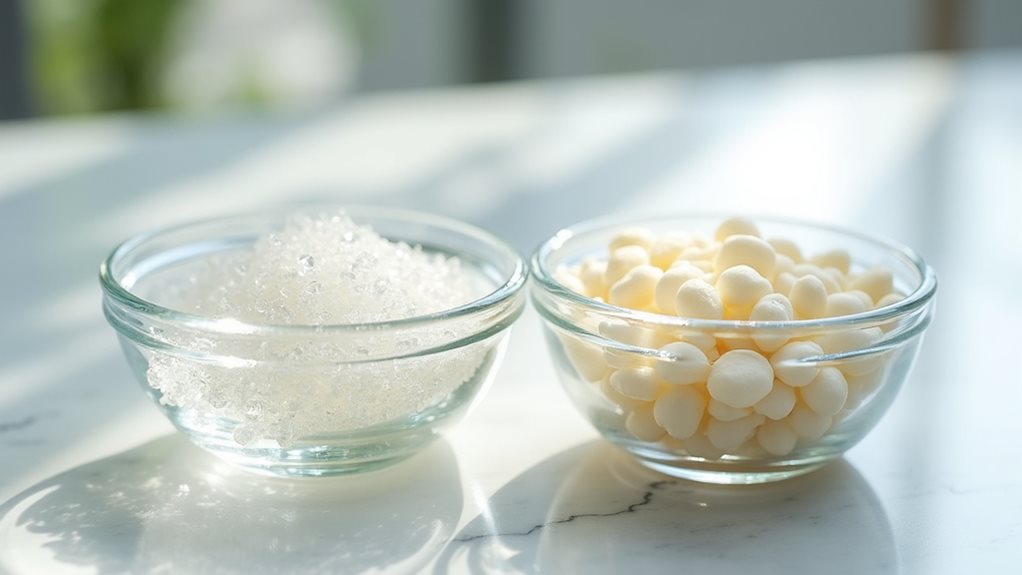
Bioavailability may differ between marine and bovine collagen mainly because of peptide size, with smaller peptides generally absorbed more efficiently.
The omega-3s and mood research emphasizes that EPA appears more consistently linked to mood benefits than DHA, and realistic expectations should consider that effects are usually modest and may require sustained intake alongside overall dietary quality. EPA evidence shows mood-related benefits in some trials, but results vary and are not universal.
Peptide Size and Absorption
Does peptide size influence how well collagen is absorbed by your body? Smaller molecular size improves peptide absorption because it allows easier crossing of the gut barrier.
Marine collagen peptides are generally smaller, around 2,000–3,000 Da, compared to bovine peptides, which are 3,000–8,000 Da. This size difference may lead to slightly faster absorption for marine collagen, but overall bioavailability depends more on product quality.
Hydrolysis Process Impact
The way collagen is processed, especially through hydrolysis, has a greater impact on bioavailability than the source of collagen itself.
Extraction methods, such as acid or enzymatic processes, influence peptide profiles, producing smaller peptides that are more soluble and easier to absorb.
Hydrolysis shapes peptide size and composition, making the final product more bioavailable regardless of whether it originates from marine or bovine sources.
Product Variability Factors
Variability in collagen products markedly influences their bioavailability, with factors such as source species, raw material quality, and extraction methods playing key roles. These factors affect collagen digestion, peptide stability, and overall absorption.
Differences in peptide size, solubility, and amino-acid profiles result from production variability, which impacts how effectively collagen is employed by the body, regardless of whether it’s marine or bovine.
How to Choose Collagen Based on Cost, Dietary Restrictions, and Availability
When choosing collagen, consider the cost, as bovine options are generally less expensive than marine collagen, which can cost two to four times more per month.
Dietary restrictions also influence selection, with marine collagen suitable for pescatarians and bovine collagen preferred for those without beef allergies.
Availability plays a role too, as bovine products are more widely accessible and come in various formats, while marine collagen may be less common and more expensive in some markets.
Cost and Affordability
Choosing the right collagen depends largely on cost, availability, and dietary restrictions, which vary between bovine and marine sources.
Bovine collagen is more affordable, with lower per-serving costs, and offers broad availability, supporting collagen stability.
Marine collagen is more expensive, often linked to sourcing ethics concerns, and may be less accessible, influencing selection based on price and ethical considerations.
Dietary Compatibility
Understanding how collagen fits into your diet involves considering its source, your dietary restrictions, and its availability. Marine collagen suits pescatarians and those avoiding beef, but may have limited flavor options and less sustainable packaging.
Bovine collagen fits non-vegetarian diets, offers more flavor choices, and typically has more sustainable packaging. Label verification guarantees compliance with religious and allergy considerations.
Availability and Access
The availability and access to collagen products depend heavily on their raw material sources, production methods, and regional supply chains.
Marine collagen benefits from marine sustainability, utilizing discarded biomass like fish skin, bones, and waste, which can lower costs.
Supply chain factors such as seasonality, species mix, and local rules influence marine collagen access compared to bovine collagen, tied to cattle processing.
Which Collagen Gives Faster Results for Skin and Connective Tissues?
Marine collagen is often believed to produce faster results for skin improvements because it’s hydrolyzed into smaller peptides, which may increase bioavailability and collagen absorption.
While some studies suggest quicker visible changes in skin, both marine and bovine collagens can improve hydration and elasticity over 8–12 weeks.
Consistent skincare routines are essential for achieving noticeable benefits. bioavailability
Are There Safety Concerns or Allergies to Consider With Collagen Supplements?

Since marine collagen is derived from fish skin, scales, or bones, it can pose safety concerns for individuals with fish or seafood allergies. Allergy risks include itching, swelling, hives, and difficulty breathing, with severe reactions like anaphylaxis possible. Safety concerns also involve potential contamination from pollutants, but thorough testing and labeling help reduce these risks. Marine collagen may also be affected by mercury exposure considerations, which can influence safety profiles for sensitive populations.
How to Pick the Right Collagen for Your Goals and Lifestyle
How do you choose the right collagen supplement to match your goals and lifestyle? Consider collagen absorption, as marine collagen has smaller peptide size and higher bioavailability, supporting faster absorption, ideal for skin and beauty goals. Additionally, evidence on collagen’s impact on mood and mood-related outcomes is evolving, so aligning supplementation with your personal wellbeing goals and consulting with a healthcare professional can help tailor choices vitamin D and mood.
Summary: Finding the Best Collagen for Your Needs
Choosing the best collagen supplement depends on your specific health goals, dietary needs, and preferences. Consider collagen purity, sourcing transparency, and whether marine or bovine collagen aligns with your lifestyle. Marine collagen offers high collagen purity, is suitable for pescatarians, and may support skin health. Third-party testing can help verify amino acid integrity and overall quality, giving you confidence in your choice. Bovine collagen provides broader support for joints and tissues, with reliable sourcing transparency and cost advantages.
Frequently Asked Questions
Can Collagen Supplements Help With Weight Loss or Muscle Gain?
Collagen supplements aren’t proven to aid weight loss or markedly increase muscle gain. They may support muscle recovery and connective tissue health, but the effects are limited and primarily indirect.
Collagen absorption varies, and dietary restrictions like vegetarian or vegan diets often exclude collagen sources, reducing potential benefits.
Consequently, collagen should be viewed as an adjunct for skin, joint, or tissue health rather than a primary method for weight loss or muscle growth.
How Long Does It Take to See Results From Collagen Supplementation?
Results from collagen supplementation typically appear within 2 to 4 weeks, depending on the absorption rate.
Skin improvement, including hydration and elasticity, begins early due to rapid collagen turnover.
However, visible changes in texture and wrinkles often take 8 to 12 weeks.
Consistent use enhances these effects over time, and more substantial improvements usually emerge after 3 to 6 months, as the body gradually integrates the collagen into skin and joint tissues.
Are There Any Interactions Between Collagen and Other Medications?
Collagen has limited drug interactions, but added ingredients in supplements, like herbs or minerals, could cause medical contraindications.
Blood thinners, blood-pressure medicines, and thyroid drugs may require caution because collagen products with certain herbs or minerals can affect absorption or blood clotting.
Always review labels for potential interactions, especially with multi-ingredient formulations, and consult a healthcare provider if you take medications like anticoagulants or immunosuppressants.
Is Collagen Safe for Pregnant or Breastfeeding Women?
Collagen is generally considered safe for pregnant and breastfeeding women when used responsibly, following recommended doses, and choosing high-quality products.
During pregnancy, hydrolyzed collagen peptides are preferred, but limited specific research exists.
For breastfeeding, collagen appears safe with no known harm to infants, though caution is advised due to limited evidence.
Always consult a healthcare provider before supplementing, and avoid products with unnecessary additives or contaminants.
Can Vegans or Vegetarians Take Collagen Supplements?
Vegans can’t take traditional collagen supplements because collagen is animal-derived. However, vegans can pursue vegan alternatives that support collagen synthesis, such as products rich in vitamin C, zinc, and amino acids like glycine, proline, and lysine.
Vegetarians may also consider these options if they contain plant-based ingredients or collagen precursors. These nutrients help the body produce collagen naturally, making such supplements suitable for plant-based diets.
And Finally
Choosing the right collagen depends on your specific health goals, dietary needs, and budget. Marine collagen offers higher bioavailability for skin benefits, while bovine collagen provides broader support for joints and muscles. Consider safety, allergies, and availability when selecting a supplement. Evaluating these factors guarantees you select a collagen type that best aligns with your lifestyle and desired outcomes, supporting your overall health efficiently and safely.
References
- https://www.verywellhealth.com/marine-collagen-vs-bovine-11804991
- https://www.livemomentous.com/blogs/product-education/marine-collagen-vs-bovine
- https://www.willpowders.com/blogs/biohacking-blog/what-is-collagen-and-what-is-the-difference-between-bovine-and-marine-collagen
- https://ancientandbrave.earth/blogs/news/bovine-marine-or-vegan-what-s-the-difference
- https://www.youtube.com/watch?v=qcn6Pw2PJOw
- https://pubmed.ncbi.nlm.nih.gov/38428122/
- https://www.atikawellness.com/blogs/atika-journal/marine-vs-bovine-collagen-what-the-science-actually-says
- https://revivecollagen.com/blogs/about-collagen/bovine-or-marine-collagen-which-is-better-for-your-health
- https://www.youtube.com/watch?v=mNXx6zK_4zU
- https://pmc.ncbi.nlm.nih.gov/articles/PMC7230273/