The best probiotic for women over 50 includes strains like *Lactobacillus rhamnosus* GR-1, *Lactobacillus reuteri* RC-14, and *Bifidobacterium longum*, which support gut and vaginal health. Effective products provide high CFU counts, often at least 10 billion, and feature strains that are verified by third-party testing. Quality depends on proper storage and label transparency, ensuring strain accuracy and dosage. Choosing a product that aligns with your health goals and maintains potency can improve overall benefits. Continuing to investigate options will help you optimize your probiotic use.
Takeaways
- Choose probiotics with specific strains like *Lactobacillus rhamnosus* GR-1 and *Lactobacillus reuteri* RC-14 for vaginal health support.
- Look for products with verified strains, adequate CFU counts, and third-party testing for quality assurance.
- Select strains that promote gut diversity, immune modulation, and support hormone-related microbiome shifts.
- Prefer formulations with proper storage, such as delayed-release capsules, to ensure probiotic survivability.
- Consult healthcare providers to tailor probiotic choices based on individual health needs and medication use.
Why Probiotics Are Important for Women Over 50

As women age past 50, their gut microbiomes undergo significant changes due to declining estrogen levels. This can negatively affect digestive, vaginal, and overall health. Supporting gut diversity through probiotics can help counteract these changes by promoting microbiome balance and resilience. Probiotics support hormonal balance by promoting microbiome diversity, helping restore beneficial microbes, and reducing dysbiosis. These changes can enhance gut comfort, vaginal health, and immune function, which are essential for maintaining health during menopause. Additionally, probiotics can influence short-chain fatty acid production and immune modulation, contributing to broader gut–hormone interactions gut–hormone interactions.
How to Choose the Right Probiotic for Your Health Goals
Choosing the right probiotic begins with identifying your specific health goals, since different strains support different outcomes. Many probiotic myths focus on strain diversity, but selecting strains with strain-level identification is essential. Products should list genus, species, and strain, and clinical research should support their use. Proper CFU doses, label quality, and storage also influence effectiveness for your health objectives. Probiotic strains support a variety of health functions, so understanding which strains target your particular needs can greatly improve results. A key consideration is that Lactobacillus and Bifidobacterium strains may target different areas of the body and health concerns, helping you tailor choices to women over 50. Lactobacillus vs. Bifidobacterium can guide you to select strains with the most relevance to your goals.
Which Strains Support Gut and Vaginal Health in Older Women
Certain probiotic strains have demonstrated effectiveness in supporting both gut and vaginal health in older women.
Strain combinations like L. rhamnosus GR-1 plus L. reuteri RC-14 and L. crispatus strains support vaginal microbiome health.
These strains help maintain vaginal balance, reduce harmful microorganisms, and promote overall genitourinary health, addressing menopause-related microbiome changes.
Additionally, survivability and third-party testing are important factors when selecting a probiotic that targets both gut and vaginal health in later life. strain diversity
How Much CFU Should You Take for Best Results
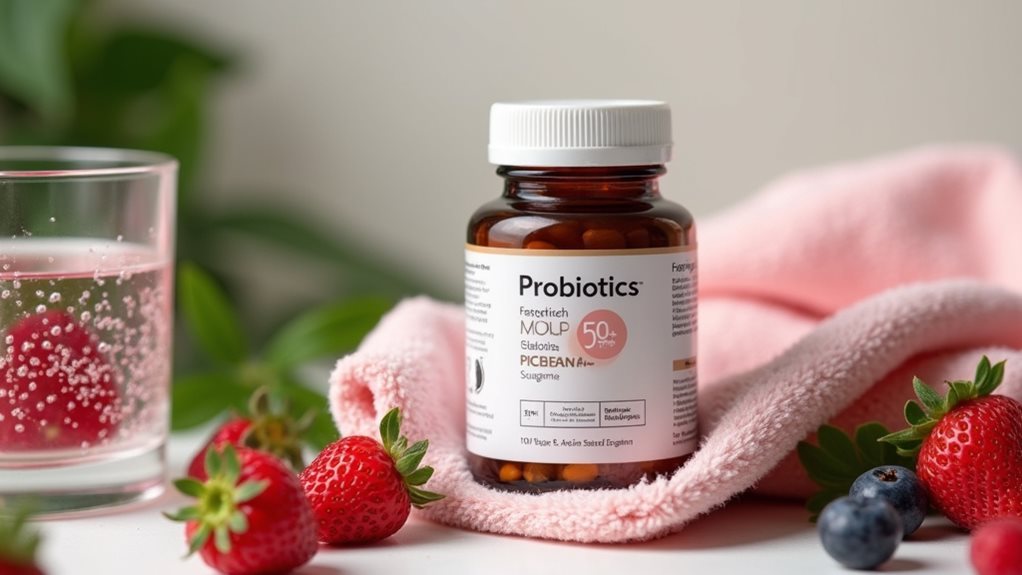
Determining the most suitable CFU (colony-forming units) intake depends on your health goals and the strains included in your probiotic.
Many believe that higher CFU counts are better, but probiotic myths persist that more CFU equals better results.
Strain diversity and product quality are more important than simply choosing a product with a high CFU number.
Probiotics can start to show noticeable benefits within days to weeks for some people, while others may take longer depending on the condition and individual gut microbiome.
strain diversity and product quality remain key factors beyond CFU counts.
What Factors Affect How Well Your Probiotic Works
Several factors influence how effectively your probiotic works, including the specific strains it contains, your health goals, and your microbiota diversity.
Strain interaction impacts outcomes because different strains target distinct health issues.
Your baseline microbiota composition can enhance or limit probiotic effects, especially if it’s disrupted.
These factors determine how well your probiotic supports your overall health. Probiotic survival through the digestive tract can be influenced by whether products are taken with food or on an empty stomach, and some research suggests timing may affect efficacy depending on the strain and formulation.
When and How to Take Probiotics for Maximum Benefits
Timing plays a crucial role in ensuring probiotics survive stomach acid and reach the intestines where they exert their effects.
Probiotic timing should follow product instructions, considering strain selection and delivery technology, such as delayed-release capsules.
Taking probiotics with meals or shortly before eating can improve survival, but strain-specific use and product formulation ultimately determine ideal timing for maximum benefits.
Strain viability can be influenced by refrigeration requirements and storage conditions, which affect how effectively a probiotic reaches the gut.
Safety Tips for Using Probiotics After 50

Before starting probiotics, you should consult healthcare providers to guarantee safety, especially if you have underlying health conditions or are immunocompromised.
It’s important to monitor your gastrointestinal response for side effects such as gas, bloating, or discomfort, and adjust or stop use if symptoms worsen.
Always choose reputable, high-quality brands verified by third-party testing to reduce the risk of contamination or mislabeled ingredients.
Probiotics may help reduce bloating for some individuals, but results can vary by person and strain. evidence on bloating and strains
Consult Healthcare Providers First
Consulting healthcare providers before using probiotics after age 50 is essential because individual health conditions, dietary restrictions, and medication use can impact safety and effectiveness.
They can advise on probiotic storage, ensuring proper handling to prevent contamination.
Professional guidance helps determine appropriate strains, doses, and duration, reducing risks associated with underlying health issues or compromised immune systems.
Monitor Gastrointestinal Response
Monitoring your gastrointestinal response is an essential step when starting probiotics after age 50 because your digestive system may react differently than when you were younger.
Track symptoms like gas, bloating, and discomfort to assess changes in digestive balance and microbiome diversity.
Mild symptoms often resolve, but persistent issues may indicate strain mismatch or excessive dosing requiring adjustment or medical review.
Choose Reputable, Quality Brands
Choosing reputable probiotic brands is essential to guarantee safety and effectiveness, especially for women over 50.
Focus on probiotic stability to verify strains remain potent until expiration, and check shelf life to confirm product freshness.
Select brands that disclose strain names, CFU counts at shelf life, quality testing, and ingredient transparency for reliable, safe supplementation.
Lifestyle Habits That Support Your Probiotic Benefits
To support the benefits of probiotics, adopting specific lifestyle habits is essential, as these habits create an environment that promotes gut health.
Consistent lifestyle routines, like proper hydration, support microbiome diversity, improve digestion, and aid probiotic function.
Maintaining regular fiber intake, eating prebiotic foods, and consuming fermented foods also encourage microbial growth, strengthening overall gut health.
In addition, considering timing and strains during antibiotic courses can help preserve beneficial bacteria and support recovery, especially when paired with evidence-based practices like rotating probiotics and continuing them after antibiotics. antibiotic co-administration
How to Read Labels and Verify the Quality of Probiotic Supplements
Reading labels carefully is crucial when evaluating probiotic supplements, as it helps guarantee product quality and efficacy.
Look for probiotic labeling that lists genus, species, and strain verification, ensuring strain-specific identification.
Verify the CFU count at the end of shelf life, and confirm proper storage instructions.
Accurate strain verification and transparent labeling are essential for assessing probiotic quality and expected results.
Common Questions About Probiotics for Women Over 50

Many women over 50 ask about the safety of probiotics, and research shows they’re generally safe for healthy individuals.
However, those with weakened immune systems should exercise caution.
Questions about dosage often focus on taking 10 to 25 billion CFUs daily, as higher doses don’t always provide additional benefits and may increase costs.
Specific probiotic strains, such as Lactobacillus and Bifidobacterium, are linked to health benefits like improved gut, vaginal, and bone health.
With strain-specific effects supporting different outcomes.
Strain-Specific Benefits Clarified
Understanding the specific strains of probiotics that benefit women over 50 can help target health concerns effectively. Strain specificity influences outcomes such as gut health, microbiome diversity, and immune support.
For example, Lactobacillus rhamnosus GG supports intestinal resilience, while Bifidobacterium longum aids regularity. Choosing strains aligned with personal health objectives enhances probiotic effectiveness and addresses menopause-related microbiota shifts.
Safety and Usage Tips
Probiotics are generally safe for healthy women over 50, but it’s important to understand how to use them properly.
Consider probiotic sustainability, choosing products with proven quality and clinical backing.
Cultural dietary habits influence gut health, so select strains compatible with your diet.
Always start with low doses, monitor for side effects, and consult healthcare providers, especially if health issues exist.
Frequently Asked Questions
Are Probiotics Safe for Women With Underlying Health Conditions?
Probiotics can be safe for women with underlying health conditions if strains and doses are carefully chosen, but risks exist.
They may support gut health and immune support, yet in immunocompromised individuals or those with serious illnesses, probiotics could cause infections.
Consulting a healthcare professional is essential to evaluate potential benefits and risks, ensuring the probiotic strain is appropriate, and monitoring for adverse effects during use.
Can Probiotics Replace Antibiotics for Infections?
Probiotics can’t replace antibiotics for treating infections because specific probiotic strains lack the targeted action needed to eradicate bacteria.
While probiotics may support gut health and reduce antibiotic resistance by maintaining microbiome diversity, they don’t treat bacterial diseases directly.
Using probiotics as substitutes can delay proper treatment, increase risks, and potentially contribute to antibiotic resistance.
Always seek medical advice for infections requiring antimicrobial therapy.
How Long Does It Take to See Probiotic Benefits?
You can typically see probiotic benefits within one to four weeks, depending on strain effectiveness and dosage guidelines. Strain effectiveness varies, so selecting strains targeting your specific condition influences how quickly results appear.
A dosage of at least five billion CFUs often enhances effectiveness. Consistent daily use is essential because probiotics are temporary residents.
Benefits may diminish within weeks after stopping, so ongoing adherence maximizes potential improvements in digestion, vaginal health, or immune function.
Should I Take Probiotics With or Without Food?
You should take probiotics with food if the product lacks delayed-release or acid-resistant capsules, as food buffers stomach acid and improves probiotic survival. This supports digestive health and immune support.
For formulations with acid-resistant technology, taking probiotics without food can be effective, as these strains withstand stomach acid better.
Consistency in timing and following product instructions are essential for maximum benefits, especially for women over 50 seeking targeted health improvements.
Can Probiotics Help With Menopause-Related Symptoms?
Probiotics can assist with menopause management by supporting gut health balance, which influences inflammatory and hormonal pathways associated with menopause symptoms. They may improve vasomotor symptoms, mood, vaginal dryness, and urogenital health, although effects are generally modest.
Strains like Lactobacillus and Bifidobacterium are most studied.
While probiotics are promising as adjunct therapy, they should complement other treatments, as research remains limited and results vary.
And Finally
Choosing the right probiotic for women over 50 involves selecting strains that support gut and vaginal health, ensuring adequate CFU counts, and verifying product quality. Safety, proper storage, and consistent use enhance effectiveness. Lifestyle habits like a balanced diet and regular exercise complement probiotic benefits. Reading labels carefully helps identify reputable products. Understanding these factors enables you to make informed decisions that support overall health, prevent infections, and maintain digestive function as you age.
References
- https://www.goodrx.com/well-being/gut-health/best-probiotic-women
- https://ubiehealth.com/doctors-note/probiotics-best-women-over-65-gut-immune-health-3722ex1
- https://www.joinmidi.com/post/best-probiotic-for-women
- https://www.webmd.com/healthy-aging/best-probiotic-strains-older-adults
- https://www.amazon.com/Garden-Life-Probiotics-Acidophilus-Probiotic-Created/dp/B004H4BRNE
- https://www.centerwellprimarycare.com/en/resources/what-are-the-best-probiotics-for-seniors
- https://www.intimina.com/blog/probiotics-for-women-over-50/
- https://asktia.com/article/probiotics-benefits-women/
- https://my.clevelandclinic.org/health/treatments/14598-probiotics
- https://pmc.ncbi.nlm.nih.gov/articles/PMC12009168/