Probiotics can start improving digestion within 1 to 3 days, but noticeable effects like reduced bloating or regular bowel movements often take 2 to 4 weeks. For conditions such as IBS, relief generally appears after 3 to 4 weeks, and immune benefits may take several weeks to months of consistent use. Factors influencing response include strain type, dosage, individual health, and adherence. Continued use and proper probiotic choices help achieve ideal results, which you will delve into further if you keep reading.
Takeaways
- Digestive relief can start within 1–2 days for acute issues, but longer for chronic conditions like IBS.
- Gut flora changes typically begin within 1–7 days, with noticeable improvements in 2–4 weeks.
- Symptom improvements, especially for IBS or bloating, usually occur after 3–4 weeks of consistent use.
- Immune benefits generally require 4–12 weeks of regular probiotic intake to manifest.
- Response time depends on strain type, baseline health, and adherence to daily, consistent use.
How Quickly Do Probiotics Help Digestive Symptoms?

Digestive myths suggest quick relief, but benefits for acute diarrhea may occur within 1–2 days, while IBS or bloating may take several weeks.
Research shows that the effectiveness of probiotics depends on factors such as strain, dose, and product quality, and a careful selection matters for outcomes.
Strain choice and baseline health influence response time.
Probiotics can help improve digestive symptoms at different speeds depending on the condition and the strains used. Many probiotic myths, including the idea that results are immediate, are false. Dosing quality also plays a role in how quickly benefits may appear for individuals.
What Is the Typical Timeline for Digestive Relief?
The timeline for experiencing digestive relief from probiotics varies depending on individual factors and the specific strains used. Many believe probiotic myths that relief occurs immediately, but gut flora changes take time. Subtle shifts can happen within 1–7 days, with noticeable improvements often within 2–4 weeks. Consistency and strain selection influence how quickly symptoms, such as bloating or diarrhea, improve. Different strains have varied response times, which can affect how soon individuals notice benefits. Additionally, initial increases in bloating or gas are common when starting probiotics as the gut microbiome adjusts bloating during adjustment and usually improve within a few days to a couple of weeks.
When Can You Expect to See Improvements in IBS and Gut Conditions?
Improvements in IBS and other gut conditions typically become noticeable within specific timeframes that depend on individual responses and the severity of symptoms.
Changes in microbiome diversity and reduced digestive sensitivity often emerge after 3–4 weeks, although some individuals see benefits sooner or later.
A trial of up to 12 weeks allows for a more accurate assessment of probiotic effectiveness on gut health.
Probiotics, prebiotics, and synbiotics can influence how quickly these improvements occur, depending on the product and the individual’s gut milieu.
How Long Does It Take for Probiotics to Boost Immune Benefits?

Although immune benefits from probiotics typically take weeks to months to become noticeable, consistent use is essential.
Improvements depend on microbiome diversity and strain specificity, with certain strains affecting immune pathways more quickly than others, so choosing a product with well-studied strains matters strain specificity.
Stable microbial shifts over 4 to 12 weeks allow the immune system to adapt, with product quality and strain choice impacting how quickly benefits penetrate.
Which Strains and Doses Speed Up Results?
Choosing the right probiotic strains and doses can considerably influence how quickly you see results. Strain-specific matching and dose optimization are essential because certain strains, such as Lactobacillus rhamnosus GG or Saccharomyces boulardii, have proven effectiveness at specific CFU counts. Proper selection guarantees faster, more reliable improvements in digestive health and symptom relief. Probiotic survival through digestion
Why Is Daily Consistency Key to Faster Benefits?
Maintaining daily consistency is essential because probiotics need to be present in the gut over time to produce noticeable benefits.
Probiotic myths suggest they colonize permanently, but gut flora changes are temporary without ongoing intake.
Consistent daily use supports stable microbial interactions, prevents gaps in microbial exposure, and guarantees benefits continue, as strains pass through the digestive system within about a week.
How Does Your Baseline Gut Health Affect Response Time?

Your baseline gut health plays a significant role in how quickly probiotics produce noticeable effects.
Microbiome diversity and baseline stability influence response time, with disturbed microbiomes showing faster, more visible changes.
Healthy, stable microbiomes often resist large shifts, resulting in slower responses.
In contrast, recent antibiotic use or dysbiosis can lead to quicker, more measurable benefits from probiotic intervention.
Vitamin D and calcium balance is essential to overall health; pairing them appropriately can support bone health and metabolic function. Vitamin D-Calcium Balance
What Are Early Signs That Probiotics Are Working for You?
Early signs that probiotics are working can be observed through changes in digestive symptoms and bowel habits. Reduced bloating, more regular bowel movements, and less gas indicate improved gut function. Incorporating diet adjustments and managing stress support these changes. Noticeable improvements in stool consistency and fewer urgent trips suggest probiotics are beginning to impact digestive health. Triglycerides and LDL are affected by fish oil, which can influence lipid profiles over time through mechanisms involving triglyceride reduction and shifts in HDL and LDL particle quality.
How Can Diet and Lifestyle Speed Up Probiotic Effects?
Diet and lifestyle choices can substantially influence how quickly probiotics work.
Increasing diet diversity, such as consuming a variety of plant foods and fermented products, provides different fibers and microbes that support probiotic growth.
Maintaining healthy lifestyle habits like regular exercise, adequate sleep, and hydration helps stabilize the gut microbiome, promoting faster probiotic effects.
In addition, understanding collagen types and their roles can help you align probiotic choices with gut-associated benefits collagen types and support overall gut health.
How to Evaluate Probiotic Success After 4 to 12 Weeks?
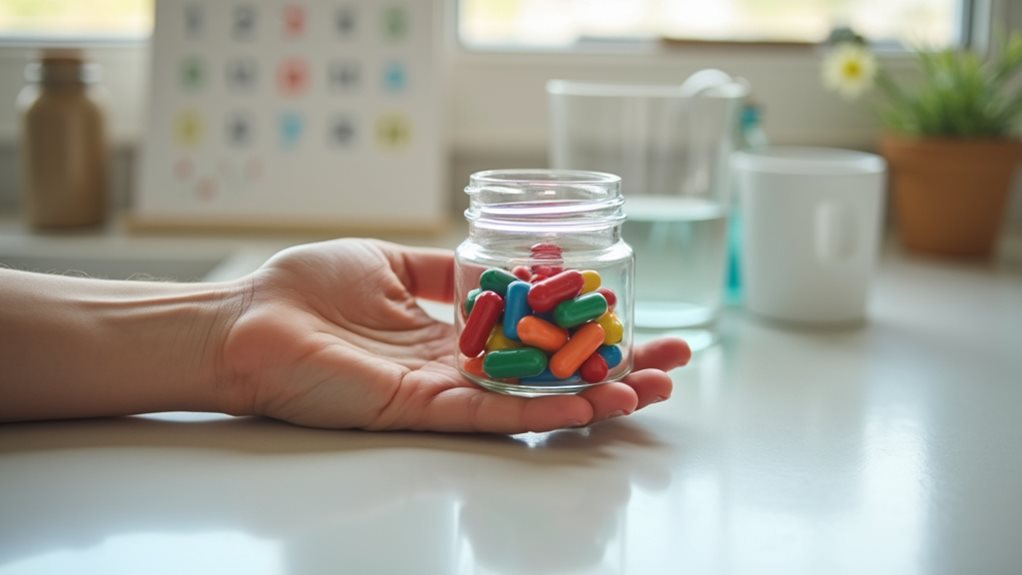
To evaluate probiotic success after 4 to 12 weeks, you should monitor symptom changes over time.
Focus on consistent trends rather than isolated improvements.
Assess whether symptoms like bloating, bowel regularity, or immune markers show sustained improvement in both severity and duration.
Regularly tracking these patterns helps determine if the probiotic is producing meaningful, lasting benefits.
Monitor Symptom Changes
How do you determine if a probiotic is effective after several weeks of use? Monitor symptom changes by observing improvements in bowel regularity, stool consistency, and bloating.
Track microbiome diversity, which reflects overall gut health, and consider strain specificity, as different probiotic strains target specific symptoms.
Consistent, gradual improvements indicate a positive response to the probiotic.
Assess Consistency and Duration
Evaluating the success of a probiotic after 4 to 12 weeks requires careful attention to consistency and duration of use. Consistent use guarantees accurate results, as probiotic effects depend on regular intake.
Monitoring probiotic side effects and strain identification helps determine effectiveness, especially if no improvements occur by 8 weeks.
A 12-week period often reveals longer-term benefits or the need for reassessment.
Common Reasons Probiotics Don’t Show Immediate Results?

Probiotics may not show immediate results because several factors can interfere with their effectiveness. Many probiotic myths involve strain selection, as not every strain addresses the same symptoms.
Using the wrong strain, or a dose too low, can delay benefits. Additionally, a short timeframe, baseline gut health, and inconsistent use can prevent noticeable improvements, even when the right probiotic is chosen.
Frequently Asked Questions
Can Probiotics Cause Side Effects Before Showing Benefits?
Probiotics can cause side effects before showing benefits because they alter gut flora, which temporarily affects digestion and bowel movements.
Gas, bloating, diarrhea, or constipation may occur as the gut adjusts to new microbes. These symptoms are usually mild and short-lived, often appearing within the first few days.
The gut needs time to adapt, and benefits typically become visible after this adjustment period.
Do Certain Foods Enhance Probiotic Effectiveness?
Certain foods, especially fermented foods, enhance probiotic effectiveness through dietary collaboration. Fermented foods supply live microbes, increasing probiotic intake.
Prebiotic foods like onions, garlic, and bananas provide fiber that feeds beneficial bacteria. Combining these foods creates an environment that supports probiotic colonization and activity.
This makes your gut microbiome more stable and effective. Regular intake of fermented foods paired with prebiotics optimizes probiotic benefits by promoting beneficial microbial growth and function.
How Does Age Influence Probiotic Response Time?
Age influences probiotic response time through age-related absorption and senior gut flora changes.
Older adults often experience slower absorption of probiotics due to decreased gut lining efficiency, which can delay effects.
Additionally, shifts in senior gut flora affect probiotic colonization and activity, potentially prolonging the time needed for measurable benefits.
These factors mean that in older populations, probiotic effects may take longer to become evident compared to younger individuals.
Can Probiotics Replace Medication for Gut Issues?
Probiotics can’t replace medication for gut issues because different probiotic strains influence the gut microbiome in specific ways. They don’t directly target pathogens or inflammation like medications do.
They serve as adjuncts in certain cases, such as antibiotic-associated diarrhea, but their effects are modest and strain-specific.
For most gut conditions, medication remains necessary, and switching solely to probiotics is unsupported by scientific evidence.
Are Probiotic Effects Reversible if Stopped Early?
Probiotic effects are reversible if stopped early because microbiome resilience allows the gut to revert to its baseline composition within 1 to 3 weeks.
The benefits provided by probiotics, such as improved digestion or symptom relief, often fade after discontinuation.
This process demonstrates probiotic sustainability is limited, as most strains are transient and don’t establish long-term colonization.
Consequently, stopping probiotics typically results in a return to the original microbiome state.
And Finally
Probiotics typically begin to improve digestive health within one to four weeks, depending on the strain, dose, and individual response. Improvements in immune function may take several weeks, while gut conditions like IBS can vary in response time. Consistent intake, proper diet, and lifestyle adjustments can accelerate results. If no changes occur after 4 to 12 weeks, consider dosage or strain variations, and consult a healthcare professional to evaluate effectiveness and address potential causes for delayed response.
References
- https://www.healthline.com/health/digestive-health/how-long-does-it-take-for-probiotics-to-work
- https://www.goodrx.com/well-being/diet-nutrition/signs-probiotics-are-working
- https://healthpath.com/gut-health/how-long-do-probiotics-take-to-work/
- https://seed.com/cultured/how-long-do-probiotics-take-to-work-science-based-timeline-guide/
- https://blisprobiotics.co.nz/en-us/blogs/blis-blog/how-long-probiotics-work
- https://drbrighten.com/how-long-does-it-take-probiotics-to-work/
- https://www.mamasselect.com/blogs/mamas-select-blog/how-long-do-probiotics-take-to-work
- https://www.reddit.com/r/ibs/comments/79tkp3/how_long_to_probiotics_do_their_job/
- https://biophysicsessentialsofficial.com/blogs/gut-check/how-long-do-probiotics-take-to-work
- https://healthpath.com/gut-health/how-long-does-it-take-for-probiotics-to-start-working/