Creatine is generally safe to combine with birth control pills, and current research shows no meaningful interaction. You can use standard creatine doses, usually 3 to 5 grams daily, without reducing contraceptive effectiveness or disrupting hormone control. Creatine supports muscle energy, while birth control works by preventing ovulation and thickening cervical mucus. If you have kidney disease, take fertility medicine, or plan pregnancy, ask your doctor, and you’ll see what else matters.
Takeaways
- Creatine is generally safe to use with birth control pills at recommended doses.
- No meaningful interaction has been shown between creatine and contraceptive hormones.
- Creatine supports muscle energy, while birth control works by preventing ovulation.
- Standard creatine doses are 3 to 5 grams daily; timing matters less than consistency.
- Ask a clinician first if you have kidney disease, pregnancy concerns, or fertility treatment plans.
Is Creatine Safe With Birth Control?
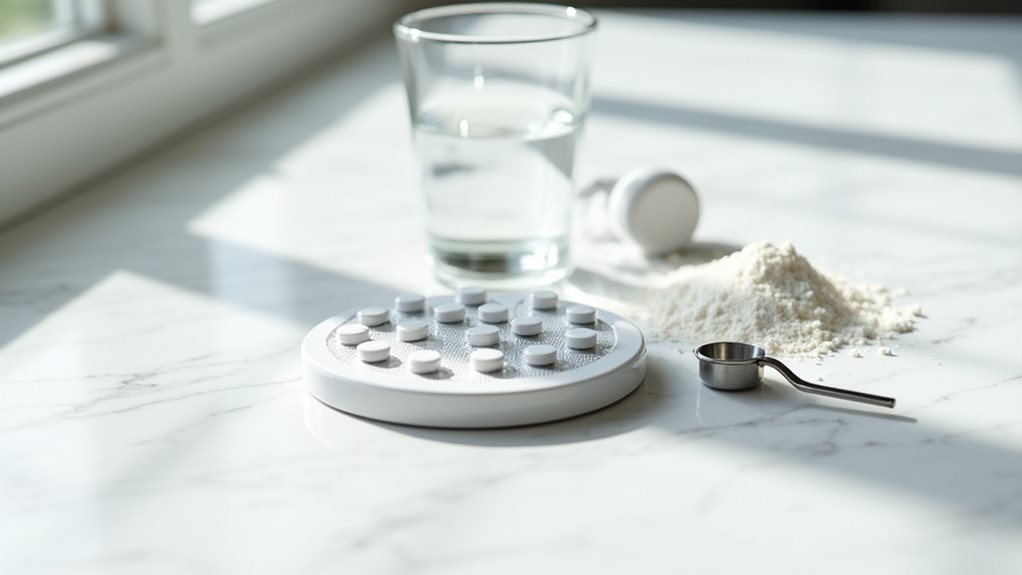
Yes, creatine is generally safe to use with birth control pills when you take it at recommended doses.
You can trust barrier free dosing, because clinical trials show no serious harm, and placebo evidence, also finds no added risk.
Research shows no hormone disruption, fertility change, or organ damage, and drug checks report no meaningful interaction with contraceptive pills. Creatine may also be especially relevant for women because hormonal fluctuations can influence creatine metabolism throughout the menstrual cycle, pregnancy, and post-menopausal years.
Creatine has been studied in healthy populations, with findings indicating no adverse impact on kidney function in individuals with normal baseline kidney health. kidney function remains stable in these trials, supporting its safety profile when used as directed.
How Creatine And Birth Control Work
You use creatine to support muscle energy, because it helps regenerate ATP quickly during high-intensity activity and raises phosphocreatine stores in your muscles.
Birth control pills work differently, synthetic estrogen and progestin suppress FSH and block the LH surge, which prevents ovulation and keeps the uterine lining thinner.
Together, these substances act through separate pathways, creatine in muscle energy production and birth control through hormone control of your menstrual cycle. Creatine monohydrate is the most researched form and is commonly used for short-duration, high-intensity exercise.
Creatine’s Role In Muscles
Creatine works inside muscle cells as a fast energy reserve, because phosphocreatine donates phosphate to rebuild ATP during short, intense activity.
You raise intramuscular stores with Creatine Loading Strategies, and Timing Exercise Sessions can help performance support.
Your muscles store creatine inside cells, so repeated bursts stay stronger.
Uptake uses the sodium-dependent transporter, and birth control doesn’t reduce creatine’s muscle role.
Birth Control Hormone Action
Birth control pills work mainly by changing hormone signals that control ovulation and the reproductive tract.
Estrogen feedback lowers follicle-stimulating hormone, progestin blocks luteinizing hormone, and you get ovulation suppression.
The hormones also thicken cervical mucus, so sperm can’t enter the uterus, and they thin the uterine lining, so implantation becomes unlikely.
This process keeps your cycle from releasing an egg.
Why Creatine Doesn’t Affect Hormones
Although creatine supports cellular energy, it doesn’t function like a hormone and doesn’t trigger hormone receptors.
In creatine metabolism, you use amino acid derivatives as a fuel substrate, not a signaling agent.
It doesn’t bind androgen receptors, alter estrogen or DHT, or change testosterone, growth hormone, or cortisol.
Research shows normal endocrine function, fertility, and puberty remain unaffected.
Creatine operates without engaging hormone receptors and does not disrupt endocrine signaling.
Does Birth Control Affect Creatine?
If you use hormonal birth control, it doesn’t appear to block creatine absorption or change how your muscles take it up. Studies show no meaningful interaction between contraceptives and creatine kinetics, so creatine remains effective for you. Oral contraceptives may raise some creatine kinase markers after hard exercise, but they don’t increase overall muscle damage or reduce creatine’s safety. Creatine remains suitable for those on birth control regimens, with no proven interference in uptake or efficacy creatine kinetics.
Hormones And Creatine
Hormonal contraceptives don’t directly block creatine’s action in muscle cells, because creatine works through ATP and phosphocreatine recycling, not hormone receptors.
You can still use creatine for muscle energy, and birth control’s water retention comes from estrogen, not creatine.
Synthetic progestins don’t stop creatine uptake, and studies show no major hormone changes, so the supplement’s effects usually stay intact in training.
No Interaction Observed
Studies consistently show no meaningful interaction between birth control and creatine, so contraceptive use doesn’t change how creatine is absorbed, processed, or stored.
You can expect stable serum levels, normal transporter function, and unchanged enzyme activity.
Creatine dosing safety remains the same, and pill timing strategies don’t appear necessary.
Research also shows consistent half-life, clearance, and effectiveness with hormonal contraceptives.
What Research Says About Creatine And Birth Control
Current research suggests creatine monohydrate and hormonal birth control don’t create a meaningful safety problem when used together.
You can expect no major change in hormone levels, creatine uptake, or metabolism.
Studies also show steady benefits for strength, recovery, bone density, and cognition.
Pregnancy considerations and fertility planning still deserve medical review, but available data support a low-risk combination.
Which Birth Control Methods Have Been Studied?

Creatine and Birth Control: Is It Safe to Combine?
Which Birth Control Methods Have Been Studied?
Researchers have studied several birth control methods alongside creatine use, and the evidence covers both combined and progestin-only options. You can compare trial designs, observational outcomes, summarize hormone types, and creatine dosing regimens across second-generation pills, third-generation pills, mini-pills, levonorgestrel emergency contraception, and norethisterone-based methods.
These studies report no major safety signals, and they show stable muscle measures during use. Metabolic support
Creatine Safety For Women On The Pill
You can take creatine monohydrate while on the pill, and studies show no meaningful interaction with hormonal contraceptives. Birth control pills don’t reduce creatine’s effects, and creatine doesn’t change estrogen, progesterone, or testosterone levels. Clinical trials in healthy women confirm this combination is safe, with only minor, temporary side effects like water retention or bloating.
Increased water retention is typically temporary and often related to dose and individual response. Creatine safety remains robust across multiple studies in healthy adults, including women on combined hormonal contraception, with no evidence of adverse hormonal interactions.
Creatine And Pill Safety
When used as directed, creatine is generally considered safe for women taking birth control pills, and no clinical evidence shows that it reduces pill effectiveness.
You can use standard doses safely, but watch dehydration risk, keep fluids up, and follow kidney monitoring if you have concerns.
Major health organizations report no known interaction, and trials in hundreds of females found no adverse events.
Hormone Interaction Evidence
Although creatine often raises questions about hormone balance, current evidence shows no meaningful disruption of estrogen or progesterone in women taking birth control pills.
Multiple trials and hormone assays show stable levels, with no change in contraceptive efficacy.
Sex related considerations and pill type safety remain favorable, because creatine follows separate metabolic pathways.
Long-term use also shows no androgenic side effects.
Creatine Side Effects To Watch For
Creatine can cause a few side effects that are worth watching for, especially during high-dose use or the first week of supplementation.
Monitor hydration status, assess gastrointestinal tolerance, because nausea, bloating, diarrhea, or stomach pain can appear.
and weight may rise from water retention.
Headaches or dizziness occur rarely, kidney injury hasn’t been shown in healthy users, but preexisting kidney disease needs medical advice.
Creatine may influence weight and fluid balance in some individuals, so consider tracking these changes alongside any other symptoms. Creatine safety
How Much Creatine Should You Take?
For most healthy adults, 3 to 5 grams of creatine per day is the standard maintenance dose, and 5 grams daily is the most studied amount for muscle benefits.
You can take it daily without loading, or use 20 to 25 grams for 5 to 7 days, then drop to maintenance.
Creatine timing matters less than consistency, and kidney monitoring is wise if you have concerns.
Creatine timing may be considered alongside consistent dosing practices to optimize long-term adherence and outcomes.
How To Avoid Stomach Upset

To avoid stomach upset, start with a low daily dose of 3 to 5 grams instead of a large loading phase, because 20 grams or more can raise the risk of diarrhea, bloating, and nausea. Split dosing, take it with meals, use travel friendly mixing in plenty of water, and monitor hydration. Manage caffeine intake, since it can worsen irritation and discomfort. If you’re concerned about gender-specific responses, be mindful that creatine bloating can vary among individuals, and monitoring body response is key for safe use. Creatine bloating and the experience of stomach upset can be influenced by dose size and timing.
When To Ask Your Doctor
Medical caution matters when you mix supplements and hormones, even when the known risk is low.
Ask your doctor if you have kidney disease, need baseline testing, or worry about renal risk from creatine raising creatinine.
You should also seek advice if nausea, cramps, bloating, or weight changes appear, because symptom overlap can hide the cause and delay proper monitoring or treatment.
Can You Take Creatine While Trying To Conceive?
You can usually take creatine while trying to conceive, because standard doses haven’t shown harm to fertility in men or women.
Creatine monohydrate, at 3–5 grams daily, has strong safety data, and studies haven’t found negative effects on sperm quality, hormone levels, or conception odds.
Preconception supplement safety still deserves care, so you should use consistent dosing, stay hydrated, and ask your doctor if you’re pregnant, have kidney issues, or take fertility medication.
Creatine And Fertility
Current research shows no evidence that 3 to 5 grams of creatine per day harms fertility in men or women trying to conceive.
Female safety outcomes remain strong, and preconception dosing effects show no harm to reproductive hormones.
You can use standard doses with confidence, because studies found no drop in sperm quality, no reduced conception chances, and no serious adverse events.
Birth Control Interaction
When taken at standard doses, creatine doesn’t appear to interfere with hormonal birth control or reduce contraceptive effectiveness.
Its Nonhormonal effects don’t alter estrogen or progesterone, and studies show stable levels.
You can focus on kidney safety, since reviews found no serious harm.
Exercise timing won’t change contraceptive action, and dosing misconceptions often cause concern, not evidence.
Preconception Supplement Safety
Creatine also appears safe during the preconception period for healthy adults taking recommended doses, and evidence doesn’t show that it harms fertility in men or women.
You can use 3–5 grams daily, with hydration, but avoid low-quality Herbal Supplements.
Check Vitamin Interactions, especially during fertility treatment, and get medical clearance if you have kidney issues.
Current data doesn’t show reduced conception chances.
How To Pick A Safe Creatine Powder
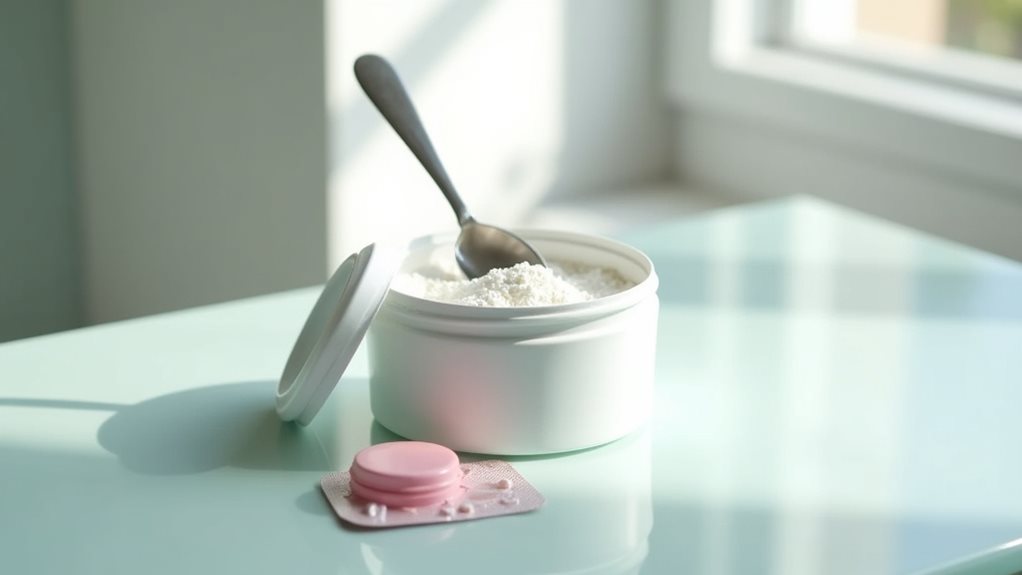
Start by choosing plain creatine monohydrate, because it’s the most studied form and it works as well as, or better than, other versions.
Check third party verification, like NSF, USP, or Informed Sport, and demand label transparency.
Pick powders with only creatine monohydrate, clear serving size, and a public batch CoA.
Micronized, high-purity products mix better and limit unwanted sediment.
What To Know Before You Start Creatine
Before you begin creatine, it helps to know what it does, how much to take, and who should check with a doctor first. Creatine can support ATP energy, strength, and muscle growth, and most people use 3 to 5 grams daily.
Keep dose consistency, maintain water intake, and consult a doctor if you have kidney disease, diabetes, are pregnant, or breastfeeding.
Frequently Asked Questions
Can Creatine Affect Breakthrough Bleeding on Birth Control?
Creatine doesn’t appear to affect breakthrough bleeding on birth control.
Research shows no meaningful hormonal interactions, and it doesn’t change estrogen or progesterone levels, so your bleeding risk stays tied to contraceptive use, not creatine.
You should keep pill timing consistency, because missed or late doses can trigger bleeding.
Creatine also doesn’t reduce pill effectiveness, and studies haven’t found increased irregular bleeding when you use both together.
Does Creatine Timing Matter With Different Contraceptive Pills?
Creatine timing doesn’t matter with different contraceptive pills. You can take creatine in the morning or evening, and pill interactions haven’t shown changes in hormone levels, absorption, or creatine effectiveness.
Combined pills, progestin-only pills, patches, rings, implants, and emergency contraception all keep normal efficacy with standard creatine use, because creatine doesn’t alter hormone metabolism.
Use 3 to 5 grams daily, and keep your schedule consistent for convenience, not safety.
Can Creatine Change Water Retention While on Hormonal Contraception?
Yes, creatine can cause short-term water retention, but it usually stays inside your muscles, not under your skin.
Hormonal contraception may also cause mild fluid shifts, so you can notice both at once.
That doesn’t mean creatine worsens pill side effects or changes birth control efficacy.
These hydration myths often confuse normal weight changes with fat gain.
With steady use, the initial water increase usually levels off within weeks.
Is Creatine Safe With Emergency Contraception?
Yes, creatine’s safe with emergency contraception, and interaction myths don’t match current evidence.
It doesn’t lower emergency pill efficacy, because it doesn’t change hormone absorption or hepatic breakdown.
For dosage guidance, you can usually stay near 3 to 5 grams daily, with normal hydration.
If you notice side effect spotting after the emergency pill, that reflects the hormone dose, not creatine.
Seek advice if you have kidney disease or unusual symptoms.
Should I Stop Creatine Before Switching Birth Control Methods?
No, you don’t need to stop creatine before switching methods. Current evidence shows no interaction between creatine and hormonal contraceptives, so you can keep your usual dose.
Creatine doesn’t change contraceptive hormone levels or reduce effectiveness, and brief hormone shifts during switching methods don’t require a pause.
If you have kidney disease, digestive side effects, or other concerns, consult clinician before changing supplements or birth control.
And Finally
Creatine and birth control don’t appear to interact in a harmful way, and current evidence does not show that creatine reduces contraceptive effectiveness. You can usually take both together, if you choose a quality creatine product and follow the label directions. If you have kidney disease, are trying to conceive, or notice unusual symptoms, ask your doctor first. Careful use and medical guidance help you make a safe decision about supplementation.
References
- https://wellfounded.health/insights/creatine-for-female-health-dont-fall-into-the-trap-of-thinking-its-just-for-elite-athletes
- https://www.youtube.com/watch?v=V8MvsVio2SU
- https://pmc.ncbi.nlm.nih.gov/articles/PMC10459976/
- https://pmc.ncbi.nlm.nih.gov/articles/PMC7353222/
- https://pmc.ncbi.nlm.nih.gov/articles/PMC11266896/
- https://pmc.ncbi.nlm.nih.gov/articles/PMC12702719/
- https://balancechaos.com/can-women-take-creatine-safely-diy-vs-nutritionist/
- https://hudson.org.au/news/creatine-and-pregnancy-what-you-need-to-know/
- https://www.goodrx.com/well-being/supplements-herbs/should-women-take-creatine
- https://www.drugs.com/drug-interactions/creatine.html