Creatine is generally safe for your kidneys if you’re healthy and your kidney function is normal. Studies, including long-term trials, show no drop in GFR, urea, or urine markers, even though serum creatinine can rise from normal creatine conversion. That rise can look like damage, but it often isn’t. If you have kidney disease, pregnancy, or you’re under 18, you should get medical advice first, and the details ahead explain why.
Takeaways
- In healthy adults, creatine has not been shown to harm kidney function in trials, meta-analyses, or long-term studies.
- Creatine can raise serum creatinine without kidney damage because more creatine naturally converts into creatinine.
- The “kidney damage” myth persists because creatinine changes look alarming and isolated case reports get overemphasized.
- Long-term use at typical doses, and even higher protocols in studies, has generally shown stable GFR and normal kidney markers.
- People with kidney disease, liver disease, pregnancy, or adolescents should use creatine only with medical guidance.
Is Creatine Safe for Your Kidneys?

Generally, creatine appears safe for your kidneys if you’re a healthy adult with normal kidney function.
Myth Origins come from study limitations and raised serum creatinine, which can look alarming.
Meta-analyses, randomized trials, and long-term studies show no decline in glomerular filtration rate, urea, or blood and urine markers. In one case report, however, acute renal failure occurred in a healthy 18-year-old taking creatine monohydrate, with biopsy-confirmed acute tubular necrosis.
If you have kidney disease, you should seek medical advice before use.
added safety data The broader body of research consistently indicates no adverse effects on kidney function in healthy individuals.
Why Creatine Raises Creatinine
When you take creatine, your muscles store more of it, and some of that creatine converts to creatinine on its own. This conversion happens naturally, so a higher creatine intake can raise your blood creatinine level without harming your kidneys. The rise reflects normal metabolism, not kidney damage, and your filtration function can stay stable. In some people, especially those using creatine ethyl ester, serum creatinine can rise even more because the supplement is readily converted to creatinine before absorption.
Creatine Converts To Creatinine
Creatine doesn’t stay unchanged in the body, because it spontaneously converts to creatinine in watery environments and during phosphocreatine breakdown. This nonenzymatic conversion keeps a creatinine equilibrium, and about 1.5% to 2% of your body’s creatine shifts daily.
When you supplement, serum creatinine can rise within days, then stabilize as stores reach a new steady state, even with normal filtration.
Creatinine Isn’t Kidney Damage
So why does creatine raise creatinine if your kidneys are healthy?
Your muscles store more creatine, so more breaks down into creatinine, a normal waste product.
This rise doesn’t mean kidney damage, especially when GFR stays stable.
Lab assay variability and meat intake can also shift results, creating false alarm symptoms.
Clinicians should read creatinine with background, not fear.
What Healthy Kidney Studies Show
In healthy people, studies consistently show that creatine doesn’t harm kidney function. When creatinine rises, it reflected creatine’s conversion, not kidney injury. Safe upper limits of magnesium intake should be observed in supplementation to avoid potential adverse effects.
Does Long-Term Creatine Use Harm Kidneys?
Long-term creatine use hasn’t shown kidney harm in healthy people, even in studies lasting months to years, including high-dose protocols. In addition, research indicates that creatine supplementation can be safe for healthy individuals when taken as directed and monitored for hydration and overall kidney health kidney safety. If you already have kidney disease, you should use creatine only with medical monitoring, because your risk and test results can differ.
Long-Term Safety Data
Although concerns about kidney stress often come up, long-term creatine research in healthy people hasn’t shown harm to renal function.
You can see stable GFR, normal urea and albumin, and unchanged creatinine excretion across 12 weeks to 5 years.
Studies support hydration considerations and dosing consistency, with 20 g/day, 10 g/day, and even 30 g/day showing no kidney damage.
At-Risk Individuals
For people with healthy kidneys, creatine hasn’t shown harm in long-term studies, but the image changes when kidney disease already exists.
You should use caution if you have kidney impairment, especially as dialysis patients may face added strain.
Doctors recommend monitoring risks, checking creatinine and eGFR, and watching medication interactions, because nephrotoxic drugs can worsen renal dysfunction during long-term use.
What the Experts Say
Experts agree that creatine is safe for healthy kidneys when you use recommended doses of 3 to 5 grams per day.
A key point from long-term studies is that kidney markers remain stable even with regular creatine use, reinforcing its safety profile for healthy individuals kidney markers stability.
Expert consensus, safety guidelines, and long-term studies show stable kidney markers, GFR, and no renal disease.
A modest serum creatinine rise can happen, because creatine turns into creatinine, but this doesn’t mean damage.
Reviews confirm preserved kidney function in healthy adults.
Who Should Avoid Creatine
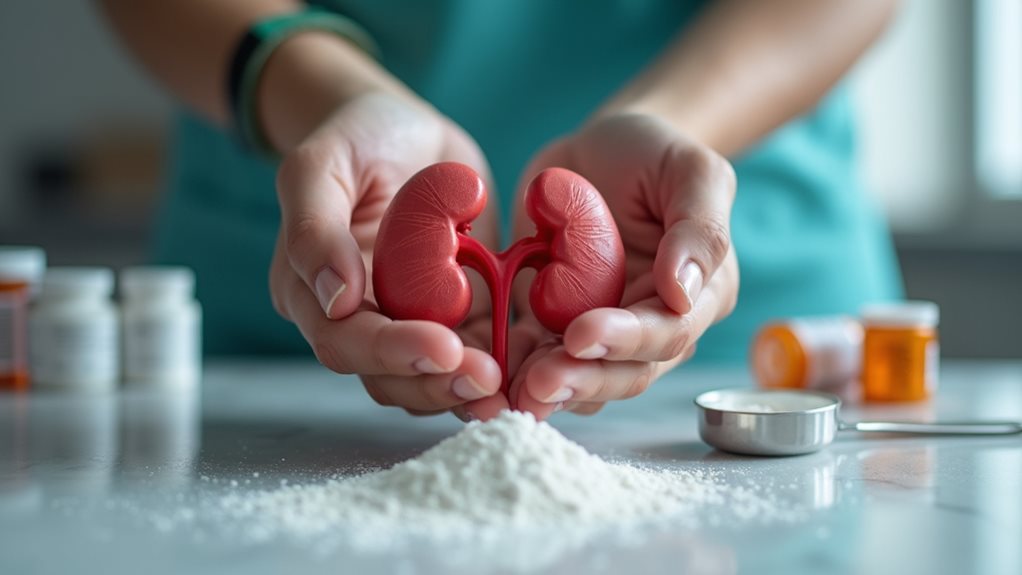
Creatine isn’t right for everyone, and certain groups should avoid it or use it only under medical supervision. You face liver risk if you have liver disease, Pregnancy caution if you’re pregnant, Teen avoidance if you’re under 18. Uncontrolled diabetes, cancer treatment, and breastfeeding advise also call for restraint, because creatine’s effects aren’t well studied in these situations, and safety remains uncertain. Consider discussing creatine use with a healthcare provider before starting, especially if you are breastfeeding, since there is limited data on its safety during lactation breastfeeding safety.
If You Have Kidney Disease
If you have chronic kidney disease, you should usually avoid creatine unless a nephrologist specifically recommends it.
Creatine supplementation can affect kidney function tests, so ongoing monitoring is essential, especially in the context of existing kidney impairment kidney function tests.
Why the Kidney Damage Myth Persists
The kidney damage myth persists because fear spreads faster than research, and isolated case reports often get more attention than large controlled studies. Media sensationalism, anecdotal bias, and social fear spread distort what you see, while correction lagging lets the story linger. Study cherry picking and confirmation bias also keep misleading claims alive, even though consensus evidence shows healthy kidneys aren’t harmed. kidney safety reinforces why cautious scrutiny and robust evidence are essential when evaluating creatine use.
How to Use Creatine Safely

For healthy people, creatine is generally used in a simple, steady pattern: 3 to 5 grams of creatine monohydrate each day, or a short loading phase of 20 to 25 grams daily for 5 to 7 days, split into four doses, followed by 3 to 5 grams daily for maintenance. Hydration tips should be followed, mix it immediately, and consider loading alternatives if you prefer skipping loading. In addition, daily creatine dosing can be adjusted based on body weight and activity goals to optimize results over time creatine dosing by weight. Use hydration tips, mix it immediately, and consider loading alternatives if you prefer skipping loading.
Frequently Asked Questions
Can Creatine Affect Kidney Test Results?
Yes, creatine can affect your kidney test results by raising serum creatinine, so you may see a false alarm on lab reports. This happens because creatine turns into creatinine, not because your kidneys fail.
Your GFR usually stays normal, and urea levels often don’t change.
To avoid hydration myths and confusion, you should tell your doctor about creatine use before testing, so they can interpret results correctly.
How Much Creatine Is Safe Daily?
You should take 3 to 5 grams of creatine daily, which fits most dosage guidelines for long-term use.
If you weigh over 200 pounds, you may need up to 10 grams daily.
Safety evidence shows 5 grams per day stays safe for 18 months, and 10 grams daily remains safe for up to 5 years.
Loading phases can reach 20 grams daily for 5 to 7 days, then return to maintenance.
Should Athletes With Kidney Disease Avoid Creatine?
Yes, if you have kidney disease, you should avoid creatine unless your doctor clears it.
The risk myths can hide real harm, because pre-existing renal disease raises the chance of dysfunction.
The dosing debate doesn’t change that.
Creatine can also lift creatinine, misleading tests and masking true decline.
If you have suboptimal kidney function, you need renal assessment, close monitoring, and individualized medical advice before any supplementation.
Does Creatine Raise Creatinine Without Harming Kidneys?
Yes, creatine can raise creatinine, but that doesn’t mean kidney damage.
You may see creatinine confusion because creatine converts to creatinine, causing a mild rise in blood tests.
Healthy kidneys usually keep working normally, and clinical trials show preserved filtration and no harm.
These kidney safety myths persist, but standard doses of 3-5 grams daily haven’t shown kidney injury in healthy users.
Why Do People Think Creatine Damages Kidneys?
You think creatine damages kidneys because misinformation spread, kidney fear, and research myths shaped public views.
Early case reports linked creatine with kidney problems, then people repeated those claims without checking later trials.
You also see creatinine rise after use, and many mistake that lab change for injury.
Clinical studies show healthy kidneys stay stable, but the myth persists because simplified headlines and cautionary stories spread faster than evidence.
And Finally
Creatine is generally safe for your kidneys if you’re healthy and use it as directed. Studies in healthy adults show no clear kidney harm, even with long-term use, though creatine can raise creatinine readings without damaging kidney tissue. If you have kidney disease, reduced kidney function, or take medicines that affect the kidneys, you should avoid creatine unless your doctor approves it. Use proper doses, stay hydrated, and monitor kidney health when needed.
References
- https://pmc.ncbi.nlm.nih.gov/articles/PMC7871530/
- https://www.medindia.net/news/healthwatch/is-creatine-bad-for-your-kidneys-separating-myths-from-facts-219065-1.htm
- https://pmc.ncbi.nlm.nih.gov/articles/PMC10054094/
- https://timesofindia.indiatimes.com/life-style/health-fitness/health-news/creatine-and-kidney-health-debunking-the-myths/photostory/124094991.cms
- https://timesofindia.indiatimes.com/life-style/health-fitness/health-news/can-creatine-damage-your-kidneys-myths-facts-and-what-you-need-to-watch-out-for/articleshow/121806343.cms
- https://www.healthline.com/nutrition/creatine-safety-and-side-effects
- https://www.mayoclinic.org/drugs-supplements-creatine/art-20347591
- https://www.livemomentous.com/blogs/all/creatine-myths
- https://www.uclahealth.org/news/article/why-everyones-talking-about-creatine
- https://pubmed.ncbi.nlm.nih.gov/30367015/