You don’t need a creatine loading phase to get results. Women can usually saturate muscle stores by taking 3 to 5 grams of creatine monohydrate daily, and full saturation typically takes about 3 to 4 weeks. Loading at 20 to 25 grams per day works faster, but it mainly shortens the timeline, not the final outcome. If you want to match your plan to your goal, the next details matter more.
Takeaways
- Women do not need a creatine loading phase; daily dosing works well for saturating muscle stores.
- Typical daily creatine dose for women is 3 to 5 grams, usually creatine monohydrate.
- Loading speeds saturation in 5 to 7 days, while daily dosing takes about 3 to 4 weeks.
- Both approaches generally provide similar end benefits; loading mainly improves speed, not final results.
- Loading can cause bloating or diarrhea, so women with digestive sensitivity may prefer steady daily dosing.
What Is the Creatine Loading Phase?
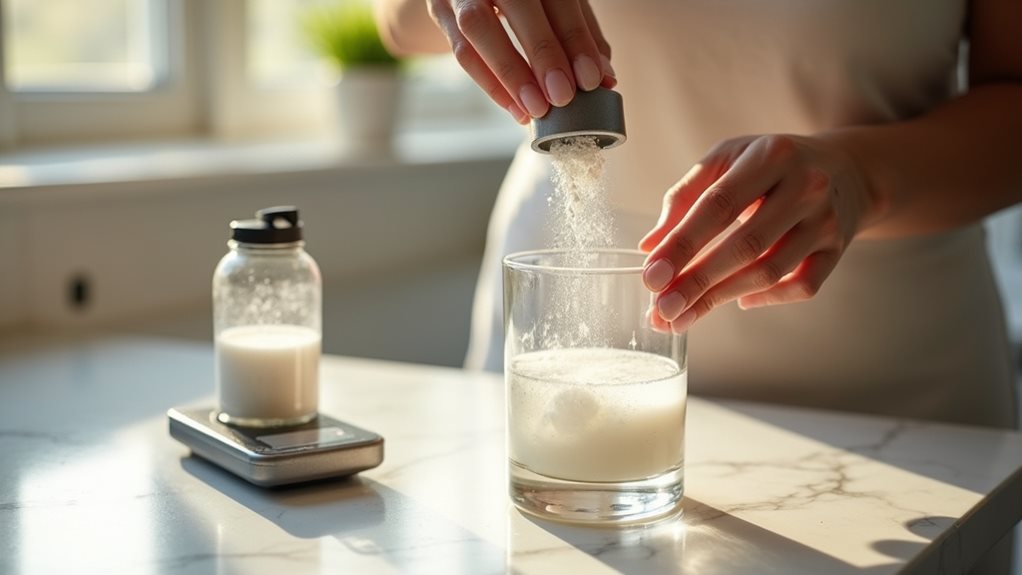
A creatine loading phase is a short-term strategy that uses higher-than-maintenance doses to fill skeletal muscle creatine stores quickly.
You take 20 to 25 grams daily, split into 4 or 5 servings, for 5 to 7 days, then switch to maintenance.
It speeds saturation, supports hydration importance, and causes water retention in muscle cells. Creatine loading is not necessary to reach creatine saturation.
It’s safe for healthy people, not required.
Research shows that in women, total daily amounts can be tailored to body weight and goals, which may help align dosing with body size and activity level. body weight-based guidance can help personalize dosing for women.
Do Women Need Creatine Loading?
Women don’t need a creatine loading phase to saturate muscle stores, because daily dosing works well on its own.
You can use 3 to 5 grams each day, and stores usually reach saturation in 3 to 4 weeks.
Women dosage myths often overstate the loading necessity debate, yet studies show equal benefits, no sex-specific dose change, and fewer digestive side effects.
Creatine monohydrate is typically recommended for easier mixing and better tolerability. For most people, a consistent daily dose supports saturation without the need for a high-load protocol, and this approach aligns with findings on comparable outcomes between genders. creatine loading and the longer saturation timeline reflect practical realities of how muscle stores accumulate over time.
Creatine Loading vs. Daily Creatine
If you want creatine to work faster, loading can raise muscle stores within 5 to 7 days, while daily dosing reaches the same result more slowly. For women, both approaches ultimately lead to similar muscle saturation over time, so choosing based on how quickly you want results or convenience makes sense. Loading is often done with 20 to 25 grams in split doses, or 3 to 5 grams daily, though the total daily amount is similar once saturation is reached. Women Creatine Myths and Dosage Timing Myths ignore that both methods end with similar saturation, loading only speeds the process. Creatine Saturation
How Fast Creatine Loading Works

When you use a creatine loading phase, your muscles can reach full saturation in about 5 to 7 days.
You take 20 to 25 grams daily, and dose splitting into four or five 5-gram servings supports absorption.
Hydration markers may rise first, then training adaptation follows.
This shorter time to effect reaches near-maximal muscle creatine faster than maintenance dosing.
Creatine loading may also support mood stability during periods of hormonal fluctuation creatine and mood.
What Happens Without Creatine Loading
Without creatine loading, you still raise muscle creatine with 3–5 g daily, but saturation happens gradually over about 4 weeks.
A gradual rise in intramuscular creatine stores supports consistent strength and power gains even without an initial loading phase, as long as daily dosing continues and training remains steady muscle creatine saturation.
You won’t lose the final benefit, because your muscles can still reach the same creatine level, just more slowly.
That slower rise means strength and power gains also build more gradually, while consistent training and daily dosing still support full results.
Gradual Muscle Saturation
By choosing a maintenance dose instead of a loading phase, you’ll still fully saturate your muscles, but the process takes longer.
With 3 to 5 grams daily, your tissues build creatine over 3 to 4 weeks, about 28 days.
This gradual approach may improve dosage tolerance and reduce water retention from a high-dose spike, while still reaching full muscle storage and support.
Slower Performance Gains
Even with creatine’s benefits, skipping a loading phase usually means slower performance gains, especially in the luteal phase of the menstrual cycle.
Your hormone sensitivity can blunt fatigue resistance, power output, and recovery, so strength adaptation progresses more slowly.
Without rapid saturation, you may see smaller gains in repeated contractions and endurance, plus longer post-exercise recovery, compared with loaded supplementation.
Creatine Doses That Work for Women
Creatine Loading Phase: Do Women Need It?
Creatine Doses That Work for Women
You can use a loading phase of 20 grams per day for 5 to 7 days, split into 4 doses, if you want faster muscle saturation.
For most women, 3 to 5 grams of creatine monohydrate daily works well, supports steady saturation, and usually reaches full effects in 3 to 4 weeks.
Take it every day with food or after a workout, because consistent intake matters more than exact timing.
A short loading phase can be used to achieve quicker muscle saturation and may be considered by those seeking faster initial gains.
Loading Phase Basics
A creatine loading phase gives women a short, higher-dose start that can saturate muscle stores faster than maintenance dosing alone. You usually take 20 grams daily for five to seven days, split into four 5-gram servings.
Hydration tips and exercise timing matter, because loading can raise creatine stores about 19% and speed results. Afterward, you can move on.
Daily Maintenance Dose
For most women, the standard maintenance dose is 3 to 5 grams of creatine monohydrate each day, and 5 grams is the most common research-based target.
You can use 3 grams if you weigh under 120 pounds, and consistency adherence matters more than cycling.
Take it daily, including rest days, follow hydration guidelines, and expect steady muscle saturation without loading.
Timing For Results
When should women take creatine for the best results? You don’t need a strict hour, because consistency timing drives saturation and performance. Take it daily with any meal, and meal pairing with protein and carbohydrates may slightly improve uptake.
Pre-workout or post-workout use works similarly, and steady intake usually produces visible gains in 3–4 weeks without loading.
Benefits Women Can Expect From Creatine
Creatine can also support cognitive function, brain health, bone integrity, metabolic health, hormonal balance, and recovery, helping you train harder and adapt more efficiently overall. Absorption differences Creatine monohydrate may offer similar cognitive and systemic benefits, with practical implications for how you structure a loading phase and ongoing maintenance.
Creatine Loading Side Effects to Watch For

During a creatine loading phase, the most common side effect is gastrointestinal distress, especially if you take large doses at once.
Watch for diarrhea, bloating, and cramping, and protect electrolyte balance with hydration tips, meal timing, and dose splitting.
Track symptoms, note red flag signs, choose product choice carefully, test form tolerance, avoid overloading, and consider preexisting GI issues.
Additionally, some individuals may experience shifts in water balance and temporary weight changes during the loading phase, so monitor hydration status electrolyte balance check.
Is Creatine Loading Safe for Women?
You can consider creatine loading safe for most healthy women, because studies show no significant rise in serious adverse events, kidney harm, or hormone disruption.
Loading doses of 20 to 25 grams per day for 5 to 7 days match maintenance dosing in overall safety, though they can cause mild water weight gain.
If you have a sensitive stomach, split the dose into smaller servings, because this can reduce temporary digestive discomfort and bloating.
Safety Considerations
Creatine loading appears safe for healthy women when they follow standard dosing, because research hasn’t linked it to serious adverse outcomes. You should still use Hydration Monitoring and review Individual Risk Factors, including kidney disease or other conditions.
FDA GRAS status and sports science reviews support short- and long-term safety.
Loading mainly shifts water into muscle cells, not organs, and standard doses remain well tolerated.
Digestive Side Effects
Digestive side effects are the main short-term concern with creatine loading for women, even though most users tolerate it well.
You may get diarrhea, stomach upset, gas, or cramping, especially with 20g doses.
Gut Distress Management means splitting servings, because Dose Splitting Benefits lower GI overload.
Taking creatine with food and water also reduces bloating, and symptoms usually pass quickly.
What Research Says About Creatine Loading
Although loading can raise muscle creatine stores quickly, the research doesn’t show that it works the same way in men.
You may see smaller gains in anaerobic performance and muscle saturation, while digestive tolerance can vary.
Many women get similar results from 3 to 5 grams daily for weeks, with hydration support and steady muscle saturation.
When Women Should Load Creatine
Women should load creatine when they need faster muscle saturation for a near-term performance goal, such as a sprint meet, powerlifting event, or rowing race within about 10 days.
Strong competition timing supports 20 to 25 grams daily, split into four or five doses, for quicker results.
If you have digestive sensitivity, skip loading and use 3 to 5 grams daily instead.
How to Start Creatine Without Loading

You don’t need a loading phase to start creatine, and a steady daily dose of 3 to 5 grams will still saturate your muscles over time.
For digestive comfort, begin with 1 to 2 grams daily, then use dosage ramping, add 1 gram every 3 to 4 days.
Split doses, take them with meals, and stay consistent.
Full saturation usually takes 3 to 4 weeks.
How to Choose the Right Creatine Plan
To choose the right creatine plan, match your dose to your goal, your timeline, and how well your stomach handles supplements.
If you want fast saturation, use a loading phase, 20 grams daily for 5 to 7 days.
If you want steady support, 3 to 5 grams daily works.
This personalization approach favors quality dosing, lowers GI distress, and fits most women.
Frequently Asked Questions
Can Creatine Loading Affect Hydration During Workouts?
Yes, creatine loading can affect hydration during workouts. You may hold more water inside muscle cells, which increases water retention and total body water. This can support performance, but you also need more fluids to preserve electrolyte balance and prevent cramps, headaches, and digestive discomfort.
Split your water intake across the day, and replace sweat losses during exercise. Pale yellow urine usually shows better hydration.
Does Loading Change Creatine Timing Around Menstrual Cycles?
No, loading doesn’t appear to change creatine timing around menstrual cycles.
Menstrual timing hasn’t shown different uptake rates, so creatine responsiveness stays similar in follicular and luteal phases.
You can load for 5 to 7 days, or take 3 to 5 g daily, and still reach saturation.
Research doesn’t support cycle-specific dosing, although high-dose loading may increase digestive side effects in some women during training and recovery phases.
Will Creatine Loading Interact With Caffeine Supplements?
Creatine loading won’t meaningfully interact with caffeine supplements for most users. Studies show you can take them together without reducing creatine uptake or strength gains, and creatine myths debunked confirm no major metabolic conflict. If caffeine upsets your stomach, split doses or take both with food, because digestive comfort can improve. Follow dosing consistency tips, since daily intake matters more than exact timing, and moderate combined use remains safe.
Can I Switch From Loading to Maintenance Midweek?
Yes, you can switch from loading to maintenance midweek.
This loading schedule flexibility is safe, and a midweek changeover won’t reduce muscle saturation.
Your maintenance phase timing can start immediately, and you don’t need a taper.
Lower dosing often reduces bloating, improves adherence considerations, and still reaches the same final creatine levels.
Consistency matters more than the exact day you change doses, because stores stay raised after the switch.
Does Creatine Loading Work Differently With Plant-Based Diets?
Yes, creatine loading works similarly, but you’ll often see a stronger plant based response because your baseline muscle stores are lower.
This means creatine absorption fills a bigger gap, so saturation rises faster during a 20-gram daily loading phase.
If you follow a maintenance dose, you’ll still reach full stores, just more slowly, in about 3 to 4 weeks.
Consistency matters most, not diet type, for lasting saturation.
And Finally
You don’t have to load creatine to get results, but loading can raise muscle stores faster. If you want quicker saturation, a loading phase followed by daily maintenance can work well. If you prefer a simpler approach, a smaller daily dose also builds levels over time. Women can use either method, depending on your goals, schedule, and stomach tolerance. The best plan is the one you can follow consistently, because regular intake drives the long-term benefit.
References
- https://www.herbalife.com/en-us/wellness-resources/articles/creatine-women
- https://www.healthline.com/nutrition/creatine-loading-phase
- https://www.parsleyhealth.com/blog/creatine-for-women
- https://www.bubsnaturals.com/blogs/creatine-and-fitness/should-women-do-a-loading-phase-of-creatine-for-best-results
- https://health.clevelandclinic.org/creatine-loading-phase
- https://draxe.com/nutrition/creatine-loading-phase/
- https://www.tandfonline.com/doi/full/10.1080/15502783.2025.2502094
- https://www.wellvia.uk/post/evidence-based-creatine-dosing-guidance-for-women
- https://formnutrition.com/us/inform/ask-dr-adam-creatine-for-women-what-you-need-to-know/
- https://pmc.ncbi.nlm.nih.gov/articles/PMC7998865/