For most women, you’ll get the best results with 3 to 5 grams of creatine monohydrate daily. A steady 5-gram dose works well for many, while 3 grams may suit lighter users. You can take it before or after training, but consistency matters more than timing, and rest days count too. Loading isn’t required, since daily use builds saturation in about 3 to 4 weeks, and higher doses may increase stomach upset, though more details follow.
Takeaways
- Most women do well with 3–5 grams of creatine monohydrate daily for maintenance and muscle saturation.
- 5 grams daily is the most studied dose, while 3 grams may suit lighter women.
- Creatine works best with daily consistency; timing matters less than taking it every day.
- A loading phase isn’t required, but 20–25 grams daily for 5–7 days can speed saturation.
- Creatine monohydrate is the best-studied form, and healthy adults generally tolerate 3–5 grams safely.
How Much Creatine Should Women Take?
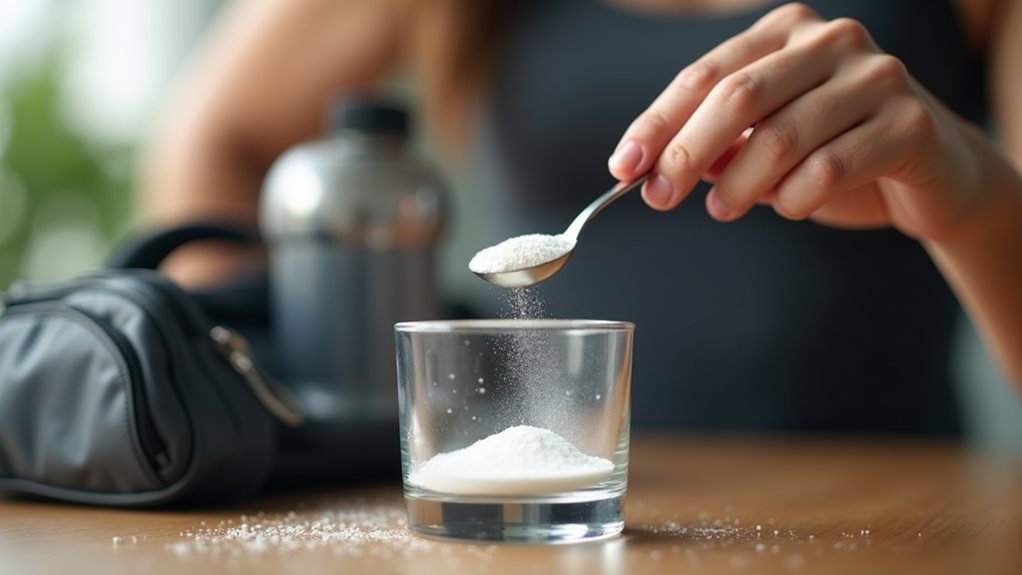
For most women, 3 to 5 grams of creatine per day is the standard maintenance dose, and clinical studies support that range for muscle saturation. You should prioritize dosing consistency, because daily intake drives results. Many women use 5 grams once daily, and 3 grams may suit lighter users. Follow Hydration tips, since enough water lowers side effects and supports tolerability. Women may also benefit from a lifespan lens because creatine needs and responses can shift during menstruation, pregnancy, postpartum, and menopause.
What’s the Best Creatine Dose by Body Weight?
Body weight helps set a more precise creatine dose, especially when you want to match intake to your size and training load. Divide pounds by 2.2, then use 0.3 g/kg for loading and 0.03 g/kg for maintenance. Most women do well with 3 grams, while heavier lifters may need 5 grams. Hydration Considerations and GI Tolerance Options matter. Weight-based dosing can be especially useful because creatine is stored mainly in skeletal muscle, so larger or more muscular bodies often have a bigger total creatine pool and turnover. Creatine timing may also influence how this dose interacts with workouts, but the practical takeaway remains that dosing should align with body size and training load for optimal results. Creatine timing considerations—morning, pre-, or post-workout—can fit different routines without changing the total daily amount.
How Much Creatine Do You Need for Muscle Saturation?
You’ll usually reach muscle saturation with 3 to 5 grams of creatine monohydrate each day, and 5 grams is the most studied dose for most women. A short-term loading approach of 20 to 25 grams daily for 5 to 7 days can rapidly saturate stores, after which you drop to a maintenance dose to keep saturation. For weight-based guidance, about 0.03 g per kg of body mass helps maintain saturated stores, and larger or highly muscular women may need up to 8 grams. A loading phase is not strictly necessary, but it can shorten the time to saturation for some individuals and may improve early muscular benefits loading protocol while skipping straight to maintenance offers a simpler routine with similar long-term saturation outcomes.
Standard Maintenance Dose
The standard maintenance dose for creatine saturation in women is 3 to 5 grams per day.
You’ll reach muscle saturation in 3 to 4 weeks without loading.
Timing vs consistency matters less than daily use, because steady intake builds stores.
Individualized dosing needs often start at 3 grams, and 3 to 5 grams stays safe, effective, and well tolerated.
Weight-Based Dosing Guide
For muscle saturation, creatine dose should match body weight, because larger bodies and higher training loads usually need more.
How to measure starts with kilograms, then use weight calculation methods: multiply by 0.03 for maintenance, or 0.1 for higher needs.
Round to a practical serving size, track intake accurately daily.
Most women need 3 to 5 grams, heavier lifters 5 to 10.
Loading Phase Option
A loading phase can fill muscle creatine stores faster, and most people use 20 grams per day for 5 to 7 days.
You can split it into four 5-gram doses, spaced about four hours apart, to improve absorption and reduce stomach upset.
Pay attention to hydration timing and food intake.
These cycling protocols aren’t required, but they can speed saturation.
Should Women Do a Creatine Loading Phase?
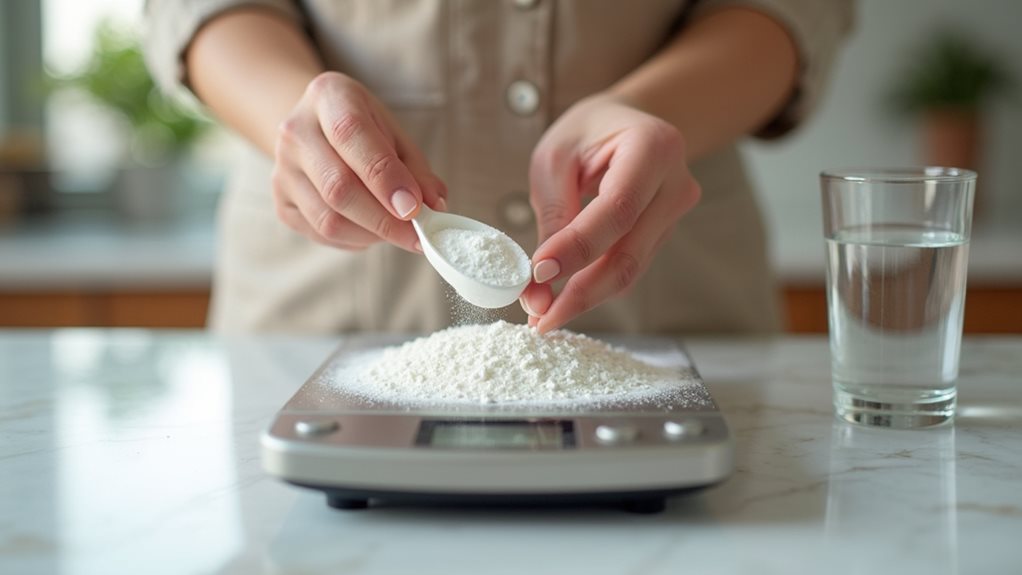
In most cases, women don’t need a creatine loading phase, because a daily 3 to 5 gram dose can still saturate muscles over 3 to 4 weeks. Energy production during resistance exercise can be enhanced more quickly with a loading approach, but it’s not necessary for long-term performance gains. Choose loading only for event timing, if you want faster saturation, and your dosing tolerance is good. Skip it if digestion sensitivity is an issue, or if water retention feels unacceptable.
Can Creatine Help Brain Health and Mood?
Creatine may also support brain health and mood, not just muscle performance.
Clinical evidence shows it can improve memory, executive function, and stress resilience.
It raises brain phosphocreatine, which supports energy metabolism in mood-linked regions.
Studies also show lower depressive symptoms and meaningful BDNF changes.
Mood biomarkers improve alongside these shifts, especially when you’re under sleep loss, mental fatigue, or other stressors.
Brain energy metabolism supports neural efficiency and may help sustain cognitive performance during fatigue.
Is Creatine Safe for Daily Use?
You can take creatine daily at standard doses of 3 to 5 grams, and major medical groups consider creatine monohydrate safe for healthy adults. It doesn’t damage healthy kidneys, although you should talk to a clinician first if you have kidney disease or other renal concerns. In healthy individuals, long-term use has shown no evidence of kidney damage in multiple studies, including people who take it regularly over extended periods, kidney function remains within normal ranges.
Daily Use Safety
When taken daily at recommended doses, creatine is considered safe for healthy adults, and research supports this across short-term and long-term use.
You can use it for years without toxicity, and side effects stay rare at 3 to 5 grams.
Bloodwork monitoring, renal function checks, and consistent daily intake help confirm safety for women, including older women, without timing concerns.
Kidney Health Cautions
For healthy women, daily creatine use at standard doses doesn’t appear to harm the kidneys, and studies show no meaningful change in glomerular filtration rate or plasma urea.
If you have kidney disease, your Dialysis risk is higher, so get Lab monitoring first.
Pregnant caution matters, and you should follow Hydration guidance.
Healthy users usually don’t need concern beyond routine testing.
Long-Term Tolerance
In healthy adults, creatine shows strong long-term tolerance, and large reviews have found no deaths or serious adverse outcomes across more than 650 studies.
You can use 3–5 grams daily, avoid loading, and expect stable safety markers.
GI tolerance tips, lower doses with meals, reduce upset, and water weight expectations usually mean 1–2 kg of muscle water, not fat.
When Should You Take Creatine?

Consistency matters more than exact timing, so you should take creatine daily at a time you can keep reliably. Creatine timing consistency supports muscle saturation, and pre vs post benefits matter less than regular use. You can take it before training, after training, or on rest days. Some evidence favors post-workout intake, but your routine and daily adherence drive long-term results. A steady daily dose helps maintain elevated muscle creatine stores, which supports repeated high-intensity efforts over time. timing
Why Creatine Monohydrate Is the Best Choice
Creatine monohydrate is the best choice because it has the strongest research support, the highest level of testing in humans, and the most consistent results for muscle saturation.
Additionally, cretaine monohydrate has undergone extensive real-world evaluation across diverse populations, reinforcing its reliability and safety for long-term use. human studies
Who May Need a Higher Creatine Dose?
Some women may need more than the standard 3 to 5 grams per day because creatine needs change with the goal and the tissue involved. If you want brain support, you may need 15 to 20 grams briefly, then 5 to 10 grams. Lower muscle stores, menopause, and recovery can justify higher doses, while dosage adherence, bloating management, hydration strategy, and Creatine contraindications still matter. Brain health considerations during perimenopause may benefit from a brief higher loading phase to support cognition and mood short-term brain support.
How to Pair Creatine With Strength Training

When you pair creatine with strength training, post-workout intake usually works best, because it supports muscle saturation more effectively than pre-workout use.
For pre workout collaboration, save 3–5 grams within 30 minutes after lifting.
Keep dose timing daily, add carbohydrate pairing with 50–100 grams, and use protein pairing with 20–30 grams, improving uptake, recovery, and strength.
Common Creatine Mistakes Women Make
You need to take creatine every day, because skipping doses slows muscle saturation and weakens results.
You also shouldn’t overcomplicate the dose, 3 to 5 grams daily works for most women, and higher amounts can raise the risk of stomach upset.
Choosing the wrong form can also hurt consistency, so creatine monohydrate remains the most studied and reliable option.
Skipping Daily Consistency
Daily creatine consistency is the main reason women see results or miss them entirely.
You need 3 to 5 grams every day, because habit adherence builds saturation in 3 to 4 weeks.
Rest day dosing matters, consistent timing helps, and reminder strategies prevent missed doses.
A post workout routine can anchor use, while skipping days quickly lowers muscle stores and performance.
Overcomplicating The Dose
Many women overcomplicate creatine by chasing loading phases, but most don’t need them to reach full muscle saturation.
You can use 3 to 5 grams daily, and steady intake supports GI distress prevention, hydration support, and simpler adherence.
Ignore dose timing myths, and adjust for individual variability, because body size and goals change needs.
Higher loading only speeds results, it doesn’t improve them.
Choosing The Wrong Form
When choosing creatine, form matters less than quality, and creatine monohydrate remains the only option with extensive third-party validation for women.
You should prioritize Purity testing and banned substance screening, because NSF, USP, or Informed Choice help verify safety.
Micronized monohydrate improves solubility comfort and supports GI intolerance management, while HCL, ethyl ester, and buffered forms lack better results or proven absorption.
Frequently Asked Questions
Can Creatine Be Taken With Coffee or Caffeine?
Yes, you can take creatine with coffee or caffeine. Research shows no meaningful drop in absorption, strength gains, or recovery when you combine them.
Creatine with caffeine timing doesn’t change results, and hydration effects stay similar in healthy adults.
You should still drink enough water, because caffeine can raise fluid loss slightly during hard exercise. A daily creatine dose of 3 to 5 grams works well with coffee or tea.
Does Creatine Cause Water Retention in Women?
Yes, creatine can cause temporary water retention in women, but it usually stays inside muscle cells, not under the skin.
You may see 0.5–1.5 kg of weight gain early on, and it often fades within 1–2 weeks.
Bloating myths overstate the risk, because standard doses rarely cause visible swelling.
Good electrolyte balance and steady hydration help limit discomfort and support normal fluid control during supplementation.
Should Creatine Be Taken on Rest Days Too?
Yes, you should take creatine on rest days too. Daily use keeps muscle stores saturated, and skipping rest days can lower levels over time.
Take your usual dose of 3 to 5 grams, or follow body-weight guidance, because consistency matters more than workout timing.
This also supports hydration strategies and preserves timing flexibility, since creatine works best when you maintain steady intake every day, including non-training days.
Can Creatine Affect Menstrual Cycle Symptoms?
Creatine usually doesn’t affect menstrual cycle symptoms, because studies show it doesn’t change estrogen or progesterone levels.
You can keep your usual dosage timing, since cycle phases don’t require adjustment.
It also doesn’t support menstrual cramp relief, and dehydration myths about creatine worsening symptoms aren’t backed by evidence.
If you have PCOS, endometriosis, or irregular bleeding, standard use appears safe, but you should still ask a clinician for guidance.
How Long Does It Take to Notice Creatine Benefits?
You’ll usually notice creatine benefits within 7 to 28 days.
A loading phase can trigger initial changes in about one week, with faster strength gains and muscle fullness.
If you skip loading, daily 3 to 5 gram doses still saturate muscle stores, but results often show after 3 to 4 weeks.
Your body weight, training frequency, and protein intake can also speed or delay the response.
And Finally
You don’t need a complicated creatine plan to see results. Most women do well with 3 to 5 grams of creatine monohydrate daily, and larger women or hard trainers may need more. A loading phase isn’t required, but it can speed up muscle saturation. Take creatine consistently, pair it with strength training, and choose a plain monohydrate product. Avoid skipping doses, and monitor how your body responds over time.
References
- https://pmc.ncbi.nlm.nih.gov/articles/PMC7998865/
- https://www.wellvia.uk/post/evidence-based-creatine-dosing-guidance-for-women
- https://www.thorne.com/take-5-daily/article/creatine-an-overlooked-nutrient-over-a-womans-health-span
- https://www.youtube.com/watch?v=DXCIdKT3UYY
- https://www.womenshealthmag.com/fitness/a44716483/creatine-for-women/
- https://repfitness.com/blogs/lifestyle/should-women-take-creatine
- https://www.bubsnaturals.com/blogs/creatine-and-fitness/how-much-creatine-can-a-woman-take-a-day-for-best-results
- https://stephswarts.com/creatine-dosage-for-women/
- https://www.drstacysims.com/newsletters/articles/posts/creatine-guide-for-active-women
- https://www.joinmidi.com/post/creatine-for-women