
Creatine monohydrate is the most proven form for muscle growth and performance, with extensive scientific support for increasing strength, lean mass, and high-intensity output. Creatine HCl dissolves better in water but offers no evidence of superior absorption, muscle retention, or effectiveness. Both forms are safe when used properly, but monohydrate is more affordable and widely available. If you want to maximize results, stick with monohydrate, and you can investigate further details as you continue.
Takeaways
- Creatine monohydrate has the strongest scientific support for muscle growth and performance benefits, with extensive research backing its effectiveness.
- Creatine HCl is more soluble but does not offer proven advantages in muscle retention or strength over monohydrate.
- Both forms have similar bioavailability and absorption; formulation differences mainly affect taste and user preference.
- Monohydrate is more cost-effective and widely available, making it the preferred choice for most users.
- Overall, creatine monohydrate is recommended for muscle growth and performance due to its proven efficacy and safety.
What Is Creatine and Why Is It Popular for Muscle Growth?
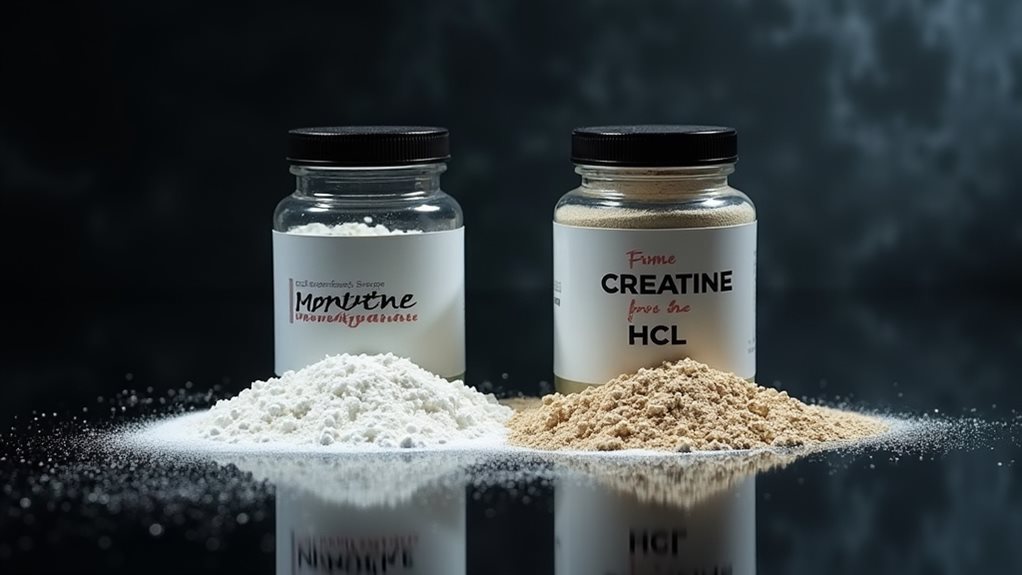
Creatine is a naturally occurring compound made from amino acids. It is stored mainly in skeletal muscle as phosphocreatine, where it helps quickly regenerate ATP during short, intense activities. It’s obtained from dietary sources like meat and fish. Supplement timing—taking it before or after workouts—can optimize muscle creatine levels, supporting strength, power, and muscle growth. Creatine supplementation can help maintain energy availability during high-intensity efforts aligned with dietary sources, promoting consistent performance across training sessions.
How Do Creatine Monohydrate and Creatine Hcl Differ in Composition?
The composition differences influence how each compound behaves, with HCl being more water-soluble due to its attached chloride ion. daily consistency is essential for achieving saturation and performance benefits regardless of the form.
Which Creatine Form Has the Strongest Evidence for Increasing Muscle Mass?
Creatine monohydrate has the strongest evidence for increasing muscle mass, supported by numerous studies and systematic reviews. It consistently shows gains in lean body mass and muscle size during resistance training, with measurable results over time. Additionally, creatine supplementation has been associated with improved cognitive performance in some cases and supports energy availability during high-intensity efforts. sleep disruption and its effects on performance are important considerations for athletes, including those who train with irregular schedules, as fatigue and reduced focus can influence training quality.
Evidence Supporting Monohydrate
What makes creatine monohydrate stand out as the most supported option for increasing muscle mass is the extensive evidence base, including numerous studies and meta-analyses.
It consistently shows significant gains in lean mass, fat-free mass, and total body mass when paired with resistance training.
Supplement timing and training cooperation enhance these effects, making monohydrate the most reliable choice.
Comparative Effectiveness Data
Extensive research shows that creatine monohydrate has the strongest overall evidence for increasing muscle mass.
Formulation differences, such as taste preferences, influence user choice, but studies consistently find no data proving HCL is more effective.
The evidence indicates monohydrate provides reliable muscle and strength gains, with no clear advantage for alternative forms like HCL regarding efficacy or tissue creatine content.
Does Creatine Hcl Absorb Better Than Monohydrate?
Although creatine HCl is more soluble in water than creatine monohydrate, this solubility advantage doesn’t mean it’s absorbed better by the human body. Studies show no evidence that creatine HCl improves gastrointestinal tolerability, muscle retention, or performance more than monohydrate. Higher solubility doesn’t translate to markedly better absorption or muscle growth outcomes. Research indicates that the overall bioavailability of creatine remains similar regardless of the form used.
How Should You Dose Creatine Monohydrate and Hcl for Best Results?
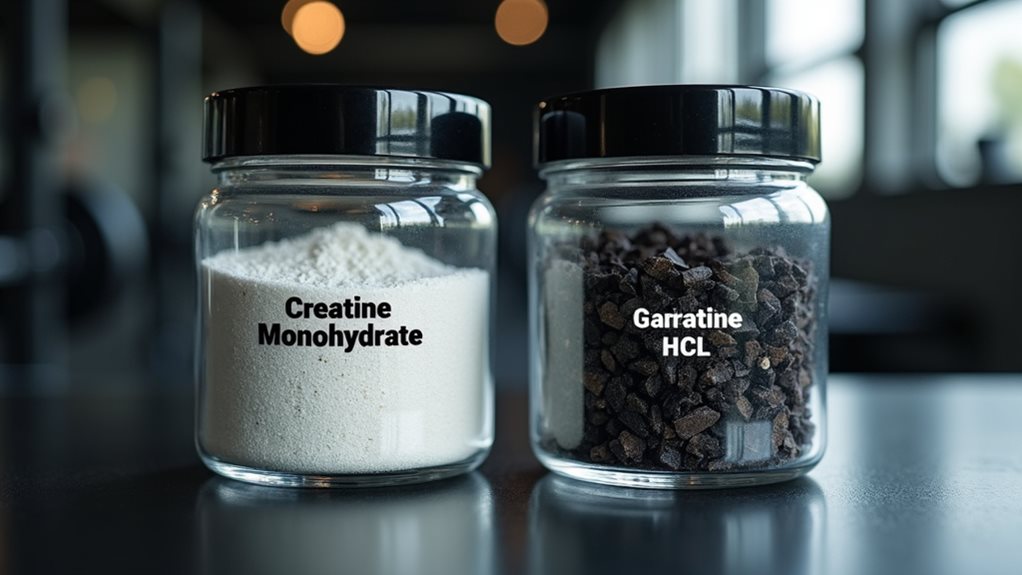
Effective creatine dosing involves following standard protocols, such as a loading phase of 0.3 g/kg/day for 5–7 days.
This can be followed by a maintenance dose of 3–5 g daily, which enhances muscle saturation quickly.
Skipping loading and taking 3–5 g daily over several weeks also produces results, though it takes longer to reach full saturation.
For best outcomes, maintaining consistent daily intake is essential, with timing being less critical than regular use over time.
Loading may speed up saturation but does not change the final saturation level compared to steady daily dosing, which is supported by research. Creatine loading
Standard Dosing Protocols
To achieve ideal results from creatine supplementation, it’s important to follow established dosing protocols based on the type of creatine used.
Creatine monohydrate is typically taken at 3–5 grams daily, with consistent intake supporting muscle saturation, regardless of timing.
HCl doses are lower, around 1–2 grams, but evidence is limited.
Packaging sustainability and flavor options influence user preference but don’t alter dosing requirements.
Loading Phase Benefits
Loading phases are designed to quickly increase muscle creatine stores, which enhances performance during high-intensity exercises. This method provides faster saturation, leading to earlier ergogenic effects, especially useful for short-term supplementation or immediate training needs.
Proper supplement timing during loading can optimize results, and individuals with dietary restrictions may prefer monohydrate due to its extensive research and established dosing protocols.
Maintenance Strategies
Maintaining heightened muscle creatine levels after initial saturation requires consistent daily dosing, which helps preserve performance benefits and optimize creatine storage.
Supplement timing matters less than daily intake; taking 3–5 g of creatine monohydrate or smaller doses of HCL each day sustains muscle saturation.
Regular, daily use guarantees long-term muscle performance improvements.
Are There Safety Concerns or Side Effects Unique to Creatine Monohydrate or Hcl?
While creatine monohydrate is well-studied and generally considered safe, there are fewer safety concerns associated with it compared to creatine HCL. In postpartum contexts, monitoring for hydration needs is important because creatine can raise hydration requirements by pulling water into muscle cells, which supports overall safety when dosing is within recommended ranges. Breastfeeding safety remains uncertain, so medical guidance is advised if nursing.
What Do Performance Studies Say About Creatine for Strength and Power?
Creatine metabolism supports increased ATP production, enhancing high-intensity efforts. Elemental magnesium is not relevant here, but the forms of creatine matter for absorption and performance despite both improving strength when combined with resistance training.
Can Creatine Hcl Be Taken in Smaller Doses Than Monohydrate?
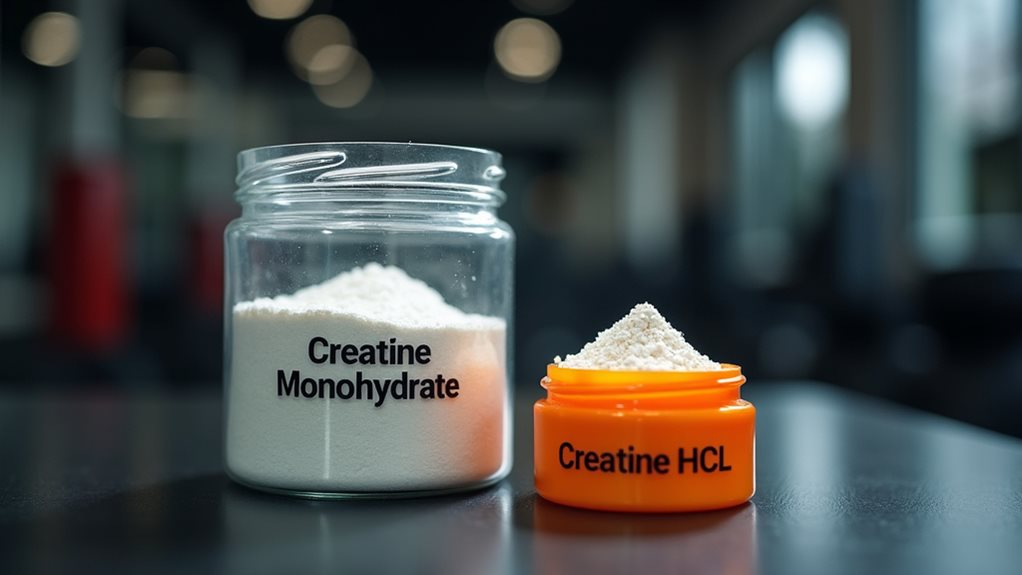
Creatine HCL is often marketed as a supplement that can be taken in smaller doses than creatine monohydrate.
Creatine monohydrate typically requires 3–5 grams daily for maintenance.
Due to absorption differences, HCL’s higher solubility allows doses of around 1–2 grams.
However, evidence doesn’t confirm these smaller doses fully saturate muscles like monohydrate does. Higher CFU counts don’t directly translate to better effectiveness for creatine supplements, and more isn’t always better for muscle saturation or performance. Clinical uptake
Which Creatine Is Better for Beginners and Athletes?
Choosing the best form of creatine depends on your experience level and training goals.
Creatine monohydrate is recommended for beginners because of its strong research support, simple dosing, and broad availability.
For athletes, monohydrate remains preferable due to extensive evidence.
Supplements interactions and storage considerations favor monohydrate, which is stable, easy to store, and compatible with most supplement routines.
Creatine monohydrate has the most robust body of research behind it, including consistent findings on strength and muscle gains scientific evidence and proven effectiveness across diverse populations.
How Do Cost and Availability Affect Your Choice of Creatine?
Cost and availability are important factors that influence your choice of creatine because they determine how easily and affordably you can maintain your supplement routine.
Cost considerations show that monohydrate is generally cheaper per serving, offering better value.
Availability impact indicates that monohydrate is widely stocked in stores, making it easier to replace quickly, unlike HCL, which has limited options.
Is There Evidence That Creatine Hcl Outperforms Monohydrate?
Although creatine HCL is marketed as a potentially more effective supplement, current research doesn’t support that it outperforms monohydrate.
Studies show both forms have similar creatine absorption, with no evidence that HCL promotes greater muscle retention.
Regarding supplement safety, both are considered safe, but no conclusive evidence indicates HCL’s superiority over monohydrate in effectiveness.
Which Creatine Supplement Is Best for Muscle Growth and Athletic Performance?
For muscle growth and athletic performance, creatine monohydrate is the most effective and well-studied option, with strong evidence supporting its benefits. It improves muscle hypertrophy, strength, and high-intensity exercise capacity, making it the preferred choice for most users.
While creatine HCL dissolves more easily, current research shows no clear advantage over monohydrate in absorption or overall results.
Effectiveness in Muscle Building
When comparing creatine supplements for muscle building, creatine monohydrate has the strongest research backing for increasing muscle mass, strength, and high-intensity performance.
It supports muscle recovery and influences hydration effects, which can improve performance and reduce injury risk.
Although creatine HCL shows some benefits, the evidence remains limited, making monohydrate the preferred choice for effective muscle growth.
Absorption and Dosing Efficiency
Which creatine supplement offers the best absorption and dosing efficiency for muscle growth and athletic performance?
Absorption myths and dosing misconceptions often suggest HCl is superior due to higher solubility, but human studies show creatine monohydrate is about 100% bioavailable.
No evidence confirms lower doses of HCl match monohydrate’s effectiveness, making monohydrate the more reliable choice for absorption and dosing efficiency.
Frequently Asked Questions
Can Creatine Supplementation Cause Long-Term Health Issues?
Creatine supplementation doesn’t generally cause long-term health issues in healthy individuals.
Potential kidney concerns are minimal when taken at recommended doses, but those with pre-existing kidney problems should consult a healthcare professional.
Long-term safety considerations show that creatine is safe for up to several years at moderate doses.
However, very high doses lack extensive safety data, and people with kidney or liver conditions need close monitoring to prevent possible complications.
Is Creatine HCL More Effective for Vegetarians or Vegans?
Creatine HCL doesn’t appear more effective than monohydrate for vegetarians or vegans.
Vegetarian absorption of creatine is typically lower due to reduced dietary intake, making supplementation beneficial.
Vegan alternatives, like creatine monohydrate, effectively increase muscle creatine stores in plant-based diets.
Current research shows no clear advantage of HCL over monohydrate in improving muscle gains or performance, making monohydrate the preferred choice for plant-based athletes.
How Quickly Can I See Results From Creatine Supplementation?
You can see initial results from creatine supplementation within 5–7 days when using a loading phase, improving muscle endurance and mental focus.
Without loading, it takes about 3–4 weeks for muscle saturation, with gradual enhancements in performance, endurance, and focus.
Consistent intake and training are essential for noticeable strength gains and muscle growth, as these effects depend on time under resistance and the total dose consumed.
Are There Differences in Taste or Mixability Between Creatine Forms?
Creatine HCL offers better mixability due to its high solubility, dissolving quickly and leaving little residue.
In contrast, creatine monohydrate has a milder taste but tends to be gritty and may require thorough mixing to avoid sediment.
The taste comparison shows monohydrate is neutral or mildly bitter, while HCL has a tangy, sour flavor that’s more noticeable in plain water.
Does Creatine Supplementation Impact Hydration Levels or Electrolyte Balance?
Creatine supplementation generally doesn’t impact hydration levels or electrolyte balance in healthy individuals. It can cause short-term water retention, mainly intracellular, without causing dehydration or electrolyte imbalances.
Controlled studies show no significant changes in key electrolytes such as sodium, potassium, or calcium.
Proper hydration remains important during intense training, but creatine’s effects on hydration and electrolytes are minimal, and it doesn’t pose a risk of dehydration or imbalance when used appropriately.
And Finally
Choosing between creatine monohydrate and creatine Hcl depends on your goals and preferences. Monohydrate has the strongest evidence for muscle growth and is cost-effective, making it suitable for most users. Hcl is absorbed more quickly, which may benefit those seeking faster results or experiencing gastrointestinal issues. Both forms are effective when dosed correctly, but monohydrate remains the standard due to extensive research supporting its efficacy and safety.
References
- https://pmc.ncbi.nlm.nih.gov/articles/PMC12702719/
- https://www.opss.org/article/creatine-monohydrate-dietary-supplement-performance
- https://ods.od.nih.gov/factsheets/ExerciseAndAthleticPerformance-HealthProfessional/
- https://www.tandfonline.com/doi/full/10.1186/1550-2783-4-6
- https://my.clevelandclinic.org/health/treatments/17674-creatine
- https://pmc.ncbi.nlm.nih.gov/articles/PMC11629957/
- https://file.scirp.org/pdf/FNS_2015122815333061.pdf
- https://www.tandfonline.com/doi/full/10.1080/15502783.2025.2533658
- https://pmc.ncbi.nlm.nih.gov/articles/PMC12053822/
- https://ubiehealth.com/doctors-note/creatine-monohydrate-safety-truth-medical-next-8923e2
Pingback: Night Shift Focus: Caffeine, Melatonin, and Sleep
Pingback: Sleep Support Supplements for Tired Parents