Refrigerated probiotics require cold storage to maintain strain viability, while shelf-stable types are designed to withstand room temperature, making them easier to handle and store. Storage conditions, such as heat, moisture, and light exposure, directly affect probiotic effectiveness, with improper handling reducing their health benefits. Certain strains are more stable at room temperature, and formulation techniques like microencapsulation enhance durability. Proper packaging and logistics preserve probiotic quality during shipping. Maintaining ideal storage conditions maximizes potency; further considerations can optimize your probiotic use.
Takeaways
- Refrigerated probiotics typically contain heat-sensitive strains requiring cold storage for optimal viability.
- Shelf-stable probiotics are formulated to withstand room temperature, maintaining effectiveness without refrigeration.
- Proper packaging and formulation techniques enhance stability for both refrigerated and shelf-stable products.
- Storage conditions and handling impact probiotic potency more than whether they are refrigerated or shelf-stable.
- Choosing the right type depends on usage, storage convenience, and specific strain stability requirements.
Refrigerated vs. Shelf-Stable Probiotics: Which Storage Method Is Right for You?
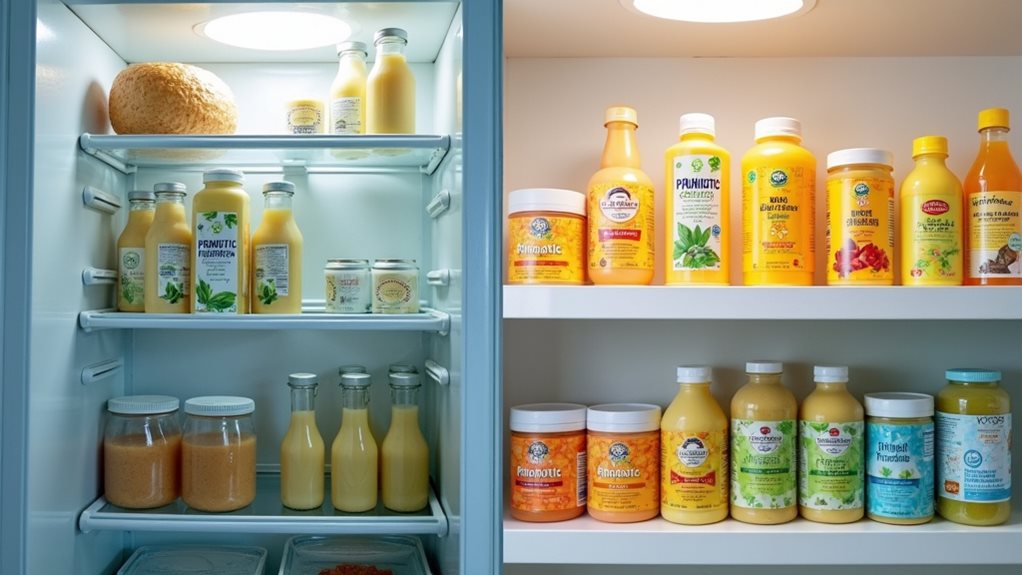
Choosing between refrigerated and shelf-stable probiotics depends on factors like storage requirements, convenience, and formulation.
Probiotic branding influences packaging innovations, ensuring products meet handling needs.
Refrigerated options require cold storage, while shelf-stable products are designed for room temperature.
Proper packaging innovations help maintain viability, but storage method reflects formulation and handling, not necessarily quality.
Proper storage and handling are essential to ensure probiotics remain effective until consumption, regardless of their storage method.
How Storage Conditions Impact Probiotic Potency and Effectiveness
Storage conditions markedly affect probiotic potency, as temperature fluctuations can cause live microorganisms to die or lose effectiveness. Different strains and formulations vary in resilience, with some tolerating room temperature while others require refrigeration to maintain viability. Proper storage is essential to ensure probiotics retain their potency over time. Over time, exposure to heat, moisture, and light can degrade probiotics, reducing their health benefits regardless of how they’re stored. A 1-4 word phrase linked concept: strain resilience can influence whether a product remains viable at higher temperatures.
Impact of Temperature Fluctuations
Temperature fluctuations can considerably reduce the viability of probiotics over time, affecting their potency and effectiveness. Variations in temperature impact microbial diversity, decreasing the number of live organisms.
Packaging materials can influence this stability by protecting against oxygen and moisture, but inconsistent storage conditions still cause significant log reductions, especially at warmer or fluctuating temperatures, compromising probiotic quality.
Strain and Formulation Resilience
The resilience of probiotic strains and their formulations substantially influences how well they retain potency during storage. Genetic diversity determines resistance to heat, acid, and other stresses, affecting survival.
Consumers prefer products with stable viability, which depends on strain selection and formulation methods such as encapsulation, freeze-drying, or moisture control. These factors guarantee effective doses are maintained over time.
Storage Duration Effects
Probiotics naturally lose viability over time, even when stored under ideal conditions, which can reduce their effectiveness.
Probiotic degradation occurs due to storage environments, with temperature and humidity playing critical roles.
Heat accelerates potency loss, while moisture promotes microbial breakdown.
Proper storage duration, especially after opening, is essential to maintain probiotic potency and prevent decreased efficacy.
Which Probiotic Strains Are Best Suited for Refrigeration or Shelf Stability?
Certain probiotic strains, such as Lactobacillus rhamnosus GG and Lactobacillus acidophilus, require refrigeration because they’re sensitive to heat and moisture, which can reduce their viability.
In contrast, spores like Bacillus coagulans and Bacillus subtilis are more stable at room temperature due to their resistance to environmental stresses.
Formulation techniques, including microencapsulation and lyophilization, also influence whether a probiotic can maintain potency without refrigeration.
A storage stability attribute helps determine whether a product can be kept at room temperature without compromising potency.
Strain Resistance to Heat
Since heat resistance varies among probiotic strains, understanding which are best suited for storage conditions is essential.
Genetic adaptation influences thermal thresholds, with spore-forming bacteria like Bacillus tolerating higher temperatures due to their resistant cellular structure.
These strains maintain viability at increased temperatures, making them suitable for shelf stability, while more fragile strains, such as certain bifidobacteria, require refrigeration.
Stability of Bifidobacteria
What makes the stability of Bifidobacteria particularly challenging? Their vulnerability to storage stress stems from their sensitivity during probiotic fermentation and the storage environment.
Refrigeration at about 4–5°C helps slow viability loss, improving survival. However, shelf-stable formulations require specific strain characteristics and process optimization, as not all Bifidobacteria withstand ambient storage equally.
Formulation Techniques Impact
The formulation techniques used in probiotic products markedly influence whether strains are suited for refrigeration or shelf stability. Probiotic fermentation impacts strain resilience.
While packaging innovations, such as microencapsulation and advanced carriers, protect cells from oxygen, heat, and light. These methods enhance shelf life for spore-formers and stress-tolerant strains, supporting stable, room-temperature storage.
Does Shipping and Handling Affect the Quality of Refrigerated Probiotics?
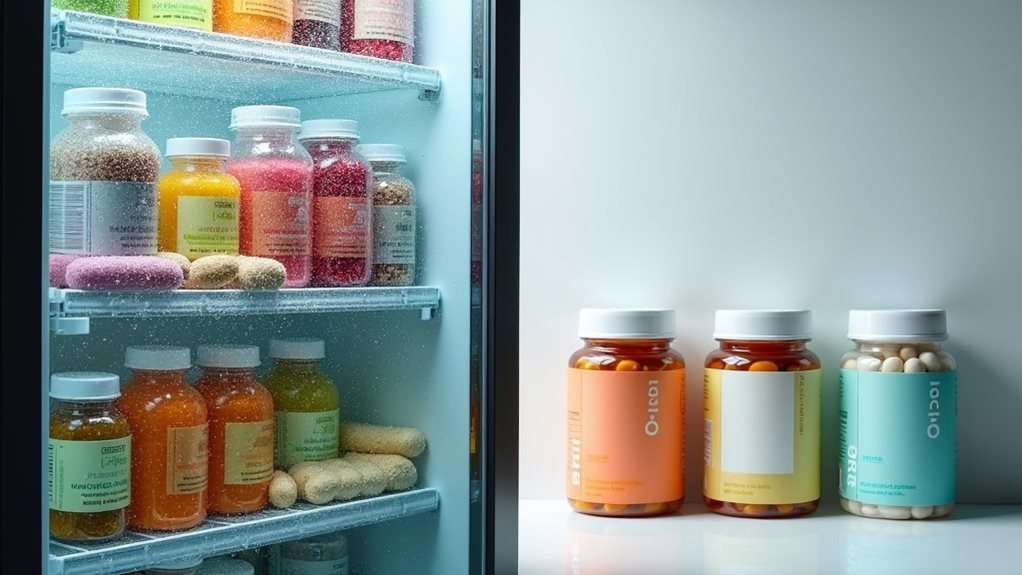
Shipping and handling can considerably impact the quality of refrigerated probiotics, especially since temperature fluctuations during transit often cause viability loss.
Packaging design and shipping logistics are critical; insulated packaging, cold packs, and temperature sensors help protect probiotics from heat exposure.
Moisture control and proper transit conditions are essential to maintain probiotic potency during delivery.
New findings in probiotic safety emphasize that simultaneous use with certain supplements may require timing considerations to preserve viability of the strains probiotic viability and ensure effective colonization.
Are Shelf-Stable Probiotics Just as Effective as Refrigerated Ones?
Shelf-stable probiotics can be just as effective as refrigerated ones, depending on their formulation and manufacturing process.
Probiotic fermentation techniques, strains resistant to heat and moisture, and protective packaging help maintain viability at room temperature.
If designed for stability, these products can deliver enough live organisms at consumption to benefit the gut microbiome, regardless of storage conditions.
How Should You Store Probiotics at Home for Maximum Potency?
Proper storage of probiotics at home is essential to preserve their potency and guarantee maximum health benefits.
Keep probiotics in their original packaging made of protective materials, which shield against air, moisture, and light.
Store in a cool, dry place, away from heat sources, humidity, and direct sunlight.
Consistent temperature and minimal handling prevent disruptions to probiotic fermentation, maintaining effectiveness.
Probiotics are often affected by temperature changes, so maintaining a stable environment helps preserve their viability over time, especially when choosing between refrigerated and shelf-stable options refrigeration stability.
Do You Need to Refrigerate Probiotics When Traveling or Out of the House?

When traveling or away from home, whether you need to refrigerate probiotics depends on the product’s label instructions.
Probiotic packaging and storage containers designed for room temperature keep shelf-stable products effective without refrigeration.
For products requiring cold storage, use a portable cooler, and return to refrigeration quickly to maintain potency.
Following label directions guarantees maximum probiotic effectiveness.
Additionally, some strains may be sensitive to heat or light, so selecting products with stable shelf life can help ensure potency while you’re away. shelf-stable
Choosing the Best Probiotic: What Factors Matter Most?
Choosing the right probiotic depends on several key factors that influence its effectiveness and storage needs.
Probiotic safety requires selecting strains with guaranteed live counts at consumption, ensuring they remain viable.
Storage temperatures impact strain viability; refrigerated formulas protect sensitive strains, while shelf-stable products are formulated to tolerate ambient conditions, reducing risks associated with temperature fluctuations during handling or shipping.
Understanding probiotics can help you assess how different approaches—probiotics, prebiotics, and synbiotics—support gut health and align with your storage and safety considerations.
Frequently Asked Questions
Can Probiotic Strains Become More Effective After Refrigeration?
Probiotic strains don’t become more effective after refrigeration because strain adaptation doesn’t occur during storage. Refrigeration preserves storage longevity by slowing metabolism and reducing viability loss, but it doesn’t enhance the strain’s activity or potency.
Effectiveness depends on the number of live CFUs at consumption, which refrigeration helps maintain.
Proper storage, according to manufacturer instructions, guarantees the probiotic’s efficacy remains stable over its shelf life.
Do All Probiotic Products Require Cold Storage for Optimal Results?
Not all probiotic products require cold storage for ideal results. Packaging design and label accuracy guide storage needs; products labeled “keep refrigerated” should be refrigerated.
Other probiotic products are formulated to be shelf-stable and don’t require refrigeration. Proper storage, away from heat, moisture, and light, maintains viability regardless of packaging type.
Following label instructions guarantees the probiotic’s effectiveness, as viability depends on proper handling and storage conditions over time.
How Does Exposure to Heat During Shipping Impact Probiotic Viability?
Heat exposure during shipping reduces probiotic viability by damaging cellular structures, especially for heat-sensitive strains. Shipping stability is compromised when temperatures exceed 115°F, causing rapid die-off.
Spore-forming strains resist heat better. Packaging and microencapsulation can improve survival but don’t prevent viability loss entirely.
As a result, heat sensitivity affects probiotic effectiveness after transit, emphasizing the importance of controlling shipping conditions for maintaining probiotic potency.
Are There Specific Brands That Guarantee Probiotic Stability Without Refrigeration?
Some brands guarantee probiotic stability without refrigeration through specific probiotic packaging and freeze-dried formulations. These formulations contain spore-forming strains, such as Bacillus species, which remain viable at room temperature.
Brands like Garden of Life and GNC market shelf-stable products with packaging designed to protect probiotics from moisture and heat. However, no brand provides an absolute guarantee, and proper storage in a cool, dry place remains essential to maintain potency.
Can Improper Storage at Home Reduce Probiotic Benefits Significantly?
Home storage can substantially reduce probiotic benefits through probiotic degradation, especially when exposed to heat, light, or humidity. Improper storage causes bacteria to die faster, decreasing the number of live organisms needed for effectiveness.
If probiotics are kept outside recommended conditions, their potency diminishes over time, making them less likely to provide the intended health benefits. Following storage instructions is essential to maintain probiotic viability and maximize benefits.
And Finally
Choosing between refrigerated and shelf-stable probiotics depends on storage needs, product strains, and transportation conditions. Proper storage preserves probiotic potency, with refrigeration generally maintaining higher viability. However, shelf-stable options can be equally effective if stored correctly at home and during travel. Always follow manufacturer instructions, consider product strain requirements, and assess your routine to guarantee maximum benefits. Accurate storage practices directly impact probiotic effectiveness and health outcomes.
References
- https://askstanley.com/blog/refrigerated-vs-shelf-stable-probiotics/
- https://www.aussiepharmadirect.com.au/blogs/news/what-are-the-differences-between-shelf-stable-and-refrigerated-probiotics
- https://www.vitacost.com/blog/shelf-stable-vs-refrigerated-probiotics/
- https://ipa-biotics.org/refrigerator/
- https://www.metagenics.com.au/blogs/inner-health-health-shelf/fridge-vs-shelf-stable-probiotics-everything-you-need-to-know
- https://www.healthline.com/nutrition/probiotic-refrigeration
- https://www.vitalplanet.com/blogs/vital-knowledge/refrigerated-vs-shelf-stable-probiotics-guide
- https://cymbiotika.com/blogs/health-hub/are-refrigerated-probiotics-better-than-shelf-stable-options
- https://www.reddit.com/r/Microbiome/comments/1d7ibj7/why_do_i_feel_better_taking_the_shelfstable/
- https://www.florajen.com/why-you-should-take-refrigerated-probiotics