
Creatine water retention is usually temporary, not permanent. You pull water into your muscle cells because creatine is osmotically active, so scale weight can rise 2 to 6 pounds during the first week. The biggest change often happens in a loading phase, then levels usually stabilize within 2 to 4 weeks. When you stop, the extra water fades over days to weeks, and the next section explains the process more clearly.
Takeaways
- Creatine water retention is usually temporary, caused by water moving into muscle cells rather than fat gain.
- Most people notice the scale rise within 48–72 hours, especially during the loading phase.
- Water weight often peaks around days 5–7 and is commonly about 2–6 pounds.
- On maintenance doses, the extra water usually stabilizes within 2–4 weeks instead of continually increasing.
- If you stop creatine, the added intracellular water gradually fades over days to weeks, returning toward baseline.
What Creatine Water Retention Means?
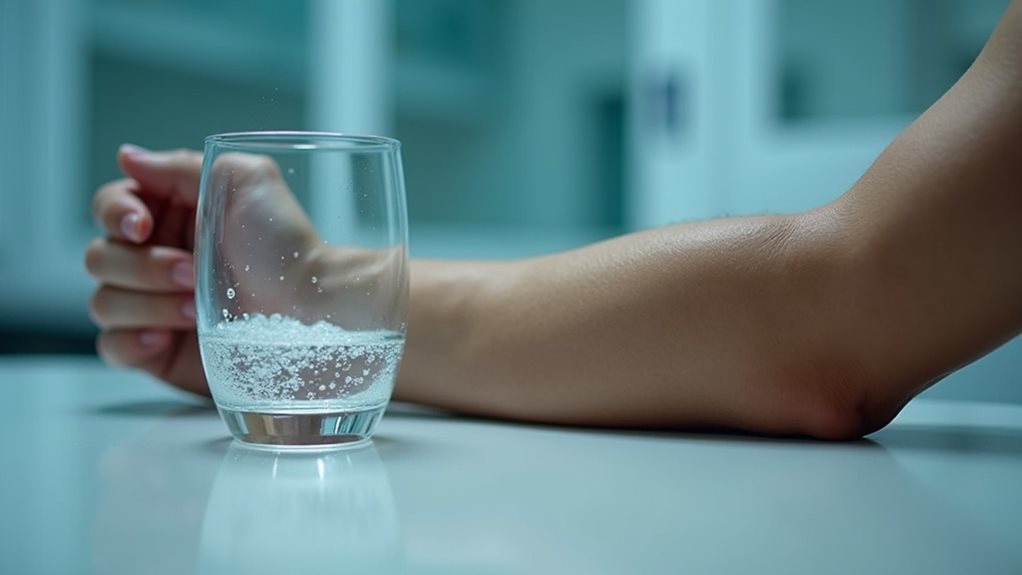
Creatine water retention means your muscles hold more water inside the cells, not under the skin or in the rest of the body.
In each Muscle Cell, an Osmotic Shift moves fluid from outside to inside, increasing intracellular water.
About 75% stays in skeletal muscle, adding 0.5 to 2 kilograms quickly.
This change is temporary, benign, and reversible, without systemic swelling or fat gain.
This phenomenon can temporarily raise body weight on the scale because of the extra water held in muscles intracellular water.
How Creatine Pulls Water Into Muscle
Inside the muscle cell, creatine acts as an osmotically active substance that draws water inward.
You create an osmotic gradient, and Intracellular Osmosis pulls fluid across the membrane without ATP.
Water Distribution shifts mainly into the cell, with most retained water staying inside muscle fibers.
As creatine rises, cell volume expands, supporting hydration, signaling, and a fuller look. Creatine loading can increase intracellular water during the first week, which may cause temporary weight gain.
How Much Water Weight Creatine Adds
During a loading phase, you can gain about 2 to 6 pounds of water weight, with most people landing near 2 to 4 pounds in the first week.
Standard daily maintenance doses usually add less water, often around 2 pounds or less, because your muscles already hold more creatine.
This increase comes from water moving into muscle cells, and it usually settles after the loading phase ends.
A few people may notice it fade more quickly, while others may see the water weight persist slightly longer depending on dose timing and individual biology creatine fluid shifts.
Loading Phase Water Gain
A rapid shift in body weight often appears when you start a creatine loading phase, and most of that gain comes from water, not fat.
During 20–25 grams daily, you may add 1–3 kg as water moves into muscle cells, shaping electrolyte balance and hydration status.
This shift starts within 48–72 hours, peaks in 5–7 days, then levels off.
Typical Weight Increase
Most adults who start creatine notice an initial weight increase of about 2 to 6 pounds, and studies often place the average closer to 2 to 5 pounds.
You usually see fluid retention within a week, and muscle fullness rises as water enters cells.
Digestive discomfort and timing differences can change the scale response, but plateau duration is short.
Larger bodies may gain a bit more.
Maintenance Dose Changes
Once you move from a loading phase to a maintenance dose, creatine’s water weight usually levels off instead of climbing higher. You’ll keep about 0.6–1.2 kg of water, mostly inside muscle cells, and Timing precision matters.
Salt balance helps hold this steady, because saturated stores keep osmotic pressure constant.
At 3–5 grams daily, you don’t add meaningful water over time.
What Happens During the Loading Phase

During the loading phase, you take about 20 grams of creatine monohydrate each day, usually split into four 5-gram servings for 5 to 7 days, and this approach fills muscle stores much faster than low-dose use. Water shifts into muscle cells as saturation builds, contributing to quick weight gain and expanded cell volume. Early muscle saturation can help explain why some people notice a rapid rise in scale weight within the first week.
When Creatine Water Retention Fades
During the loading phase, you usually see the biggest spike in water retention, because muscle creatine stores rise fast and pull fluid into the cells. A gradual adaptation occurs as your body adjusts to higher stores, which can help explain why the initial bloating may subside with time muscle creatine stores. With a maintenance dose, your muscle creatine levels stabilize, the water shift plateaus, and the bloating or weight change often fades over the next few weeks. If you stop taking creatine, your stores drop, the osmotic pull weakens, and your water weight gradually returns to baseline.
Loading Phase Spike
When you start a creatine loading phase, water retention usually rises fast and reaches its highest point around days 5 to 7.
Dose timing and absorption kinetics drive intracellular saturation, while water balance mechanisms and osmotic response shape the spike.
With 20 to 25 grams daily, you may gain 1.5 to 3.5 pounds, and variability factors change your peak.
Maintenance Dose Stabilizes
As creatine intake shifts from loading to maintenance, water retention usually begins to settle as muscle stores approach saturation.
You typically reach 95-100% saturation in about 4 weeks, and muscle adaptation drives fluid stabilization inside cells.
Extra weight often levels near 1.5-2.5 pounds, while glycogen storage rises.
Reverses After Stopping
Once you stop creatine, the extra water it pulled into your muscles fades gradually over days to weeks.
Your scale fluctuation reflects water, not fat or muscle loss, and hydration feedback normalizes as intracellular creatine declines.
Blood creatine clears quickly, muscle stores return to baseline in 4–8 weeks, and the osmotic pull weakens, so your body excretes the excess water.
Why Creatine Water Weight Is Not Fat Gain
Creatine adds water weight by pulling fluid into muscle cells, not by storing extra fat.
A common concern is whether this temporary shift in body composition affects kidney health, but in healthy individuals, research shows no evidence of kidney harm from standard creatine use.
Loading can add 2 to 4 pounds of water, then levels plateau, and intracellular water shifts distinguish this from fat.
How Creatine Causes Muscle Fullness
Sure. Here is your updated content following your steps:
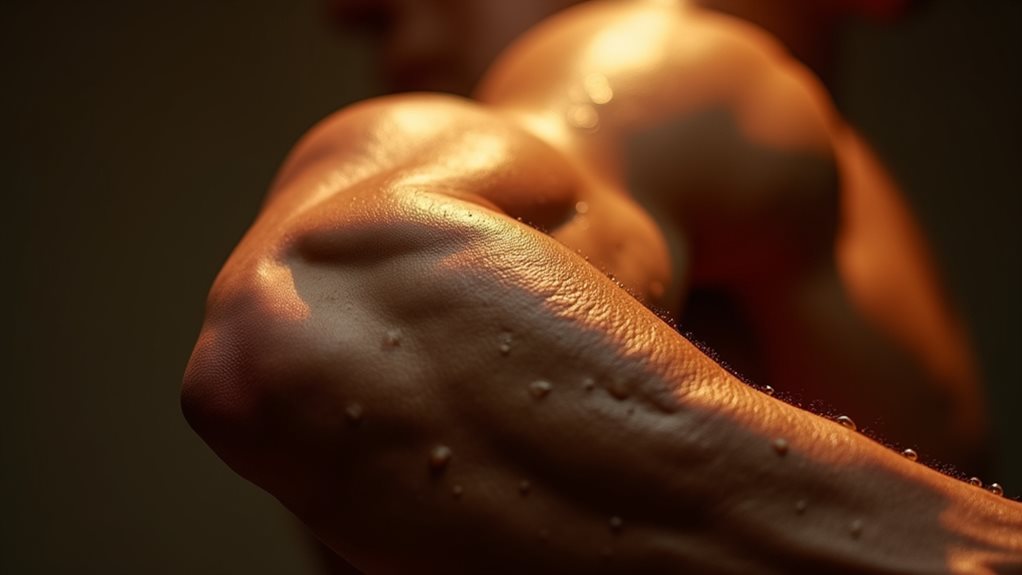
When you start supplementing, creatine raises the solute concentration inside muscle cells, and that increase pulls water from the space outside the cells into the muscle tissue.
You get intracellular water retention, not under-skin fluid.
This swelling can affect water balance, electrolyte effects, glucose control, and insulin sensitivity, while making fibers look fuller and thicker.
The change comes from water, not new tissue, and it largely reflects cellular hydration rather than permanent tissue growth. intracellular water retention
Who Notices Creatine Water Retention Most
Who notices creatine water retention most?
You usually see it first in athletes loading creatine, high-intensity trainers, and bodybuilders with weight class sensitivity. Beginners often show strong beginner perception, because they expect fat gain instead of intracellular fullness. If you have low muscle mass, visible muscle swelling can seem larger, and weight shifts become easier to notice during the first week. Creatine bloating is more noticeable in individuals who are sensitive to changes in intracellular water and who track daily weight closely.
Why Creatine Water Retention Is Temporary
During the first week of creatine use, your body often gains 1–2 kg because muscle cells pull in water as creatine levels rise. There is evidence that this shift is temporary, since saturation finishes within days, and water levels stabilize within 2–4 weeks on maintenance doses. Hydration management and sodium control also limit scale changes, and this fluid gain isn’t fat, it’s intracellular.
Frequently Asked Questions
Can Creatine Water Retention Affect Body Measurements or Clothing Fit?
Yes, creatine water retention can change your body measurements and clothing fit.
You’ll often see a small increase in weight, waist, or thigh size, because water moves into muscle cells.
How to measure changes, use the same scale, tape, and time of day.
Clothing fit tips include looser gear.
Timing of shifts is usually 1 to 4 weeks, and a steady hydration strategy can help reduce discomfort and stabilize results.
Does Creatine Cause Bloating in the Stomach or Face?
Creatine can cause stomach bloating, but you usually see it during high-dose loading, when digestive discomfort appears.
If you take 3 to 5 grams daily, split doses, and take it with food, you lower that risk.
Creatine doesn’t cause facial puffiness in most users, because it holds water inside muscle cells, not under the skin.
If your face looks puffy, sodium, sleep, or hydration often explain it instead.
Is Creatine Water Retention Different Between Men and Women?
No, creatine water retention isn’t usually different between men and women. You’ll gain intracellular water in muscle cells, and Men vs women show similar percentages when doses match body mass.
Salt sensitivity can change how much fluid you notice, and Hormone differences, creatine uptake may affect response size, but the core mechanism stays the same.
Men may gain more kilograms only because they often have more muscle mass overall.
Can Creatine Be Taken Without a Loading Phase to Reduce Water Gain?
Yes, you can take creatine without a loading phase to reduce water gain. Timing without loading supports gradual uptake, so your muscles absorb creatine over about 28 days, and you’ll usually avoid the sharp 1 to 2 kg jump linked to high doses.
A daily 3 to 5 g dose still reaches full saturation, causes less bloating, and keeps performance benefits the same as loading.
Does Stopping Creatine Make You Lose Muscle Size Immediately?
No, you don’t lose muscle size immediately after stopping creatine. Immediate Muscle Size usually stays stable because the muscle protein you built remains, and Creatine Cessation Effects mainly reduce stored water.
You may see a small scale drop within days to weeks, but training keeps your muscle tissue intact.
If you continue resistance exercise, strength and size usually hold, and real muscle loss occurs only when you stop training for longer periods.
And Finally
Creatine water retention is usually temporary, not permanent. You may notice extra water in your muscles during the loading phase, because creatine pulls fluid into muscle cells. This can raise scale weight for a short time, but it isn’t fat gain. As your body adapts, the effect often levels off. If you stop taking creatine, the added water typically fades over time, and your weight usually returns closer to baseline.
References
- https://nakednutrition.com/blogs/supplements/creatine-water-retention
- https://pmc.ncbi.nlm.nih.gov/articles/PMC155510/
- https://protealpes.com/en/creatine/retention-eau/
- https://www.biohackr.health/antiaging/does-creatine-cause-water-retention/
- https://uk.usn.global/blogs/usn-lifestyle-news/creatine-water-retention-weight