Creatine can make you look bloated at first because it pulls water into your muscle cells, especially during loading or with large doses. This usually causes short-term weight gain, not fat, while true GI bloating feels like gas or stomach pressure. To reduce it, skip loading, take 3 to 5 grams daily, split doses, mix it well with food and water, and keep hydration and electrolytes steady. More details can show you how to fine-tune the approach.
Takeaways
- Creatine often causes temporary water retention in muscle cells, which can add 2–4 pounds and make you feel puffier.
- Loading phases, large doses, poor hydration, and extra sodium can increase bloating and digestive discomfort.
- This is usually intracellular water gain, not abdominal fat or true GI bloating, and it often fades within 2–3 weeks.
- To reduce bloating, skip loading and use 3–5 grams daily, or ramp up slowly with meals.
- Stay well hydrated, keep electrolytes balanced, and mix creatine thoroughly in lukewarm water to improve tolerance.
What Causes Creatine Bloating?

Creatine bloating usually comes from three main processes, not from fat gain or true stomach swelling. You often store extra water inside muscle cells, and muscle hydration makes you look fuller.
Creatine also increases total body water, which is why the loading phase can cause short-term weight gain and bloating.
High loading doses, dose timing, and poor hydration can overwhelm absorption, causing digestive distension.
Unabsorbed particles and added sodium can also increase fullness, so smaller servings help reduce it. In some individuals, the body’s ability to retain water adapts over time with continued supplementation, which can lessen the sensation of bloating after the initial period. body water retention may become more stable as you consistently hydrate and follow moderate dosing.
Creatine Water Retention vs. GI Bloating
The water gain people notice with creatine usually comes from inside the muscle, not from the abdomen. Creatine pulls water into cells, supporting Muscle Hydration and Electrolyte Balance. Intracellular water retention is an expected response during loading and usually stabilizes within 2–4 weeks. True GI bloating feels like gas, nausea, or stomach pressure, often from poor Product Selection, high doses, or bad Hydration Timing. With 3–5 grams daily, you usually see minimal digestive discomfort, not abdominal swelling. Cellular hydration can influence performance by helping muscle function and recovery without causing abdominal distention.
Why the Loading Phase Causes Puffiness
During the loading phase, high creatine intake quickly raises muscle creatine levels, and that shift pulls water into the cells.
You see transporter saturation limit further uptake, so fluid rushes inward through an Aquaporin response.
This rapid intracellular hydration process creates a transient volume gain, often adding 2 to 4 pounds.
The puffiness comes from water inside muscle, not extra fat.
Creatine uptake can influence how quickly and how much water shifts into cells during the loading phase, contributing to the transient puffiness.
How to Avoid Bloating Without Loading
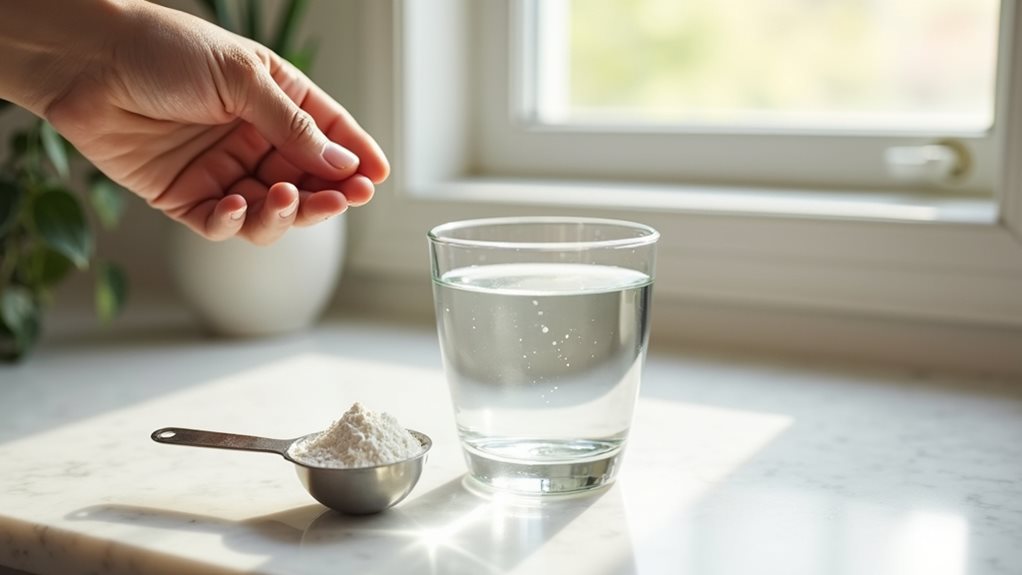
If you want to avoid bloating, skip the loading phase and start with a maintenance dose of 3 to 5 grams of creatine monohydrate each day. Regular dosing supports steady absorption and minimizes water retention when paired with meals. Consider timing your intake with your largest meal or post-workout, and split doses if needed. Keep hydration control steady, aim for 3 to 4 liters daily, and maintain sodium balance below 2,500 mg. Creatine monohydrate is widely studied for effective results with a simple dosing plan.
Best Creatine Dose for Sensitive Stomachs
For sensitive stomachs, creatine works best when you start low and raise the dose slowly.
Use 2 to 3 grams daily for a week, then add 1 gram only if Digestive Tolerance stays steady.
Skip loading, split doses if needed, and keep water and food with each serving.
Your Maintenance Dose should stay at 3 to 5 grams on your long term schedule.
Does Creatine HCL Cause Less Bloating?
Creatine HCL usually causes less bloating because it dissolves faster in water, leaving less undissolved powder in your stomach. You also take a smaller daily dose, which lowers the chance of fluid buildup and digestive discomfort. Evidence suggests that the higher solubility of creatine HCL may contribute to its gentler profile for some people, particularly in terms of stomach comfort and fewer GI issues. solubility advantage
HCL Solubility Benefits
The higher solubility of creatine HCL can reduce some common causes of bloating because it dissolves much faster than creatine monohydrate.
This creates bioavailability differences, and stomach comfort research suggests fewer suspended particles may mean less irritation.
You may also need smaller doses, which lowers water volume and stomach load, though studies don’t prove HCL always causes less bloating for everyone.
Lower GI Discomfort
Although creatine HCL may ease stomach upset, it doesn’t eliminate bloating for every user.
You may notice less lower GI discomfort because HCL dissolves better and often moves through your gut transit with less fluid buildup.
Split doses, magnesium timing, and taking 1.5 to 3 grams daily can further reduce bloating.
Human trials show fewer puffiness reports than monohydrate.
Why Creatine Monohydrate Can Upset Your Stomach?
When you take creatine monohydrate, it can upset your stomach because undissolved particles draw water into your intestines. That osmotic pull can cause bloating, cramping, and loose stools. Large doses, empty-stomach use, and poor mixing raise the risk. Microdose ramping and dosing consistency help your gut adjust, while taking creatine with meals and enough water lowers irritation and discomfort. Adequate hydration also supports better absorption and reduces the chance of gastrointestinal discomfort proper mixing to keep the creatine evenly dissolved.
How Creatine Solubility Affects Digestion
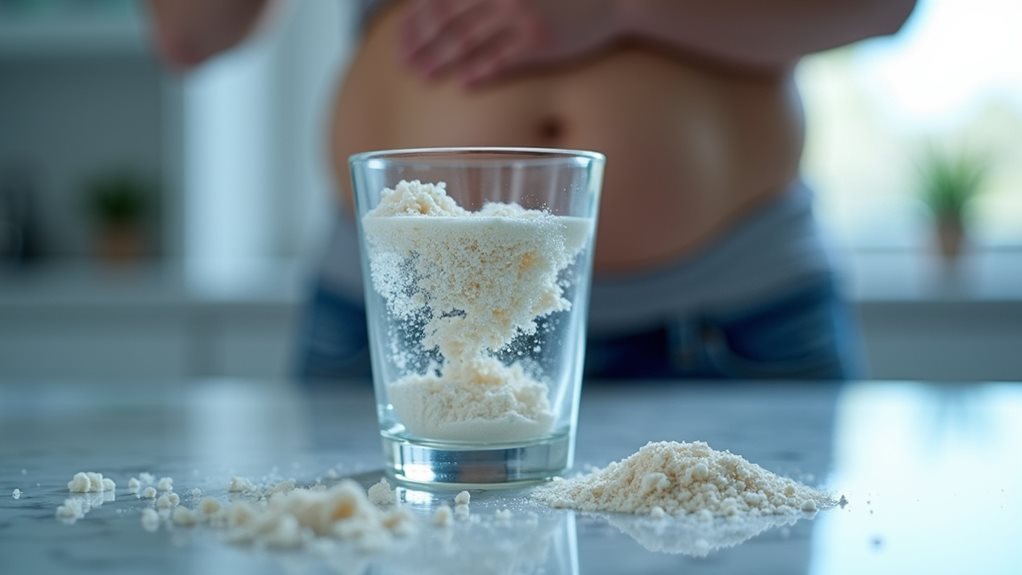
When you mix creatine fully, you reduce gritty particles, ease stomach discomfort, and lower the chance of bloating. Faster dissolution helps creatine spread more evenly in your gut, supports absorption, and leaves less unabsorbed powder to irritate the intestine. Warm liquids, stirring, or smaller doses can improve solubility, smooth digestion, and reduce loose stools or cramping. Consistent dosing and choosing the right form can also influence comfort and effectiveness for women seeking better GI tolerance. absorption efficiency
Solubility And Stomach Comfort
Creatine’s solubility can affect how your stomach feels because undissolved powder can linger in the gut and pull in water.
Temperature solubility matters, warmer water helps you stay under the osmotic threshold, while cold mixes leave residue.
In this particle size discussion, coarse crystals can increase crystal irritation, so you may feel fullness, cramping, or loose stools if you don’t dissolve it well.
Dissolution Rate And Absorption
Dissolution rate affects how quickly creatine leaves the stomach and enters the intestine, so poor mixing can slow digestion and leave gritty residue behind.
You’ll absorb it best when you use 180–240 mL, stir well, and wait, because hydration time variability changes with temperature and pH dependent absorption.
Warm or acidic drinks improve solubility, while undissolved particles may slightly reduce peak uptake.
Which Additives Can Trigger Stomach Discomfort?
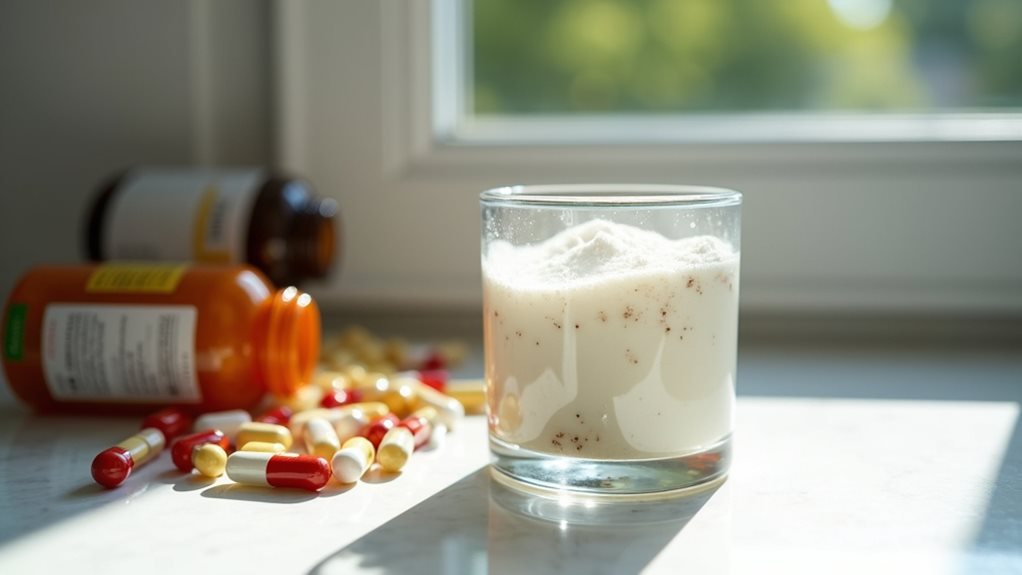
Several common creatine additives can trigger stomach discomfort, especially in sensitive users.
Look for ingredient transparency, check labeling, and avoid hidden sweeteners like sorbitol, xylitol, or sucralose.
Artificial flavorings, citric acid, maltodextrin, and preservatives such as sodium benzoate can also cause bloating, cramping, gas, or nausea.
Proprietary blends often hide these irritants, making digestive reactions harder to predict.
Omega-3 benefits can extend to supporting gut health through anti-inflammatory effects, which may influence digestive comfort when consuming certain supplements. omega-3 sources
How to Mix Creatine Without Irritation
Mix your creatine with water, preferably lukewarm or room temperature, because it dissolves more evenly and leaves fewer gritty particles.
Avoid acidic juice, carbonation, and other irritating additives, since they can raise the chance of stomach discomfort and bloating.
Stir or shake it well, then drink it right away, so the full dose stays mixed and easier to tolerate.
Mix With Water
When you want creatine to go down smoothly, use lukewarm or slightly warm water, not ice-cold water, because warmer liquid helps the powder dissolve more fully and leaves less grit behind.
For better Hydration timing, add 3 to 5 grams to 8 to 12 ounces, stir 30 seconds, and drink right away, supporting clumping prevention, stomach comfort, and proper mixing duration.
Avoid Irritating Additives
The cleanest creatine mixes usually contain few ingredients, because extra additives can irritate the digestive tract and contribute to bloating.
Choose unflavored, allergen free monohydrate with Third party testing, and avoid sucralose, artificial colors, preservatives, and fillers like maltodextrin.
These compounds can trigger cramping, delay digestion, and increase fluid retention, so plain powder in water usually reduces irritation.
Why Water Intake Matters With Creatine
With creatine, water intake matters because the supplement pulls water into muscle cells through osmotic activity, which increases total body water by about 1–2% during the first week.
Hydration timing and dosing hydration help you absorb it better, meal pairing improves uptake, and water splitting reduces bloating.
If you stay hydrated, you limit digestive discomfort and support steady intracellular water balance.
How Electrolytes Affect Creatine Bloating
Electrolyte balance shapes how your body moves water during creatine use, because sodium and potassium control osmotic pressure in muscle cells.
Better Electrolyte ratios, especially a higher potassium sodium ratio, can reduce visible bloating.
Magnesium timing matters too, since magnesium supports fluid balance and digestion.
Balanced chloride and calcium also improve hydration, limit cramping, and help you handle loading with less puffiness.
Does Sodium Increase Creatine Puffiness?

Yes—high sodium intake can make creatine-related puffiness more noticeable, because it increases fluid retention outside the muscle cells.
You can see facial swelling when Electrolyte Balance shifts, and Sodium Potassium Ratios drop.
Keep sodium under 2,000 mg daily, limit processed foods, and support potassium intake, because excess sodium raises extracellular water, while creatine pulls water into muscles, creating puffiness.
Best Time to Take Creatine With Food
You’ll usually get better creatine uptake when you take it with meals, especially ones that include carbohydrates and protein, because food helps drive the insulin response that moves creatine into muscle.
Post-workout meals can be especially effective, since your body often absorbs nutrients well after training and a carb-rich meal can support both recovery and creatine storage.
If you’re trying to reduce bloating, pairing creatine with food instead of taking it on an empty stomach can also help lower digestive discomfort.
With Meals
With meals, creatine is absorbed more efficiently, because carbohydrates and protein raise insulin and help move it into muscle cells.
Carb timing and protein pairing matter, so you should take 3 to 5 grams with breakfast, lunch, or dinner.
A meal with carbs and protein can improve uptake and reduce bloating.
If needed, split doses, and choose lower-fat foods for better comfort.
Post-Workout Meals
After training, take creatine within 60 minutes with your post-workout meal, because this period supports faster muscle uptake.
You’ll improve insulin timing with carbohydrate pairing, which helps move creatine into muscle cells.
Aim for 3 to 5 grams with 30 to 50 grams of carbs and 20 to 30 grams of protein, since this combination can reduce bloating and improve recovery.
How Long Creatine Bloating Usually Lasts
Creatine bloating usually lasts from a few days to about two weeks, and it often peaks during the first 5 to 7 days of a loading phase.
Your hydration timing, gut adjustment, and dose splitting can shorten it, while maintenance use often resolves symptoms within 2 to 3 weeks.
If you skip loading, you may notice little or no bloating at all.
What Happens When You Stop Creatine?
When you stop creatine, your muscle stores gradually return to baseline over about 4 to 6 weeks, and phosphocreatine levels drop most in the first month.
The creatine depletion timeline brings a brief scale drop from water loss, not muscle loss.
During the performance dip duration, your explosive output may fall slightly, then normalize as natural synthesis resumes and stores stabilize.
Is Creatine Safe for Long-Term Use?
Across decades of research, creatine monohydrate has shown a strong safety record for healthy adults.
You can trust long term marker safety when you keep dosage adherence steady, because studies up to five years show no liver, kidney, or cancer harm.
Creatine microdosing may improve stomach tolerance, and occasional bloating stays rare, with effects similar to placebo in trials.
How to Choose a Low-Bloat Creatine Product
To reduce bloating, choose a creatine product that dissolves well, uses a modest dose, and comes from a tested brand.
Micronized or buffered forms improve absorption, while 3–5 grams supports supplement consistency.
Take it with meals, follow dosage timing, and use Hydration tips plus electrolyte balance.
NSF-tested, microfiltered products reduce impurities, and splitting doses can lower water retention and gas.
Frequently Asked Questions
Can Creatine Affect Bowel Movements or Cause Constipation?
Yes, creatine can affect bowel movements, but usually only at higher doses. You may notice temporary gut transit changes during loading phases, because creatine water retention can pull fluid into the intestines and speed stools.
At 3–5 grams daily, studies show little evidence of constipation. If you drink enough water, spread doses, and take it with meals, you’ll lower the chance of digestive discomfort and keep bowel habits steadier.
Does Creatine Bloating Happen More With Certain Body Types?
No, creatine bloating doesn’t happen more with certain body types. Research shows you’re more likely to notice water retention during loading, not because of lean mass or higher bodyweight.
Your dosing sensitivity matters more than body composition, and poor hydration can worsen the effect. If you use smaller daily doses, drink enough water, and choose a better-tolerated form, you’ll usually reduce bloating without changing your body type.
Can Caffeine Make Creatine-Related Bloating Worse?
Yes, caffeine can make creatine-related bloating worse, especially when you take both together in large amounts.
Caffeine timing matters, because it can speed digestion, raise gastric irritation, and increase cramping or nausea.
If you use caffeine with creatine, separate them by two hours, avoid empty-stomach doses, and drink enough water.
Lower caffeine intake can also reduce stomach pressure and help you tolerate creatine better.
Is Creatine Bloating Different During Bulking Versus Cutting?
Creatine bloating isn’t different in bulking or cutting, because creatine pulls water into muscle cells in both phases.
You can reduce early water weight by skipping loading, using 3–5 grams daily, and splitting doses, and Creatine Timing helps consistency.
Hydration Balance matters too, because steady fluid intake supports uptake and limits discomfort.
The main change is appearance, bulking may look fuller, cutting may look leaner despite the same intracellular water shift.
Can Travel or Dehydration Increase Creatine Stomach Discomfort?
Yes, travel or dehydration can increase creatine stomach discomfort. When you’re traveling, missed meals, irregular travels creatine timing, and less water can slow absorption, irritate your gut, and raise bloating risk.
Dehydration dosing tips include taking smaller doses, drinking water with each serving, and avoiding creatine on an empty stomach.
Long flights, heat, and alcohol can worsen fluid loss, so you should keep hydration steady and dose consistently.
And Finally
Creatine can cause bloating when you load too quickly, use large doses, or choose a product that upsets your stomach. You can reduce this effect by taking 3 to 5 grams daily, skipping the loading phase, and mixing it with food or water. Most bloating fades within days or weeks as your body adjusts. If you stop creatine, the extra water leaves, and your muscles return to normal.
References
- https://www.healthline.com/nutrition/creatine-bloating
- https://ubiehealth.com/doctors-note/creatine-for-women-37-body-needs-bloat-medic-steps
- https://www.health.com/does-creatine-cause-bloating-11696608
- https://1stphorm.com/blogs/news/does-creatine-cause-bloating
- https://www.medicalnewstoday.com/articles/does-creatine-cause-bloating
- https://teamwarrior.com/blogs/creatine/why-creatine-makes-some-people-feel-bloated-and-how-to-fix-it
- https://www.performancelab.com/blogs/nutrition/does-creatine-make-you-bloated
- https://reneeclerkin.com/why-creatine-makes-you-bloated/
- https://www.verywellhealth.com/what-to-do-if-creatine-makes-you-bloated-11812779
- https://www.youtube.com/watch?v=3c1jO8a3SFI