KSM-66 and Sensoril are both effective ashwagandha extracts, but you’ll usually choose KSM-66 for daytime stress support, cortisol balance, testosterone, and fertility, or Sensoril for calmer evenings and sleep onset. KSM-66 is root-only and standardized to 5% withanolides, with the stronger human research base. Sensoril uses root and leaf, is standardized to 10% withanolides, and often works at lower doses. Your best choice depends on your goal, and the details below explain why.
Takeaways
- KSM-66 is root-only, more widely studied, and better supported for stress, focus, and men’s hormone support.
- Sensoril is a root-and-leaf extract, usually more calming, and may be better for sleep or evening use.
- KSM-66 is standardized to 5% withanolides; Sensoril is 10%, but higher percentage does not always mean stronger effects.
- KSM-66 is commonly dosed at 300–600 mg daily, while Sensoril is often used at 125–250 mg daily.
- If you want daytime performance, choose KSM-66; if you want relaxation or sleep support, choose Sensoril.
KSM-66 vs Sensoril: What’s the Difference?
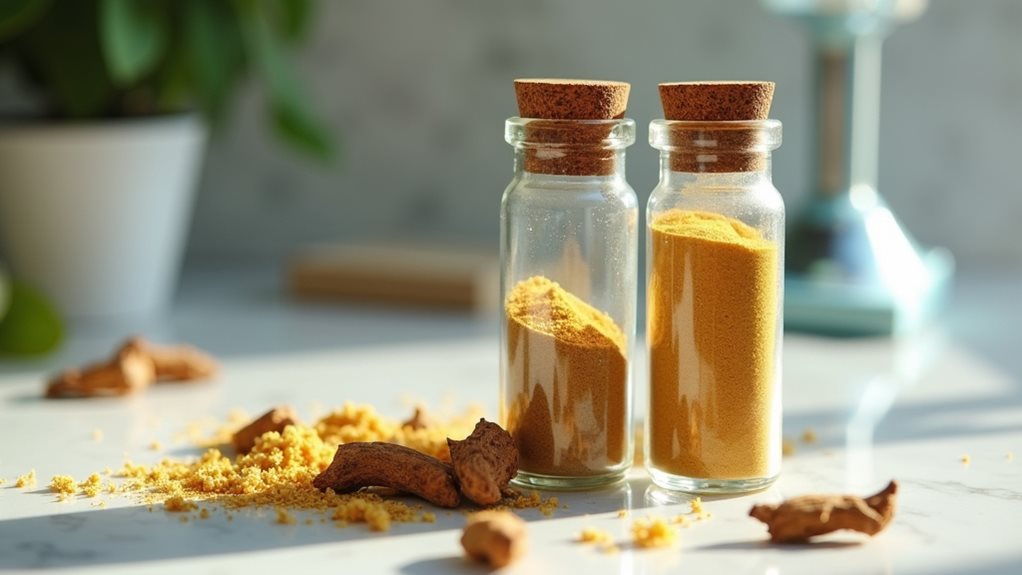
KSM-66 vs Sensoril: What’s the Difference?
Although both are popular ashwagandha extracts, KSM-66 and Sensoril differ in extraction, strength, and research focus. You get Root only consistency with KSM-66, a green-chemistry extract standardized to 5% withanolides. Sensoril uses water and ethanol, reaches 10%, so you need less. Evidence breadth favors KSM-66, over 20 trials, while Sensoril’s about 12 trials center more on sleep support and lower daily dosing. Both are commonly sold as capsules or powders.
A newer comparison note shows that withanolide content and its method of extraction influence both potency and the breadth of studies supporting each extract.
Root-Only vs Root-and-Leaf Extracts
Root-only ashwagandha extracts dominate the clinical evidence, and they align with the plant part used in major pharmacopoeias and traditional Ayurveda. You should note that leaf variability raises Toxicity risk, because leaves contain more withaferin A. Regulatory warnings in Europe and India reflect this concern, while root-only products match monographs, safety data, and approved supplement labels more closely for internal use. Regulatory monographs and advisories also consistently prioritize the root over the leaves, reinforcing why root-based extracts are the more evidence-aligned choice for internal use. Ashwagandha dosage guidelines by extract type indicate that higher concentrations may require careful consideration of the intended outcome and duration of use to stay within safe daily ranges. Extract type and caution around leaf inclusion further support prioritizing root-only formulations for internal use.
Withanolide Strength: 5% Vs 10
KSM-66 and Sensoril differ most clearly in their standardized withanolide strength, with KSM-66 set at 5% and Sensoril at 10%. You should note the limitations of concentration comparisons, because standardization vs bioavailability can shift real effects. A higher percentage doesn’t always mean better absorption. KSM-66 often uses 300-600 mg, Sensoril 125-250 mg, so similar withanolide exposure can come from different doses. Bioavailability factors and extraction methods can influence how withanolides are absorbed and utilized in the body, which is why dose equivalence isn’t a direct one-to-one match. withanolide exposure can therefore be achieved through different product profiles and dosing schemes.
Which Ashwagandha Has More Research?

When you compare the evidence behind these extracts, KSM-66 has the larger research base overall. You’ll find over 24 human RCTs, while Sensoril has 12+. KSM-66 also has more total participants and longer study history since 2012. Clinical evidence base further supports that broader extract dosing evidence exists for KSM-66, and trial duration comparability is fair, because both have studies lasting weeks to months.
KSM-66 for Stress and Cortisol Support
For stress and cortisol support, this extract has strong clinical backing, and it lowers serum cortisol in randomized controlled trials by as much as 27.9%. In addition, ashwagandha appears to support a faster return to baseline cortisol after stress exposure cortisol rebound prevention. You can use 600 mg daily, split with meals, to support emotional regulation and cortisol rebound prevention. Studies show a 25–30% average drop from baseline, with durable results across eight and 12 weeks in replicated trials.
Why Sensoril Is Better for Sleep
Sensoril is usually the better ashwagandha extract for sleep because it acts more directly on calming pathways, including GABA receptor modulation, which helps reduce neuronal excitability and supports sleep onset.
You get non jittery relaxation, steadier sleep framework, and shorter sleep latency.
Its root-and-leaf formula, lower effective dose, and clinical sleep data support better overnight use, especially under stress.
A newer consideration is that Sensoril’s higher withanolide content may contribute to its more pronounced effects on stress-related sleep disturbances, aligning with evidence that calming pathways can improve sleep onset and continuity GABA modulation.
KSM-66 for Energy and Endurance

KSM-66 serves a different purpose than Sensoril, because it targets energy, endurance, and physical performance rather than sleep.
Regular use of adaptogens during training can support recovery, focus, glucose metabolism, and sustained output, without stimulant-like side effects or abrupt stimulation.
Additionally, adaptogens can modulate the stress response and help maintain a stable cortisol profile during prolonged physical activity stress response.
Typical KSM-66 Dosage
You’ll usually see KSM-66 used in a standard daily range of 300 mg to 600 mg, with most products standardized to about 5% withanolides.
If you start at 300 mg daily and need stronger support, higher-end use may move to 300 mg twice daily or 600 mg once daily, depending on your goal.
Consistent use for 4 to 8 weeks matters, because the dose works best when you give it time to build its effects.
Ashwagandha may influence hormonal balance over time, so consider monitoring for any changes in mood, energy, or sleep as you adjust your dosage. hormonal balance
Standard Daily Range
For most clinical uses, ashwagandha extract in the KSM-66 form falls within a 300–600 mg daily range, and that amount has the strongest human trial support for stress and anxiety.
You should note Standardization differences, because KSM-66 uses 5% withanolides, unlike Sensoril.
Dose timing considerations matter too, since 300 mg twice daily or 600 mg once daily both fit this standard range well.
Higher-End Usage
When clinicians move beyond the standard daily range, they often use 300 mg of KSM-66 twice daily, because this 600 mg total dose appears most often in randomized controlled trials. You can follow these dose frequency protocols for stress adaptation, cortisol reduction, and athletic support.
Tolerance based dosing may justify higher amounts, but 600 mg daily remains the typical upper limit, with split dosing improving consistency.
Typical Sensoril Dosage
You’ll usually take Sensoril at 125 mg to 250 mg twice daily, and 250 mg per day often gives solid stress and mood support.
For sleep or evening use, 125 mg to 250 mg daily is common, and many people choose it later in the day for calming effects.
Clinical studies also use 250 mg to 500 mg daily, while higher ranges like 500 mg to 1,000 mg are reserved for thyroid or adrenal support.
Standard Sensoril Dose
Sensoril’s typical adult dosage usually falls between 125 mg and 250 mg per day, and 250 mg is often the standard starting point for general wellness.
You can keep dose consistency by taking it once or twice daily, and sleep timing matters because evening use may support rest.
Clinical trials often use 125–250 mg, with higher doses reserved for stronger stress support.
Evening Use Range
Evening Sensoril dosing usually falls between 125 mg and 250 mg, and this range targets sleep support more directly than daytime use.
You can take 125 mg 30 to 60 minutes before bed, or 250 mg with dinner, and sleep onset protocols often improve.
This single dose fits cortisol night timing, reduces nighttime anxiety, and may limit daytime sedation.
Why Sensoril Works at a Lower Dose
Working at a lower dose, Sensoril delivers more active compounds per milligram because it uses a 10% withanolide glycoside standardization, compared with KSM-66’s 5% standardization.
This supports dose dependent efficacy, limits extract variability, and strengthens bioactive collaboration.
You get higher potency from the root-leaf matrix, including withaferin A, which helps reach cortisol endpoints and clinical benefits with 125–250 mg.
Daytime Use vs Evening Use
KSM-66 and Sensoril fit different parts of the day because their extract profiles and clinical effects point in opposite directions.
Use KSM-66 in the morning or daytime, since it supports focus, lowers cortisol, and usually avoids drowsiness.
Use Sensoril at night, since it promotes calm and sleep onset.
Dosage timing matters, and consistency for best results still drives the outcome.
KSM-66 for Testosterone and Fertility
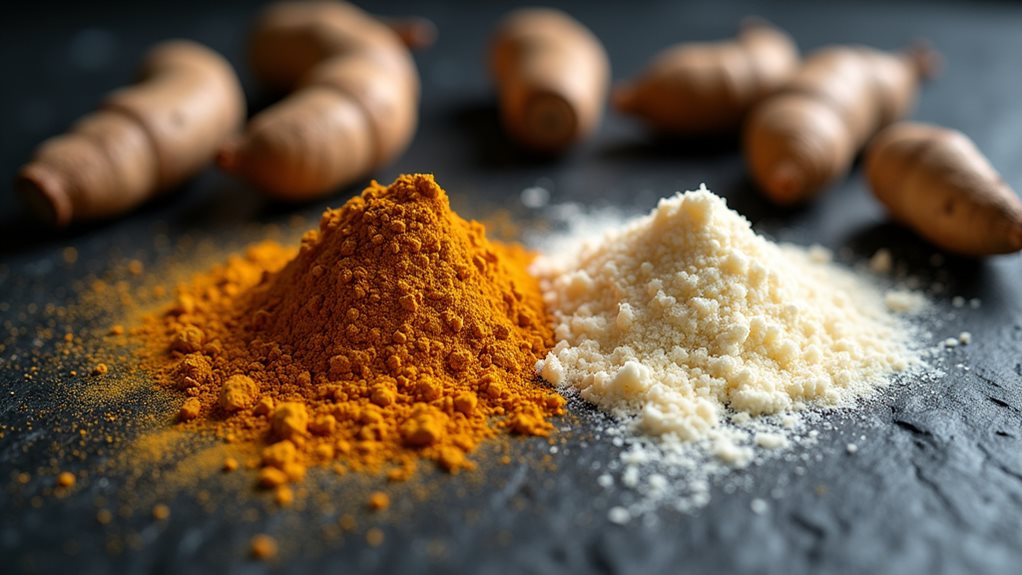
For men focused on hormone support, KSM-66 has clinical evidence for raising testosterone and improving fertility markers.
You can see testosterone rise about 17%, free and total levels improve, and luteinizing hormone increase.
In oligospermic men, sperm concentration climbed sharply, and fertility biomarkers improved.
KSM-66 also helps normalize the HPA response, which can support hormone balance and sperm quality over time.
Sensoril’s Calming Effects
Sensoril shifts the focus from hormone support to calming support, and its root-and-leaf formula works differently from KSM-66. You may notice slower breathing, easier sleep, and less anxiety as GABAergic activity rises and cortisol falls.
Stress biomarkers tracking can show these changes, while anxiety reduction timelines often appear within 6 to 8 weeks.
Trials also link it to better morning alertness.
Safety, Side Effects, and Liver Risk
Although both extracts usually show good short-term tolerance, ashwagandha can still cause mild side effects and rare liver problems.
You may notice stomach upset, loose stools, nausea, or drowsiness, especially with higher doses.
Dosage variability can raise risk.
Rare liver injury has caused jaundice and itching.
If you use it longer than 3 months, follow monitoring plans and stop with symptoms.
Which Ashwagandha Extract Should You Choose?
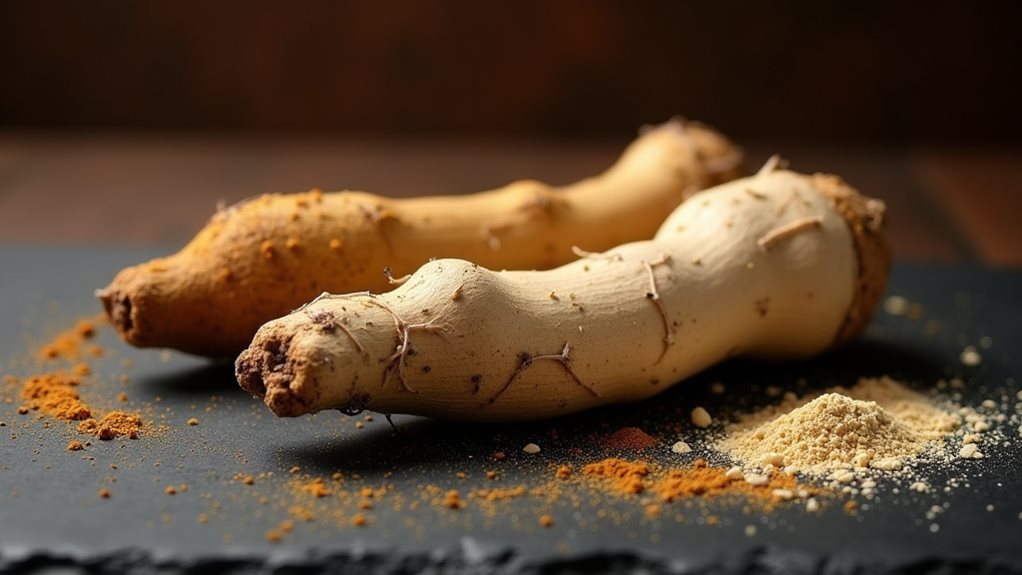
You should choose KSM-66 if you want daytime stress support, better workout recovery, and a root-only extract with broader systemic effects.
Sensoril fits better for evening use, since it has stronger evidence for sleep onset, longer sleep duration, and nighttime calming.
KSM-66 offers lower withanolide concentration but more complete root-spectrum coverage, while Sensoril provides higher potency per dose with a leaf-and-root formula.
Daytime vs Evening Use
For daytime support, KSM-66 is usually the better choice because it acts as a more energizing adaptogen and helps maintain mental clarity during waking hours.
Its morning dosing supports cortisol timing, stress regulation, and smoother daytime focus, especially with meals.
Sensoril fits evening use better, since it’s calmer and can improve sleep onset when taken before bed.
Root Spectrum vs Potency
When choosing between KSM-66 and Sensoril, the main difference is root profile versus potency.
KSM-66 uses Traditional Extraction from root only, so you get a Full Range Root Range profile with strong Bioactive Consistency.
Sensoril combines root and leaf, concentrates more withanolides, and works at lower doses.
Choose KSM-66 for broader balance, Sensoril for higher potency and targeted calming.
Frequently Asked Questions
Does KSM-66 Contain Any Leaf Material?
No, you shouldn’t expect KSM-66 to contain leaf material.
Its KSM 66 leaf content is designed to be zero, because manufacturers use only roots when identifying plant parts for the extract. This root-only standard matches Ayurvedic and pharmacopoeial guidance, and it helps limit leaf-derived compounds, including withaferin A.
You can check label claims and third-party tests to confirm root-only sourcing and quality control.
Is Sensoril Suitable for Vegetarians and Vegans?
Yes, you can use Sensoril if you’re vegetarian or vegan. It uses root and leaf extract, and manufacturers don’t add milk, dairy, or animal fillers, so it fits plant-based diets.
Third party certifications and product labels support this, while purity standards help confirm vegan suitability.
Its capsules usually use cellulose, not gelatin, and independent databases classify it as vegan-friendly.
If you avoid animal products, Sensoril meets that requirement safely.
Can Either Extract Interact With Prescription Medications?
Yes, either extract can interact with prescription medications.
You should treat the drug interaction evidence as meaningful, because ashwagandha can affect thyroid drugs, immunosuppressants, and other medicines.
It may also cause metabolism enzyme effects through CYP450 pathways, which can change how drugs break down.
If you take thyroid medicine, steroids, biologics, statins, or liver-acting drugs, you need medical review and monitoring before use.
How Should Ashwagandha Be Stored to Preserve Potency?
Store ashwagandha in airtight, cool, dry conditions, keep away from light, and avoid moisture to protect active compounds.
Use sealed containers, preferably opaque or amber, and monitor lot freshness because shelf life varies.
Refrigeration helps when room temperatures rise above 25°C, and proper storage for effectiveness means steady temperatures, low humidity, and no exposure to heat, sunlight, or chemical fumes.
Check seals often, and replace containers if damage appears.
Are Third-Party Tested Supplements More Reliable?
Yes, third-party tested supplements’re more reliable because verification standards check potency, purity, and contaminant limits.
You get lot to lot consistency when independent labs confirm each batch matches the label and stays within accepted ranges.
This testing can expose heavy metals, microbes, and fillers, so you’re less likely to buy a product that’s weak or unsafe.
Certified brands also give you clearer proof that claims aren’t just manufacturer promises.
And Finally
You should choose KSM-66 if you want broader research, stress support, and possible benefits for testosterone and fertility. You should choose Sensoril if you want a stronger calming effect and a lower-dose option. Both extracts come from ashwagandha, but KSM-66 uses root only, while Sensoril uses root and leaf, which may affect potency and use. You should check safety, dose, and your health needs before you start either supplement.
References
- https://www.transparentlabs.com/blogs/all/best-ashwagandha-powder-ksm-66-vs-sensoril
- https://www.reddit.com/r/Nootropics/comments/t2xwwx/ksm66_vs_sensoril_ashwagandha/
- https://ubiehealth.com/doctors-note/ashwagandha-ksm66-vs-sensoril-doctor-tips-brand3751q6
- https://www.nakedcompound.in/ingredients/ashwagandha-ksm66-vs-sensoril
- https://maxfit.ee/en/blog/ashwagandha-ksm66-sensoril
- https://www.bellaallnatural.com/blogs/learn/ashwagandha-sensoril-ksm-66
- https://nordvitalwellness.com/ashwagandha-complete-guide/
- https://www.myformulaforge.com/learn/compare/sensoril-vs-ksm66-ashwagandha
- https://www.youtube.com/watch?v=4r080MaY9DE
- https://www.youtube.com/watch?v=T-dWCPxLFDk