Creatine can help you build stronger muscles, improve resistance training, and support lean mass after 40, especially when you pair it with exercise. It works by helping regenerate ATP, which lets your muscles produce more force, recover faster between sets, and delay fatigue. It may also support bone health indirectly by improving strength, stability, and training consistency. For most women, 3 to 5 grams daily is enough, and more details can clarify how to use it well.
Takeaways
- Creatine helps women over 40 improve strength by regenerating ATP for harder resistance training and faster recovery between sets.
- With regular training, creatine can support modest lean mass gains, often around 1.1 to 1.5 kg, especially with resistance exercise.
- Creatine does not directly increase bone mineral density, but it may indirectly support bone health by improving muscle strength and loading.
- Stronger muscles can improve balance, reduce fall risk, and support safer daily movement as women age.
- A common effective dose is 3 to 5 grams of creatine monohydrate daily, usually without needing a loading phase.
What Creatine Does for Women Over 40

Although many people think of creatine as a gym supplement, it can support several areas that matter for women over 40.
You get Metabolic Support and Cellular Energy, which help daily function and training.
When you use it with resistance exercise, you may improve strength, sustain power, and preserve bone structure. Strong muscles also create greater mechanical forces that help stimulate bone formation.
In healthy adults, long-term use has shown no harm to kidney function. Creatine supplementation has been studied extensively in healthy individuals, with findings indicating no detrimental effects on kidney function in people without preexisting kidney disease. Kidney safety
How Creatine Helps Build Lean Muscle
You can build lean muscle more effectively when creatine helps your muscles regenerate ATP, so you push harder during resistance training and recover faster between sets. With consistent training, creatine supports greater lean tissue gain, including increases in upper-body and lower-body strength, and studies show about 1.4 kg more lean mass in older adults. This effect is strongest when you pair creatine with resistance training, because the extra work volume and stronger contractions drive muscle growth over time. In women over 40, resistance training is especially important for supporting muscle maintenance and strength as muscle mass naturally declines with age. Creatine may also support mood stability and cognitive function during aging, potentially contributing to overall well-being alongside strength gains. Creatine can help maintain energy availability during demanding workouts and daily activities, which may support consistent training and adherence.
Muscle Strength Gains
Creatine helps muscles produce more force by improving how quickly they regenerate ATP, the cell’s main energy source.
You can sustain harder efforts, delay fatigue, and improve short bursts, while cardiovascular endurance and exercise recovery support repeated training.
With resistance work, you may gain more strength in your legs, grip, and upper body, because creatine increases phosphocreatine stores and power output.
Lean Mass Accretion
Resistance training can build more than strength alone, and creatine often helps women over 40 add lean mass as well.
You can gain about 1.1 to 1.5 kg, with muscle growth supported by better ATP recycling and cellular hydration changes.
Most women do well with 3 to 5 grams daily, and the extra scale weight usually reflects water inside muscle, not fat.
Resistance Training Synergy
When resistance training and creatine come together, older women often see stronger gains than with training alone.
You’ll improve training volume, support muscle recovery, and build lean tissue faster, because creatine helps regenerate ATP during sets.
Keep workout consistency and dosing adherence high, 3 to 5 grams daily, and you can preserve more muscle, enhance strength, and handle harder sessions.
Creatine and Muscle Strength Gains
When you take creatine with resistance training, you can increase lean mass and build more strength than training alone.
Older adults, especially postmenopausal women, often see better upper-body and lower-body gains, with the strongest results in programs that last 24 weeks or longer.
Creatine monohydrate at 3 to 5 grams daily supports these changes by helping your muscles store more creatine and respond better to training.
New evidence suggests that timing creatine around workouts may not drastically change overall gains for women, but consistency with daily dosing appears beneficial for maintaining muscular adaptations creatine timing and supports bone-density-linked improvements when paired with resistance training.
Strength and Lean Mass
Alongside resistance training, creatine can help women over 40 build strength and preserve lean mass more effectively than training alone. You may see 10% to 20% stronger lifts, faster power gains, and about 1.4 kg more lean tissue.
Better hydration status supports muscle function, and improved workout tolerance can help you keep training hard with less fatigue during sessions.
Resistance Training Synergy
With regular resistance training, creatine helps women over 40 gain more strength than training alone, especially over longer programs.
You improve upper-body force and lower-body output, because creatine raises phosphocreatine and ATP regeneration.
When your saturation timeline reaches about 24 weeks, training adherence matters, and gains become more visible.
Studies show greater lean mass, better chest press and leg press performance, and no added safety concerns.
Why Creatine Works Best With Training
Creatine works best with training because it gives your muscles more immediate energy during hard efforts, and that extra energy lets you do more work.
During high-intensity effort, creatine helps with ATP replenishment, supporting improved training performance and the ability to perform more reps, lift heavier loads, and generate more power.
Post-workout timing supports recovery and stronger adaptation, with creatine contributing to faster restoration of energy stores after intense sessions.
With resistance work, you build more strength, not from creatine alone.
Creatine Timing matters for recovery and adaptation, reinforcing how immediate energy availability during workouts complements ongoing training adaptations.
Creatine’s Role in Bone Health After Menopause

Creatine also helps with muscle strength and function, which can support safer movement and reduce fall risk, even though it does not significantly increase bone mineral density in postmenopausal women. bone quality
Can Creatine Help Prevent Osteoporosis?
Creatine alone doesn’t directly prevent osteoporosis, and studies show it doesn’t raise bone mineral density without exercise. Pairing creatine with resistance training can further support bone formation through stronger muscles, greater loading on bones, and improved bone geometry. That extra muscle strength can also lower fall risk, which helps reduce the chance of osteoporotic fractures. In addition, ongoing resistance training with creatine may help optimize energy production during workouts, potentially enhancing performance and adherence to a bone-healthy exercise routine. bone remodeling
Bone Formation Support
Although creatine doesn’t appear to raise bone mineral density on its own, it may still support bone formation in other ways.
You can see changes in bone turnover signals, with lower resorption and sometimes higher osteocalcin.
Its anti inflammatory effects may also reduce cytokines that drive breakdown.
These shifts don’t prove osteoporosis prevention, yet they suggest possible support for healthier bone remodeling.
Resistance Training Synergy
A 24-week resistance training program can make creatine more useful for bone health because it enhances strength, lean mass, and mechanical loading on bone.
You get Metabolic Support and Exercise Recovery, plus bigger lifts, which increase force on bone and help preserve muscle.
Creatine doesn’t directly build bone, but with consistent training, it may help support osteoporosis prevention through stronger muscular function.
Fall Risk Reduction
As muscle mass rises, fall risk often drops, because stronger legs, better balance, and faster reactions help you stay steady during daily movement.
Creatine may support injury prevention by increasing lean mass, improving neural speed, and reducing weakness-related stumbles.
When you pair it with balance training, you can lower fall rates and help preserve bone density, which may slow osteoporosis progression.
How Creatine May Support Brain Health
Creatine may support brain health by increasing the brain’s energy stores, which helps cells regenerate ATP during metabolic stress.
This broader energy support may help mitigate cognitive slowdown caused by sleep disruption, stress, and fatigue in shift work. Brain energy stores
Best Creatine Dose for Women Over 40
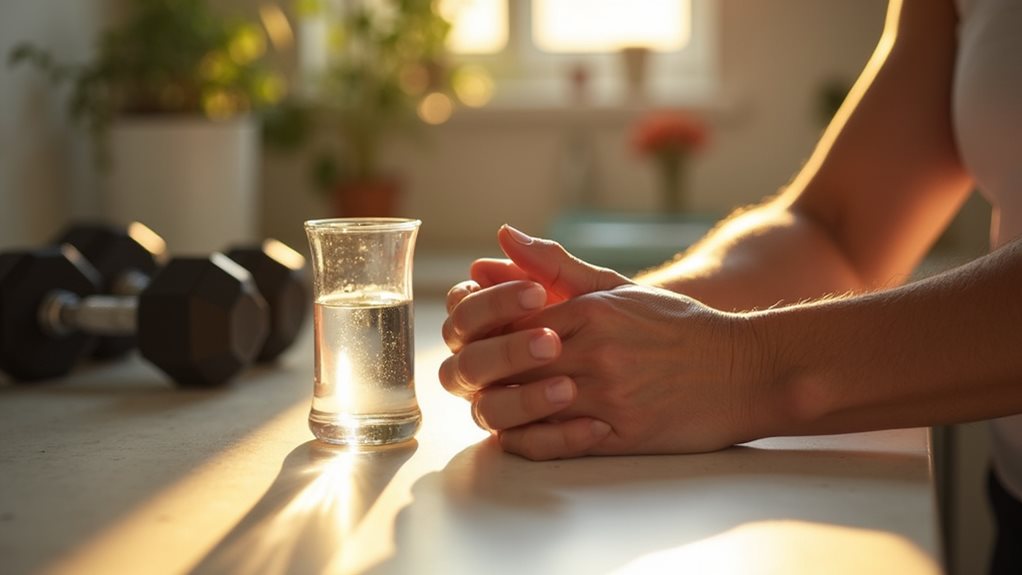
For most women over 40, 3–5 grams of creatine monohydrate per day is the standard dose for muscle and strength support.
You should take it daily, with meals if possible, because steady intake helps saturate muscles in 3–4 weeks.
Monitor hydration needs and side effects, since healthy adults usually tolerate this dose well, and 5 grams remains the common default. Body weight considerations and how they influence dosing strategies can help tailor intake for individual goals.
Should You Load Creatine or Skip It?
You can skip the loading phase and still fully saturate your muscles, because 3–5 grams of creatine monohydrate daily works well for most women over 40.
Fast loading speeds saturation, but it can cause stomach upset.
Slow loading gives the same end result, with better Hydration Support, and Glycemic Timing doesn’t change saturation.
For strength and bone density, consistency matters more than loading.
Is Creatine Safe for Long-Term Use?
Long-term research shows that creatine monohydrate is safe when healthy adults use recommended doses.
You can use 3 to 5 grams daily with Long Term Monitoring, and studies show no harm to Kidney Function in healthy adults over years.
Clinical trials report no serious adverse events, and placebo comparisons show similar side effects, supporting long-term use for you.
Frequently Asked Questions
Does Creatine Cause Water Retention in Women Over 40?
Creatine doesn’t usually cause water retention in women over 40; it pulls water into muscle cells, not under the skin. A daily 3–5 gram dose limits bloating, while loading phases can cause brief scale changes.
You can expect mild, temporary weight shifts, not fat gain myths. Studies support supplement safety, and most women see muscle fullness, not puffiness, as cells store creatine and water, then stabilize within two weeks.
When Is the Best Time of Day to Take Creatine?
You should take creatine at the time you’ll remember every day, because timing consistency matters more than the exact hour.
If you train, taking it before or after your workout can give slight workout cooperation, especially with food.
On rest days, keep the same schedule to maintain muscle saturation.
Morning or evening won’t change results much, but a steady routine will support strength, recovery, and long-term use.
Can Creatine Be Taken With Coffee or Protein Shakes?
Yes, you can take creatine with coffee or protein shakes. Coffee doesn’t noticeably reduce creatine’s effects, but hydration with coffee matters, since caffeine can increase fluid loss.
Protein shakes can improve mixing and support absorption.
To how to dose, use about 5 grams of creatine monohydrate, stir it well, and avoid boiling liquids. If your stomach feels sensitive, separate caffeine and creatine by an hour or two.
Does Creatine Affect Hair Loss or Hormonal Balance?
Creatine doesn’t appear to increase hair loss or disrupt hormonal balance. Current studies show no meaningful change in DHT, testosterone, or other hormones, and creatine and aging research hasn’t linked it to thinning hair.
You can follow standard dose recommendations, usually 3 to 5 grams daily, because this amount hasn’t shown hormone-related problems.
Hair loss usually reflects genetics, age, or stress, not creatine use.
Should Women Over 40 Stop Creatine Before Surgery?
Yes, you should usually stop creatine before surgery, because most teams prioritize Surgery safety and ask for a Creatine interruption 7 to 14 days ahead.
You should also follow fasting rules, which often mean stopping supplements 24 hours before anesthesia.
Creatine hasn’t been shown to increase bleeding risk, but your surgeon may still want it paused, because fluid balance and monitoring can change.
Always confirm your plan directly.
And Finally
Creatine can help you preserve lean muscle, improve strength, and support training after 40. It may also support bone density after menopause, especially when you combine it with resistance exercise. Some research suggests it can aid brain health, too. For most women, a daily 3 to 5 gram dose works well, and loading isn’t necessary. Used long term, creatine is generally considered safe when you stay hydrated and follow recommended amounts.
References
- https://pmc.ncbi.nlm.nih.gov/articles/PMC7998865/
- https://pubmed.ncbi.nlm.nih.gov/42141930/
- https://www.tandfonline.com/doi/full/10.1080/15502783.2025.2502094
- https://pmc.ncbi.nlm.nih.gov/articles/PMC6518405/
- https://ubiehealth.com/doctors-note/creatine-bone-density-women-postmenopausal-health751q2
- https://www.eatingwell.com/creatine-for-women-over-40-11843879
- https://www.womenshealthmag.com/uk/food/a69617141/creatine-women-over-40-benefits-10g-research/
- https://www.youtube.com/watch?v=uH7TQo2Gutw
- https://www.sciencedirect.com/science/article/pii/S1279770723019541
- https://clinicaltrials.gov/study/NCT02047864