Creatine monohydrate can support you during perimenopause by improving strength, power, lean mass retention, mood steadiness, sleep, and mental clarity. Daily use of 3 to 5 grams, especially with resistance training, helps replenish phosphocreatine, improve ATP recycling, and support recovery. Research links creatine to modest gains in working memory and less brain fog, with low risk in healthy women. Bone benefits appear stronger when you pair it with training, and more details follow next.
Takeaways
- Creatine may help perimenopausal women with strength, power, and lean mass when paired with resistance training.
- It can support brain energy, improving working memory, mental fog, and information processing.
- Creatine may also help stabilize mood, reduce fatigue, and support emotional resilience during hormone shifts.
- A typical dose is 3–5 grams daily, with no loading phase required for most people.
- Creatine is generally safe for healthy women, especially with good hydration and recommended dosing.
What Creatine Does for Perimenopause
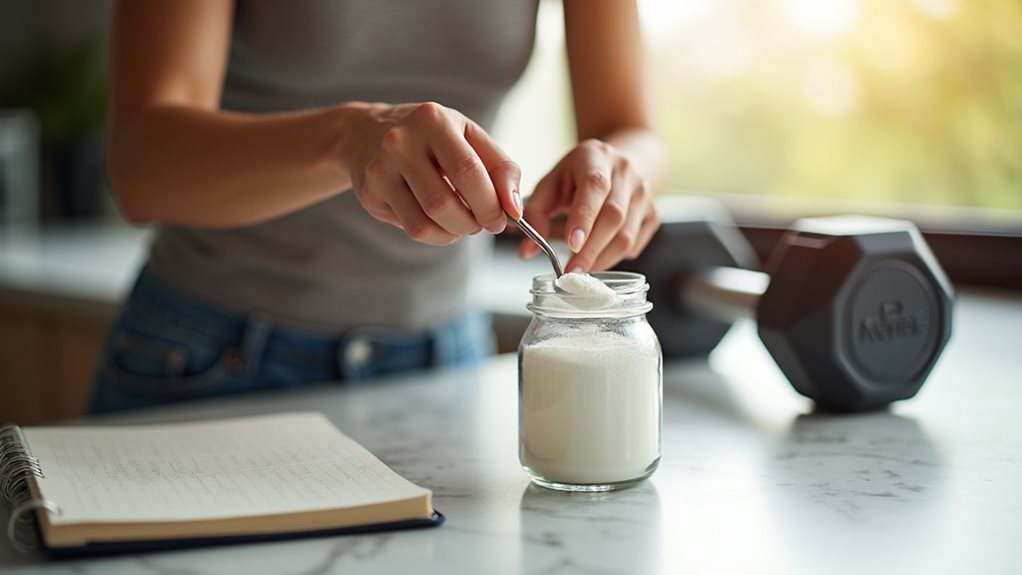
Creatine can help perimenopause by supporting brain energy, mood, sleep, and physical resilience when hormone shifts strain the body.
This perimenopause overview shows creatine efficacy in you, improving reaction time, working memory, and sleep quality, while easing mood swings and fatigue.
It also helps maintain ATP, supports recovery after restless nights, and offers a low-risk option at 3 to 5 grams daily. Creatine also supports ATP regeneration during high-energy-demand periods, which may be especially useful when perimenopause-related stress and fatigue make energy demands feel higher.
Creatine for Strength and Power
When paired with resistance training, creatine monohydrate can increase strength and power during perimenopause, especially in the lower body. You may see higher Peak torque during isometric effort, because phosphocreatine replenishment supports fast energy use. Taken daily, 3–5 g can improve explosive power, and the clearest gains appear when you keep training consistently for at least 24 weeks. Creatine’s low risk-to-benefit ratio makes it a practical option for many women across this stage of life. In addition, creatine may support bone-related outcomes and help preserve lean muscle mass, which is especially relevant as women navigate changes in bone density and muscle maintenance with age. bone health considerations can be informed by existing research on how creatine complements resistance training to support overall physical function in midlife and beyond.
How Creatine Helps Lean Mass Retention
Along with resistance training, creatine can help you retain lean mass during perimenopause by supporting muscle energy and recovery. Resistance training collaboration improves muscle protein accretion, and studies show about 1.4 kg more lean tissue than placebo. This supports sarcopenia prevention, especially with daily 3–5 g or higher doses. Initial water gain is temporary, while consistent use helps preserve muscle. Creatine is widely used in resistance training contexts to support strength and performance, particularly for maintaining muscle energy and recovery during aging creatine supplementation and may aid in maintaining lean mass across hormonal transitions.
Creatine and Cognitive Clarity

Creatine can support your brain’s energy supply, which helps maintain steady mental performance during perimenopause.
Research links creatine use with better working memory, faster information processing, and less mental fog, especially when energy demands are high.
These effects may be modest, but they point to a real role for creatine in cognitive clarity.
Creatine timing considerations may influence how you incorporate this supplement into a perimenopausal routine, particularly if you’re balancing workouts and daily tasks.
Brain Energy Support
For many women in perimenopause, creatine can support brain energy and help maintain cognitive clarity during periods of stress or poor sleep.
It raises brain creatine stores, improves energy supply to neurons, and can steady focus when demands rise.
Studies also link it to better sleep-deprived processing, lower inflammation markers, and possible gut microbiome-related brain support, helping you sustain mental performance.
Working Memory Boost
When mental demands rise, creatine can help support working memory and cognitive clarity, especially during stress or poor sleep.
Your creatine dosage matters, and 3–5 g daily often supports attention gains.
In memory testing, healthy adults showed better backward digit span and reasoning.
Cognitive screening may reveal small benefits, with faster processing and steadier recall, especially in older adults.
Mental Fog Relief
Mental fog often reflects low brain energy, and creatine can help restore cognitive clarity by replenishing phosphocreatine stores. You may notice sharper thinking because it helps recycle ADP into ATP, supports mitochondrial energy, and enhances brain energy during stress.
Studies show better attention, memory, and processing speed, especially with sleep loss or heavy mental work.
A 3–5g daily dose is safe.
Mood Benefits During Perimenopause
As perimenopause changes hormone levels, creatine may help steady mood and support emotional control. Creatine supports mitochondrial energy production in brain regions involved in regulation, which may reduce mood fluctuations. Cognitive function and mood benefits observed in women trials include a 12% mood stability gain, with no major side effects.
How Creatine Supports Sleep and Recovery
Creatine can support sleep and recovery by improving how cells make and recycle energy, which helps the body restore itself after stress and exercise.
Energy metabolism and phosphocreatine storage help cells resupply ATP, reduce fatigue, and support nightly repair, especially when you use creatine consistently.
Better sleep architecture may occur when creatine helps maintain cellular energy during the night, supporting uninterrupted repair processes.
Can Creatine Help Prevent Sarcopenia?

Yes, you can pair creatine monohydrate with resistance training to preserve lean mass and strength.
Creatine monohydrate is well-supported for boosting lean body mass and improving recovery in older adults, particularly when combined with a structured training program. Lean body mass gains have been observed, along with enhancements in sit-to-stand performance and muscle recovery methods. Its anti-inflammatory effects may support recovery, and 5 grams daily often helps older adults slow sarcopenia progression.
Creatine for Bone Health
You can support bone density in perimenopause with creatine, especially when you pair 3 to 5 grams daily with resistance training.
Creatine supplementation has not been shown to harm kidney function in healthy individuals when used at typical doses, and the benefits for bone health appear to be enhanced when combined with regular exercise rather than used alone. kidney safety The combination helps preserve bone mineral density, and it can also support sarcopenia prevention by increasing lean mass and muscle strength.
Research shows stronger effects when exercise is consistent, while creatine alone has shown limited bone benefits.
Bone Density Support
When combined with resistance training, creatine may help slow the bone loss that often accelerates during perimenopause and early postmenopause.
Hormone fluctuation can reduce skeletal protection, and creatine supports femoral neck density by lowering resorption and aiding osteoblast activity.
In studies, you may lose less bone with 3 to 8 g daily, but creatine alone doesn’t preserve density without loading.
Sarcopenia Prevention
Bone support in perimenopause matters, but muscle loss also speeds up with age, and creatine can help slow that decline.
Your sarcopenia outlook improves when you pair 3 to 5 grams daily with progressive resistance, because creatine raises phosphocreatine, enhances ATP regeneration, and supports protein synthesis.
Studies show greater lean mass, strength, and sit-to-stand performance than placebo, lowering fall risk.
Best Creatine Dose for Perimenopause
A daily dose of 3 to 5 grams of creatine monohydrate is the standard recommendation for perimenopause, and it supports long-term muscle, strength, and cognitive benefits. A common approach is to use 3–5 grams daily to maintain creatine stores and support resistance training adaptations Creatine Monohydrate and it is safe for most individuals when taken with adequate hydration. You can also use 0.1 grams per kilogram daily, with 2 to 3 grams often fitting smaller bodies. Take it consistently, skip loading if you want fewer shifts. Follow hydration guidelines, and note menstrual symptoms.
Is Creatine Safe for Women?
Creatine is generally safe for healthy women when they use recommended doses, and research shows no increase in serious side effects, mortality, or kidney and liver problems in this group.
Side effect myths often overstate weight gain, hair loss, or cramps, while kidney safety remains strong in healthy users.
Follow the liver warning if you have liver disease, and ask your doctor.
How to Take Creatine for Best Results
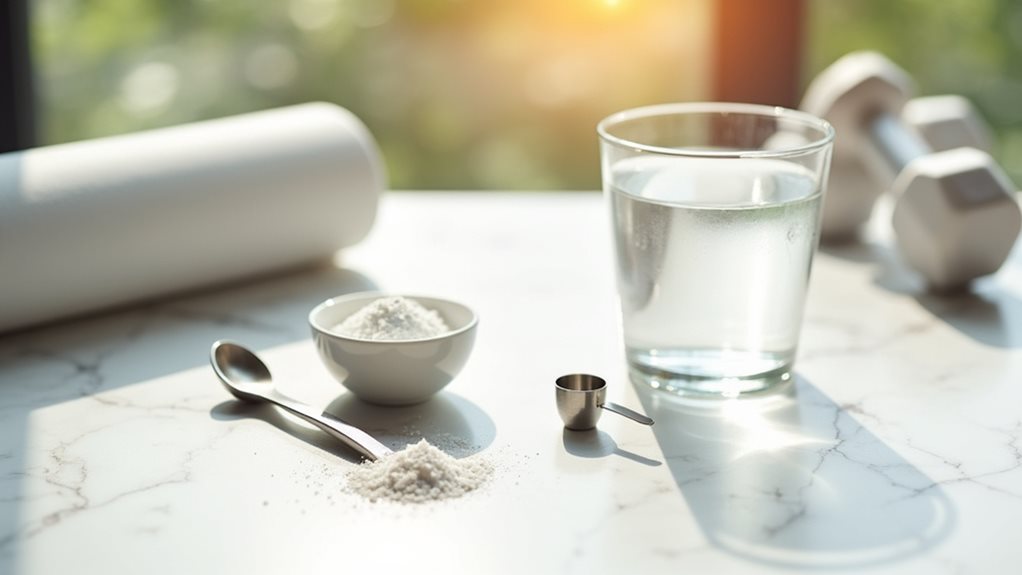
For best results, take creatine monohydrate every day, since consistency matters more than exact timing. You should use 3 grams daily, or up to 5 grams if training hard, and loading isn’t required.
Dosage Consistency supports muscle stores, and post-workout with food can aid uptake.
Mix it with water or juice, and keep Hydration Monitoring at 2.5 to 3 liters.
Frequently Asked Questions
Does Creatine Help Perimenopausal Women With Vegetarian Diets More?
Yes, creatine can help you more if you follow a vegetarian diet. You usually start with lower muscle creatine stores, so supplementation raises levels faster, improves strength, and may reduce fatigue during training.
Vegetarian diet benefits also include larger gains in working memory and mood stability.
For hormone symptom relief, creatine may support better energy and exercise tolerance.
A daily 3 to 5 grams dose is usually enough, and no loading phase is needed.
Can Creatine Reduce Brain Fog During Hormonal Fluctuations?
Creatine may reduce brain fog during hormonal fluctuations, but the evidence isn’t strong enough to confirm it.
You may see modest gains in focus, reaction time, and mental energy, especially if Sleep Quality drops or your brain faces stress.
Hormone Sensitivity can affect these symptoms, so creatine may help support brain energy, not fix the cause.
Use it as one tool, alongside sleep, nutrition, and symptom management.
How Quickly Might Mood Improvements Appear After Starting Creatine?
Mood improvements can appear within 2 weeks of starting creatine, especially at 3–5 g/day.
You may notice faster gains if you also use antidepressants, because hormone interaction can support brain energy and neurotransmitter function.
Most people see clearer change between 4 and 8 weeks, and better sleep quality can reinforce progress.
Some respond in 10–14 days, while others need the full 6–8 weeks for measurable benefit.
Should Creatine Be Taken on Rest Days Too?
Yes, you should take creatine on rest days too, because daily use keeps muscle stores saturated and supports brain energy.
Dose timing isn’t critical, so you can take it with breakfast or another meal.
Aim for 3–5 grams each day, and keep hydration tips in mind, since steady fluid intake helps tolerance and absorption.
Consistent rest day dosing prevents gaps, preserves benefits, and supports long-term strength, mood, and recovery.
Does Creatine Support Exercise Recovery Without Causing Water Retention?
Yes, creatine can support exercise recovery and muscle soreness recovery without major water retention. You usually store extra water inside muscle cells, not under the skin, so water retention myths often overstate the effect.
Daily 3 to 5 gram doses can improve ATP recovery, reduce fatigue, and support stronger training, while causing only a small, temporary weight change. Skip large loading phases if you want to limit that increase.
And Finally
Creatine can support your perimenopause plan by helping you preserve strength, lean mass, and exercise performance. It may also support mental clarity, mood, and bone health, which can matter as hormone levels change. Most women use 3 to 5 grams daily, and creatine is generally safe when taken as directed. You should pair it with resistance training, enough protein, and consistent hydration, because those habits improve results and help you maintain function over time.
References
- https://www.tandfonline.com/doi/full/10.1080/15502783.2025.2502094
- https://www.forhers.com/blog/creatine-for-perimenopause
- https://blog.ochsner.org/articles/how-can-creatine-benefit-active-women-during-perimenopause/
- https://pmc.ncbi.nlm.nih.gov/articles/PMC7998865/
- https://www.alexanutrition.com/articles/creatine-for-perimenopause
- https://pmc.ncbi.nlm.nih.gov/articles/PMC12291186/
- https://www.threeriversmedicine.com/articles/creatine-perimenopause-concierge-doctors-guide-st-louis-women
- https://www.bonzahealth.com/blog/creatine-supplementation-during-perimenopause-mitigates-sarcopenia-the-age-related-loss-of-muscle-mass-and-strength
- https://healthrx.com/womens-hrt-faq/what-are-the-benefits-of-creatine-in-perimenopause-alloy-health
- https://www.joinmidi.com/post/creatine-for-women