The timing of collagen intake matters little for its effectiveness, as long as you take it consistently every day. Research shows that routine and long-term adherence provide the best benefits for skin, joints, and overall health. Whether taken on an empty stomach or with food makes minimal difference for absorption, and the specific time of day does not substantially impact results. Continuing this overview will reveal more about maximizing collagen benefits through proper scheduling.
Takeaways
- Consistency in daily intake is more important than the specific time you take collagen.
- Collagen absorption is effective whether taken with food or on an empty stomach.
- Morning or evening timing has minimal impact; routine stability matters most.
- Taking collagen around workouts supports recovery, but timing is less critical than daily use.
- Nighttime collagen may aid sleep and skin renewal, though current evidence is limited.
Why Timing and Routine Are Key to Collagen Benefits

Timing is less important than maintaining a consistent routine when taking collagen supplements. Regular use over time produces better results, regardless of the specific hour. Research shows that daily consistency is more crucial than the exact timing, ensuring that your body steadily benefits from the supplement. Dietary restrictions may influence supplement brand choices, but routine adherence is key. Consistency builds cumulative benefits, and selecting a routine time that fits your schedule guarantees long-term adherence, making visible improvements more likely.
Does Taking Collagen on an Empty Stomach Improve Absorption?
Although taking collagen on an empty stomach may support faster absorption, scientific evidence doesn’t strongly confirm this advantage.
Supplement timing influences absorption efficiency only minimally because hydrolyzed collagen peptides are already small and easily absorbed.
Some sources suggest that empty stomach use reduces nutrient competition, but studies show little or no meaningful timing difference, emphasizing consistent daily intake over exact timing.
The body’s ability to absorb collagen remains effective regardless of whether it is taken with food or on an empty stomach, highlighting the importance of regular consumption.
In addition, daily total intake consistency appears more important than precise timing, aligning with broader findings on nutrient absorption and performance. daily intake consistency
What’s the Best Time to Take Collagen for Skin and Beauty Goals
For skin and beauty goals, the best time to take collagen primarily depends on your routine and consistency. Morning intake supports routine stability and is often paired with breakfast.
While evening use aligns with overnight skin repair. Packaging options and flavor variations influence convenience, but scientific evidence shows timing has little effect on absorption or results, so choose what fits your daily schedule.
Additionally, studies often use daily dosages around 2.5–10 grams and report noticeable effects after several weeks to a few months, regardless of whether collagen is taken in the morning or evening, indicating timing is less critical than adherence absorption timing.
Should You Take Collagen Before or After Workouts?
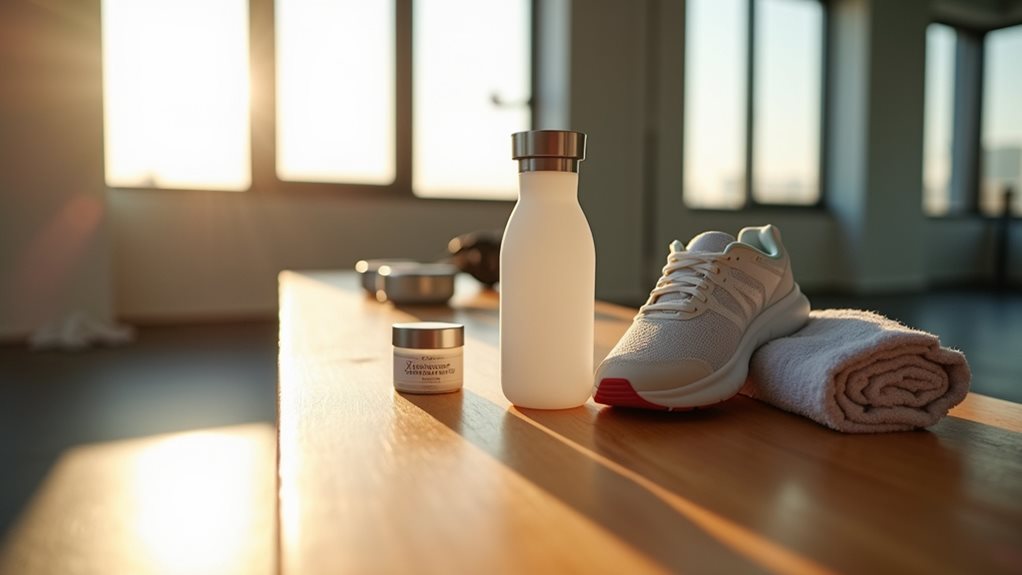
Taking collagen before or after workouts can be effective, but current evidence suggests that the specific timing is less important than maintaining consistent daily intake. In addition, pair collagen timing with your broader recovery strategy to support muscle and joint health glutamine vs creatine as you optimize training recovery and adaptation.
Is Nighttime Collagen Better for Sleep and Skin Renewal?
Research exploring the timing of collagen intake suggests that taking collagen at night may offer specific benefits for sleep quality and skin regeneration, although strong scientific evidence remains limited. Nighttime collagen, which contains glycine, may support calming the nervous system, improve sleep onset, and enhance cellular repair processes. However, current evidence doesn’t confirm nighttime timing as superior for these effects. Nighttime glycine role emerges as a potential mechanism linking collagen timing to sleep and recovery, but more rigorous studies are needed to establish causality and practical guidance.
Why Consistency Matters More Than Exact Timing
Consistent daily intake of collagen is vital because research shows that benefits come from long-term, repeated use rather than specific timing.
Additionally, establishing a routine supports steady adherence, which is important since studies indicate improvements in skin and joint health typically appear after 12 to 24 weeks of regular supplementation. long-term use
Long-Term Habits Over Timing
Long-term intake of collagen is more important for seeing measurable benefits than the specific time of day it’s taken.
Consistent use over weeks or months produces better results, regardless of seasonal variations or supplement stacking with other nutrients.
Adherence to a regular intake schedule guarantees sustained benefits, as effects build gradually and depend on prolonged, continuous use rather than precise timing.
Daily Routine Ensures Results
Taking collagen regularly is more important than taking it at a specific time of day. Consistent daily intake guarantees a steady supply of amino acids, regardless of flavor preferences or supplement variety.
Regular routines improve adherence, and studies show benefits appear after weeks of consistent use.
Timing has little impact; focus on maintaining daily habits to achieve long-term results.
Tips for Incorporating Collagen Into Your Daily Routine
Incorporating collagen into your daily routine can be straightforward if you establish a fixed habit, such as taking it with breakfast or in the evening.
Flavor pairing, like mixing collagen with vitamin C-rich foods or beverages, supports absorption.
Supplement timing matters less than consistency, so choose a routine that fits your schedule and stick to it daily for ideal results.
Regular use may also intersect with overall energy and metabolism considerations discussed in vitamin B12 vs energy drinks, reinforcing the idea that consistency supports long-term fatigue management and daily energy patterns. energy metabolism
What Science Says About Collagen Timing and Long-Term Results

Research shows that the timing of collagen intake has little impact on long-term results, with consistency over time being more important than specific moments during the day. Evidence indicates that absorption depends on the body’s needs, not the time of ingestion, and benefits are typically seen after several weeks of daily use. While pre-exercise timing supports joint and tissue repair, there’s no clear advantage for long-term outcomes from taking collagen at particular times, whether with food or on an empty stomach. Regular, ongoing use aligns with how the body utilizes collagen over time. absorption of collagen is influenced by overall dietary context and needs.
Evidence on Absorption Timing
Scientific studies show that collagen absorption occurs regardless of the time of day, meaning your body’s ability to process collagen is consistent in the morning or evening.
Absorption variability is influenced minimally by circadian influence, as plasma levels of amino acids rise after ingestion at any time.
Food may delay peak absorption but doesn’t substantially reduce total uptake, emphasizing formulation over timing for bioavailability.
Long-Term Consistency Benefits
Long-term consistency plays a crucial role in achieving noticeable results from collagen supplementation. Regular intake over weeks or months is more effective than short-term use, regardless of dietary restrictions or lifestyle factors.
Studies show benefits in skin, joints, and bones increase with sustained use, emphasizing that persistent, daily dosing is essential for long-term improvements, not timing or rapid results.
Frequently Asked Questions
Can Collagen Be Taken Multiple Times a Day for Better Results?
Yes, collagen can be taken multiple times a day for better results, as dosage frequency influences overall effectiveness. Timing flexibility exists because regular daily intake is more important than precise timing.
Splitting doses may improve adherence or fit specific routines, but scientific evidence doesn’t confirm that more frequent dosing enhances absorption or outcomes.
Consistency in total daily intake remains the primary factor for achieving desired benefits, regardless of whether doses are divided or taken once daily.
Does Collagen Timing Differ for Men and Women?
Collagen timing doesn’t differ for men and women because gender differences and hormonal effects don’t substantially influence absorption.
Both sexes should focus on consistent daily intake rather than specific timing, as biological processes related to collagen don’t vary by sex.
Instead, consider individual goals such as skin health, joint support, or exercise recovery, which determine ideal timing, rather rather than gender-based differences or hormonal effects.
Is There an Ideal Collagen Dose for Specific Health Benefits?
The ideal collagen dose varies depending on health-specific recommendations and targeted benefits. For skin improvement, 2.5 to 5 grams daily is common.
Joint support may require 10 grams or more, especially around exercise.
Sleep support benefits from about 3 grams of glycine, which is equivalent to 15 grams of collagen before bed.
Consistent daily intake, paired with vitamin C, enhances collagen production, regardless of the specific timing.
How Long Does It Take to See Results From Collagen Supplements?
Results from collagen supplements typically become noticeable after 4 to 6 weeks, with skin hydration improvements often seen first.
For visible effects on elasticity, 8 to 12 weeks is common.
Joint and connective tissue benefits usually require 8 to 12 weeks of consistent use.
Absorption rate influences effectiveness, but ideal timing, such as taking collagen with vitamin C or before workouts, can support better results.
Regular daily intake remains the most important factor for progress.
Can Collagen Interfere With Other Medications or Supplements?
Collagen generally doesn’t cause significant drug interactions, but supplement compatibility depends on timing.
Calcium and iron supplements may interfere with collagen absorption if taken simultaneously, so separating these by at least two hours reduces interaction risk.
Collagen can be taken with or without food, but consistent scheduling and avoiding overlapping with mineral supplements improve absorption and effectiveness.
Always consult a healthcare professional if taking prescription medications or managing chronic conditions.
And Finally
Timing can influence collagen absorption and effectiveness, but consistency in daily intake remains crucial for results. Taking collagen on an empty stomach may enhance absorption, while specific timing around workouts or sleep can support skin and joint health. However, maintaining a regular routine guarantees sustained benefits over time. Focus on integrating collagen into your daily schedule, regardless of exact timing, to maximize long-term advantages. Proper consistency ultimately determines the effectiveness of collagen supplementation.
References
- https://www.verywellhealth.com/best-time-to-take-collagen-11702054
- https://www.thalaingredients.com/best-time-take-collagen/
- https://www.medicinenet.com/when_should_i_take_collagen_morning_or_night/article.htm
- https://www.gold-collagen.com/blogs/collagen-edit/best-time-to-take-collagen
- https://veloforte.com/blogs/the-collagen-lab/when-is-the-best-time-to-take-collagen
- https://www.vogue.com/article/best-time-to-take-collagen
- https://wellbeingnutrition.com/blogs/skin-beauty/collagen-timing-checklist-maximize-absorption-now
- https://goldmanlaboratories.com/blogs/blog/best-time-to-take-collagen
- https://www.drwu.com/pages/httpswwwdrwu2025-recommended-timing-for-collagen-supplementation?locale=en
- https://goldmanlaboratories.com/blogs/blog/best-time-to-consume-collagen