EPA and DHA are essential omega-3 fats you need from food or supplements. EPA mainly helps control inflammation and support triglyceride levels, while DHA supports brain, eye, and fetal development and helps cell membranes stay fluid. You get both from fatty fish, algae, and some supplements. Most healthy adults need about 250 to 500 mg combined daily, but you may want more EPA or DHA depending on your goal, and the details matter.
Takeaways
- EPA and DHA are long-chain omega-3s from fish, algae, and supplements because the body can’t make enough.
- EPA mainly supports inflammation control and triglyceride reduction.
- DHA mainly supports brain, eye, and fetal development.
- EPA is often chosen for heart, mood, and inflammation goals; DHA for pregnancy, vision, and cognition.
- A balanced supplement with about a 1:1 to 2:1 EPA:DHA ratio suits most people, but needs vary by goal.
What Are EPA and DHA?
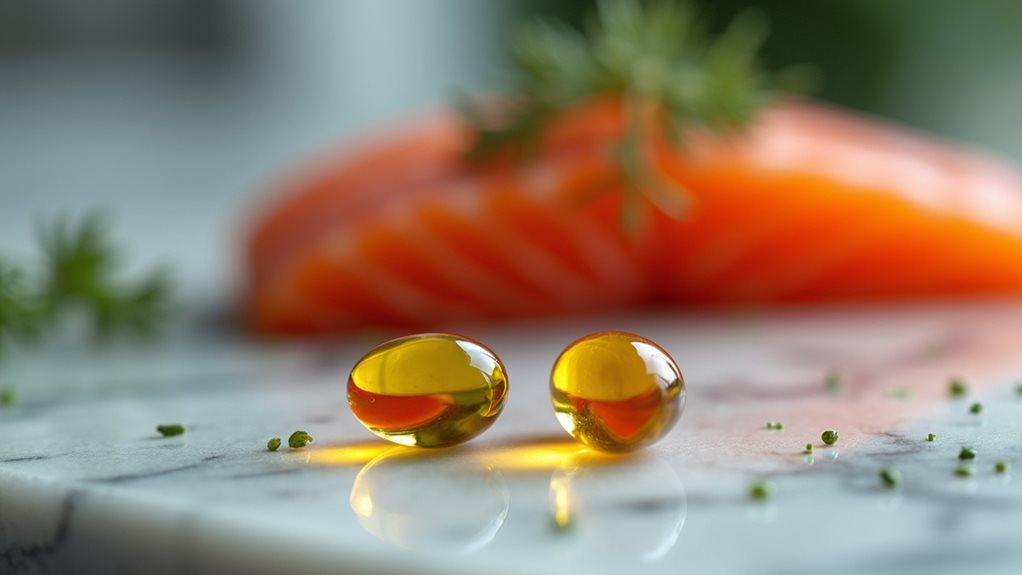
EPA and DHA are long-chain omega-3 fatty acids that your body needs but can’t make in enough amounts on its own. EPA, eicosapentaenoic acid, has 20 carbons and 5 double bonds, while DHA, docosahexaenoic acid, has 22 carbons and 6 double bonds. You get them from fish, algae, supplements, and algal DHA alternatives, because understanding enzyme conversion shows ALA alone won’t meet needs. Fish is the best dietary source of EPA and DHA, and fatty fish can provide them in meaningful amounts. EPA and DHA are essential for supporting heart, brain, and eye health, and intake targets vary by age and health goals to optimize the benefits of omega-3s.
EPA vs DHA: How They Differ
Although both are omega-3 fats, EPA and DHA differ in structure, function, and where they act in the body.
EPA has a shorter chain and mainly helps regulate inflammation and triglycerides, while DHA is longer and supports brain and eye development.
Trends in Omega 3 Research highlight these roles, and Regulatory Safety Considerations guide dosing because their metabolic effects and clinical uses aren’t identical. DHA’s role in neuronal membranes makes direct intake especially important.
Where EPA and DHA Come From
You get EPA and DHA mainly from marine algae and phytoplankton, which naturally make these omega-3 fats at the base of the ocean food chain.
Fish, especially cold-water species like salmon, mackerel, herring, sardines, and anchovies, build up EPA and DHA by eating these organisms.
You can also get them from krill oil, cod liver oil, algal oil, and fortified foods, which provide direct or added marine omega-3s.
base of the ocean food chain Marine algae and phytoplankton form EPA and DHA at the base of the ocean food chain, supplying the initial source for these fats in marine ecosystems.
Natural Marine Sources
In cold-water seas, fatty fish are the main natural dietary source of EPA and DHA.
Salmon, sardines, herring, mackerel, anchovies, and trout give you the most omega-3s.
Because fish store algae-fed fats, small species often pack more per ounce.
For Herbivore Aquaculture, choose low-mercury options, and use Mercury Management to limit albacore while eating two to three servings weekly.
Algal And Fish Origins
At the base of the marine food chain, microalgae synthesize EPA and DHA first, and fish obtain those fats by eating algae or smaller organisms that have already stored them.
You get EPA and DHA from these marine pathways, or from algae oils.
GM plant sources now supply them too, and industrial production species, like Crypthecodinium, help make commercial oils for supplements and formula.
How EPA and DHA Work in the Body
Although the body can use EPA and DHA for energy later, their first job is structural: they build and support cell membranes.
You insert them into phospholipid bilayers, where DHA adds fluidity and both help stabilize lipoprotein particles.
EPA also supports eicosanoid basics, shaping inflammation signals and other cell messages.
Because you can’t make enough, you need food sources.
Important concept: essential fatty acids These nutrients are not just energy sources but essential components of cell membranes and signaling pathways.
EPA vs DHA in Inflammation

When researchers measure outcomes, they often track changes in inflammatory markers over weeks to months, and effects can vary by dose and duration dose-response relationship.
EPA vs DHA for Heart Health
For heart health, EPA and DHA don’t perform the same way, even though both can lower triglycerides and affect blood vessel function.
EPA monotherapy has reduced major cardiovascular events more reliably, while EPA+DHA results vary.
DHA may lower heart rate and blood pressure more, but it can raise LDL and heart rhythm risk.
Your supplement composition should match your cardiovascular goals.
A potential mechanism behind EPA’s stronger protection in some studies is its anti-inflammatory profile and impact on plaque stability, which supports targeted EPA-focused supplementation under certain heart-health goals EPA-focused benefits.
DHA for Brain Health and Memory
You need DHA because it supports brain cell structure, and it accumulates in the cerebral cortex and hippocampus, where memory and learning happen.
DHA also plays a role in supporting hormonal balance and skin health, which can influence cognitive function indirectly through mood, stress responses, and overall well-being. brain structure supports neural connections critical for memory across life stages.
Brain Cell Structure
Because DHA makes up most of the brain’s omega-3 fats, it plays a central role in brain cell structure and function.
You need it in membrane phospholipids, where it enhances fluidity, supports ion channels, and helps receptors work properly.
It also aids synaptic maintenance, limits microglial activation, and strengthens neurons against stress.
EPA and ALA stay in trace amounts, so they don’t provide this structural support.
Memory And Learning
DHA often plays a central role in memory and learning, especially when intake is low or brain demands are high.
You can improve episodic memory and reaction time with DHA, and studies show benefits even in mild memory complaints.
DHA supports synaptic signaling, sleep quality, and stress management, while higher intake links to stronger baseline memory, because brain cells rely on it.
Cognitive Aging Support
As brain cells age, adequate DHA helps preserve their structure, signaling, and overall function.
You can support memory and slower decline by keeping blood biomarkers in range through Omega 3 testing, and choosing supplements with quality certification, third party verification.
Studies link higher DHA with larger hippocampal volume, lower dementia risk, and better cognition, while deficiency can accelerate cognitive decline.
DHA for Eye Health and Vision

DHA plays a major structural role in the eye, since it makes up about 60 percent of the fatty acids in retinal photoreceptor membranes. It keeps discs flexible, supports light-sensitive cells, and helps reduce oxidative stress and inflammation. You can improve eye supplement safety with dosing consistency tips, by choosing triglyceride fish oil or algal oil, and using 250 to 500 mg daily. Omega-3s, including EPA and DHA, have been studied for dry eye symptoms, with evidence suggesting benefits for some individuals when taken at appropriate doses EPA/DHA balance
DHA in Pregnancy and Infant Development
During pregnancy, DHA supports fetal brain growth, and it helps build the neural structures that infants rely on after birth.
You should aim for at least 300 mg daily, with higher amounts in late pregnancy.
DHA can lower preterm birth risk, support attentional tasks, and improve infant size.
It also helps Skin and Joint health, Postpartum Bonding, and remains safe when used as directed.
EPA vs DHA for Athletes
For athletes, EPA and DHA play different but complementary roles, since DHA supports cell structure while EPA helps control inflammation.
You’ll support training nutrition timing by taking 1 to 3 grams daily, check blood omega 3 status after 6 to 8 weeks, and use it within muscle recovery protocols to reduce soreness, lower damage markers, and support steady endurance adaptation during heavy training. omega-3 status is influenced by source type, so consider how fish oil vs krill oil may affect absorption and sustainability.
What Research Shows About EPA

You can see research link EPA to lower inflammation, and that effect may support healthier blood vessel function.
You can also find studies showing EPA helps heart health, especially when it improves triglyceride levels and reduces cardiovascular risk markers.
Clinical findings on EPA point to real benefits in some groups, but results depend on dose, study design, and overall health status.
EPA And Inflammation
Although EPA is often grouped with other omega-3s, research shows it has clear anti-inflammatory effects on its own.
You can use Omega 3 dosing to lower IL-6, TNF-α, and CRP, while supporting resolvins that help end inflammation.
EPA also shifts cell membranes away from arachidonic acid, reducing pro-inflammatory signals.
For Side effects management, it can help balance inflammatory stress.
EPA For Heart Health
Research shows that EPA can support heart health by lowering major cardiovascular events, especially in people at higher risk.
Your Risk Reduction Evidence includes fewer ischemic events, fewer heart attacks, and lower cardiovascular death.
Statin convergence Explained matters too, because EPA can add benefit when you already take a statin.
In high triglycerides, 4 g daily has shown broad event reduction.
Clinical Findings On EPA
Clinical trials show that EPA can lower major coronary events, especially in people at high cardiovascular risk.
You can see a 19% drop in events, and REDUCE IT findings relevance supports 4 g daily in statin users with high triglycerides.
EPA also lowers cardiovascular death and nonfatal heart attack rates, while Omega 3 safety monitoring matters because atrial fibrillation and bleeding can rise.
What Research Shows About DHA
DHA plays a major role in the brain and eyes, and studies show it supports both cognitive and visual development.
You can see brain DHA mechanisms in its membrane effects, and DHA safety pregnancy data support fetal growth.
Research links higher DHA to lower dementia risk, better retinal development, and possible benefit in mild cognitive impairment, while also supporting infant health.
Best EPA:DHA Ratio for Most People
For most people, a balanced EPA:DHA ratio around 1:1 to 2:1 works well for general health, because EPA and DHA support different but overlapping functions in the body.
Choose supplement quality first, then check omega 3 testing for purity and label accuracy, maintain dosing consistency, and monitor side effects management if you notice digestive changes.
This approach supports steady daily intake.
When to Choose More EPA
More EPA makes sense when your main goal is mood support, especially if depression or anxiety is involved.
Choose EPA-dominant products, check Supplement sourcing, and use blood test guidance, especially CRP threshold use above 2 mg/L.
EPA anxiety benefits are stronger, because EPA lowers inflammatory signals and supports better symptom reduction than DHA.
Aim for 60% EPA or more.
When to Choose More DHA
Choose a DHA-dominant supplement when your main goal is brain, eye, or pregnancy support, because DHA builds key structures in these tissues.
You should match Dietary timing with meals, keep dosage consistency, and meet pregnancy DHA needs of 300 to 800 mg daily.
DHA supports fetal brain growth, infant eye development, and adult memory, while low intake can weaken learning and vision.
How to Choose an Omega-3 Supplement
Selection begins with the label, because the front of the bottle often hides the real EPA and DHA content.
You should check the Supplement Facts panel for EPA/DHA dosing accuracy, and ignore total fish oil claims.
Compare omega 3 capsule forms, favor triglyceride or rTG forms.
Look for Third party testing labels, COAs, and Freshness and rancidity markers.
Choose opaque packaging and verified sourcing.
How Much EPA and DHA Do You Need?
For most healthy adults, 250 to 500 mg of combined EPA and DHA each day is a practical target, and many major health agencies place the minimum at about 250 mg.
You can verify dosage through supplement label reading, because products vary widely.
Most guidelines support this range for everyday maintenance, and upper limits near 5,000 mg daily still define safety margins for adults.
Which Do You Need for Your Health Goal?
Which omega-3 you need depends on your goal, because EPA and DHA play different roles in the body.
For inflammation targeting, choose EPA, which can support mood and triglycerides.
For brain, vision, and prenatal needs, choose DHA.
Dose response variations matter, so adjust amounts to your goal.
Seek metabolic health benefits with combined intake, and use personalized supplement timing for consistency.
Frequently Asked Questions
Can You Take EPA and DHA Together?
Yes, you can take EPA and DHA together, and your body usually handles them well. For dosing basics, follow product labels or your clinician’s advice, because combined daily intake often ranges from 250 mg to 1,000 mg or more.
Taking timing isn’t critical, but you may absorb them better with meals, and food can reduce stomach upset.
Together, they can lower triglycerides, support heart health, and add brain and eye benefits.
Do EPA and DHA Have Side Effects?
Yes, EPA and DHA can cause side effects. You may notice fishy aftertaste, belching, heartburn, nausea, loose stools, or diarrhea, especially with higher Omega 3 dosage.
High intakes can also raise blood thinning risk slightly, and may increase atrial fibrillation in some people.
You should watch for rash, headache, or constipation, and take supplements with meals to reduce stomach upset.
Doses above 3 grams daily need medical review.
Which Is Better for Vegans: EPA or DHA?
For vegans, DHA is usually more important, because omega 3 conversion from ALA to DHA is very low. You can’t rely on plant based sources alone, so choose algae derived fats for preformed DHA and EPA.
Check supplement dosage on the label, aim for 100 to 300 mg daily, and increase only if your clinician advises it. This direct intake helps maintain adequate omega-3 levels and supports brain and vision health.
Does Cooking Destroy EPA and DHA in Food?
Yes, cooking can destroy some EPA and DHA, especially with frying, long heating, and high temperatures.
You’ll lose more omega-3s in deep-frying, canning, and microwaving, while steaming, baking, boiling, and light grilling preserve more.
Physical loss in cooking juices and oil also lowers amounts, causing micronutrient losses.
Choose fresh-frozen fish, short cook times, and lower heat, and you’ll improve absorption efficiency and keep more nutrients.
Can EPA or DHA Interact With Medications?
Yes, EPA or DHA can interact with medications.
You may face higher bleeding risk with warfarin, aspirin, clopidogrel, NSAIDs, and some DOACs, especially at doses above 1 gram.
Omega 3 timing tips, taking supplements with meals, can help tolerance, but they won’t remove drug effects.
Blood test guidance matters, because warfarin users may need INR checks for 4 to 6 weeks after starting omega-3s, and you should ask your clinician first.
And Finally
EPA and DHA each support your health, but they do different jobs. EPA helps regulate inflammation and supports heart and mood health, while DHA builds brain and eye tissue and matters most during growth and aging. You need both from fatty fish, algae, or a quality supplement if your diet falls short. Check the EPA and DHA amounts, match them to your health goal, and choose a product that fits your daily needs.
References
- https://likama.fr/blogs/news/epa-dha-differences-omega-3
- https://www.dplantes.com/blog/zoom-omega-3-epa-dha
- https://www.everlywell.com/blog/vitamins-supplements/epa-vs-dha/
- https://nfo.com/en/blogs/news/epa-vs-dha-understanding-the-differences-and-why-they-matter-for-your-health
- https://www.myaquaomega.ca/fr/blogs/benefits/epa-and-dha-what-s-the-difference
- https://www.dynveo.fr/blogs/news/les-differents-types-domega-3-et-leurs-bienfaits
- https://superpower.com/guides/omega3-epa-vs-dha
- https://www.grassrootshealth.net/blog/dha-vs-epa-difference-take/
- https://www.bio-infos-sante.fr/epa-et-dha-quelles-differences/
- https://www.psychologytoday.com/us/blog/in-the-zone/201204/what-are-the-real-differences-between-epa-and-dha