Omega-3s can help you support hormone balance by reducing inflammation and improving cell signaling, which may ease PMS and PCOS symptoms. During pregnancy, DHA supports fetal brain and eye development, and breastfeeding needs stay important for infant growth. Omega-3s may also help your skin by lowering dryness, sensitivity, and acne-related inflammation. Choose products with clear EPA and DHA amounts, and continue on to see how the right dose changes with your goal.
Takeaways
- Omega-3s may help balance women’s hormones by lowering inflammation and supporting estrogen, progesterone, and insulin signaling.
- In PCOS, omega-3s can improve insulin resistance, lower hs-CRP, and reduce testosterone-related symptoms like acne and hirsutism.
- Omega-3s can ease PMS and menstrual pain by reducing prostaglandins, cramping, bloating, and headache severity.
- During pregnancy, DHA is especially important for fetal brain and eye development, with about 300 mg DHA daily often recommended.
- For skin health, omega-3s may support dry eye, inflammation control, and healthier skin by improving oxidative stress markers.
How Omega-3 Supports Hormone Balance

Omega-3s help support hormone balance by reducing systemic inflammation, which can disrupt hormone signaling and worsen imbalance.
You also support estrogen and progesterone regulation, because EPA and DHA help make hormone-like prostaglandins.
Omega 3 and inflammation work together here, and improved cell receptor function can aid insulin sensitivity support.
This can lower PCOS markers, stabilize cycles, and reduce hormone-related shifts. In PCOS, omega-3 supplementation has also been linked to improved oxidative stress markers such as higher SOD, GPX, and CAT and lower MDA.
Best Omega-3 Forms for Women
To get the most from omega-3 for women, you need to choose a form your body can absorb well and use efficiently.
Free fatty acids absorb best, triglycerides and reformed triglycerides also work well, while ethyl esters need conversion.
Check fish oil quality, Omega 3 stability, supplement freshness, and oxidation prevention through vitamin E, opaque packaging, and cool storage. EPA and DHA are the active components to look for on supplement labels, not just the total fish oil mg. Triglyceride vs Ethyl forms can influence absorption depending on the product.
Omega-3 for PMS and Menstrual Pain
When menstrual pain or premenstrual symptoms interfere with daily life, omega-3 fatty acids can help reduce both discomfort and symptom severity. You may notice less cramping, bloating, and headache as Omega 3 anti inflammatory actions lower prostaglandins. Studies also show menstrual cycle regulation support, fewer rescue ibuprofen doses, and better relief with 1,000 to 3,000 mg daily for 2 to 3 months. Omega-3 supplementation has been studied for dry eye and overall inflammation, suggesting benefits may extend to hormone-related skin and mucosal health in some individuals. Omega-3 evidence and dosing
Omega-3 and PCOS Symptoms
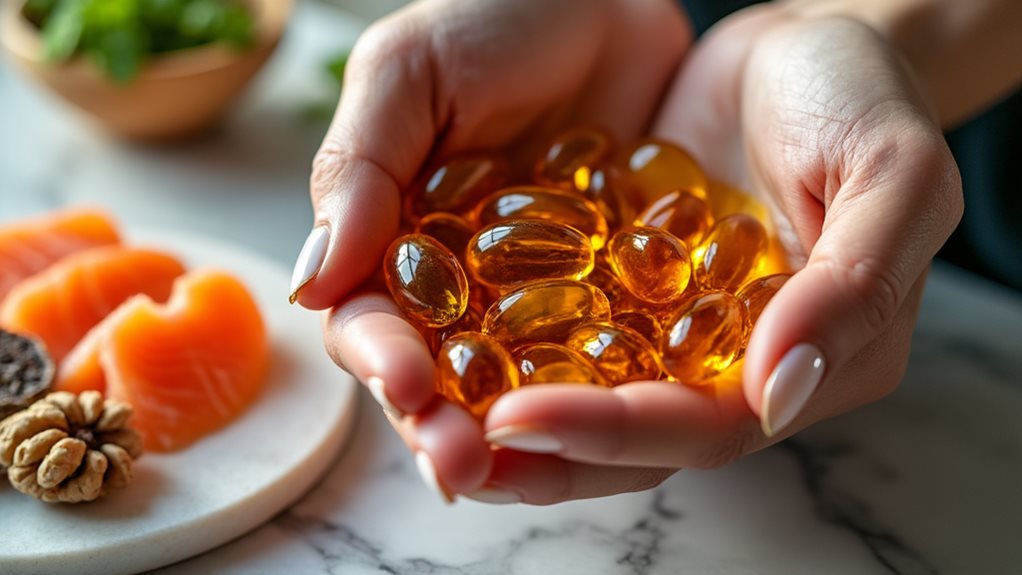
You can use omega-3 fatty acids to support insulin sensitivity in PCOS, and studies link them to better HOMA scores, higher adiponectin, and lower triglycerides.
They also help balance hormones by lowering bioavailable testosterone, raising SHBG, and reducing LH, which can ease acne and hirsutism.
With more stable hormone levels, you may also see more regular cycles and improved ovulation. EPA and DHA content can influence the effectiveness of these effects across different products, so choosing an appropriate dosage matters.
Insulin Sensitivity Support
In women with PCOS, omega-3 supplementation can support insulin sensitivity by lowering insulin resistance markers and improving glucose regulation.
You may see lower fasting insulin, reduced HOMA-IR, and better insulin sensitivity after 12 weeks.
Inflammation control also matters, because omega-3s can reduce hs-CRP and oxidative stress, helping cells respond to insulin more effectively.
Results vary, but the trend supports metabolic improvement.
Hormone Level Balance
Omega-3 support in PCOS goes beyond insulin control, because these fats can also help balance key hormone levels.
You can lower testosterone and LH, raise SHBG in some cases, and reduce acne, hirsutism improvement.
Omega-3s also curb inflammation, with hs CRP lowering and less oxidative stress, which supports steadier hormonal signaling.
Clinical trials show these effects after weeks to months of use.
Menstrual Symptom Relief
For women with PCOS, omega-3 can ease menstrual symptoms by improving hormone patterns and cycle regularity. You may see lower testosterone, steadier cycles, and less disruption after about 8 weeks of 3 grams daily.
It can also support pregnancy planning and libido support, while reducing inflammation, improving insulin sensitivity, and helping your body handle PCOS-related metabolic strain.
Omega-3 for Fertility Before Pregnancy
Before pregnancy, omega-3 fatty acids can support fertility by helping build healthier egg cells and protecting them from oxidative stress. They also influence Melatonin Effects and Thyroid Support, both of which help regulate reproductive function. Omega-3s may help reduce anxiety and support mood during the preconception period Omega-3 and can contribute to overall hormonal balance, which supports reproductive health.
Omega-3 During Pregnancy
During pregnancy, you need enough omega-3s, especially DHA, because it builds fetal brain tissue and supports retinal development.
DHA accumulates quickly in the baby’s brain and eyes, so regular intake from seafood or supplements can help support neurodevelopment and vision.
Experts recommend about 300 mg of DHA each day during pregnancy, along with enough EPA and DHA to meet overall omega-3 needs.
New evidence indicates that omega-3s can favorably influence triglyceride levels in the bloodstream during pregnancy, which may contribute to overall lipid balance. lipid balance Maintaining appropriate omega-3 intake can support fetal development and maternal health beyond the basics of DHA needs.
Fetal Brain Development
Omega-3 fatty acids, especially DHA, play a central role in fetal brain and eye development, because they make up most of the omega-3 fats in the brain and retina.
You need prenatal DHA timing early, and third trimester accumulation matters most, when your baby stores about 70% of brain DHA.
Adequate intake supports neural structure, retinal function, and later problem-solving skills.
Maternal DHA Needs
Because your baby’s brain and eyes need steady DHA supply, pregnancy calls for a higher daily intake than usual.
Aim for 200 to 300 mg DHA daily, start supplementation timing in the second trimester, and use Prenatal nutrition with low-mercury fish or algae supplements.
High-risk cases may need more.
Continue omega 3 monitoring, and plan Postpartum DHA for lactation support.
Omega-3 During Breastfeeding
For breastfeeding women, omega-3 supplementation is generally considered safe and medically recommended when taken at standard doses.
DHA supports infant brain growth, and Infant eczema evidence suggests possible allergy reduction.
If you don’t eat oily fish, supplementation helps cover needs during lactation.
Omega-3 supplements can come in various forms, including algae-based options for vegetarians and vegans with clinically relevant DHA content. third-party purity testing helps ensure low heavy metals and oxidation levels in products.
Omega-3 Benefits for Menopause

During menopause, omega-3 fatty acids can support several common health concerns, including hot flashes, mood changes, heart health, bone strength, and sleep.
Your Hot flash variability may improve, though studies show mixed results.
Mood symptom trends often shift, with some women reporting less depression.
Omega-3s also support vascular health, reduce inflammation, and may help preserve bone density, joint comfort, cognition, and sleep quality EPA vs DHA: Which Fatty Acid to Prioritize by Goal.
How Omega-3 Improves Skin Health
Omega-3 fatty acids also support skin health, and their effects go beyond general wellness. You get less inflammation and redness, smoother skin, and fewer acne flare-ups.
They improve Barrier hydration, limit moisture loss, and support collagen, which strengthens elasticity. This anti aging support also helps reduce fine lines and photoaging.
Regular intake can ease dryness and sensitivity in inflammatory skin conditions.
Adding omega-3s supports a balanced inflammatory response in the skin’s microenvironment, which can help protect against environmental stressors inflammatory response.
Omega-3 Dosage for Women by Goal
Because omega-3 needs vary by goal, women should match the dose to their health priority, whether that means daily maintenance, pregnancy, PMS relief, or heart support.
For skin hydration and Omega 3 acne, 250 to 500 mg of EPA and DHA often works, while pregnancy may need 200 to 300 mg DHA.
PMS and heart goals usually need 1,000 mg or more.
Frequently Asked Questions
Can Omega-3 Help With Postpartum Mood Changes?
Yes, omega-3 may help with postpartum mood changes, especially postpartum depression, because it supports mood regulation and omega 3 mechanisms in the brain.
Studies show EPA-rich supplements can lower depression scores during pregnancy and after birth.
You may also get breastfeeding benefits, since omega-3s support infant development while helping replace DHA lost during pregnancy.
Results vary, so omega-3 works best as part of broader care, not as a stand-alone treatment.
Should Women Take Omega-3 With Meals or on an Empty Stomach?
You should take omega-3 with meals, not on an empty stomach, because dietary fat enhances absorption and lowers nausea, reflux, and fishy burps.
Use Dietary Timing Tips, choose breakfast, lunch, or dinner when food includes nuts, eggs, avocado, or olive oil.
If you use Fish Free Alternatives, pair them with a fat-containing meal too.
Consistent daily intake matters more than morning or evening dosing for steady omega-3 levels.
Are There Side Effects From Taking Too Much Omega-3?
Yes, taking too much omega-3 can cause side effects.
High dose risks include bleeding complications, because omega-3 can slow platelet activity and interfere with clotting.
You may also notice nosebleeds, gum bleeding, bruising, nausea, diarrhea, heartburn, fishy burps, and stomach upset.
Very high amounts can lower blood pressure too much, cause dizziness, and in rare cases trigger irregular heart rhythms.
Can Omega-3 Interact With Birth Control Pills?
Omega-3 usually doesn’t interact with birth control pills, and studies show it doesn’t reduce contraceptive effectiveness. You should still review dosage timing, because fish oil may affect stomach comfort, not hormone control.
Omega 3 absorption tips include taking it with food, avoiding orlistat at the same time, and asking your clinician if you use warfarin or other blood thinners, since bleeding risk can rise.
Is Algae Oil a Good Option for Women Avoiding Fish?
Yes, algae oil is a good option for you if you avoid fish, because it supplies DHA EPA directly. It works well as a vegan omega source, and studies show its absorption is comparable to fish oil.
You also get a clean label choice without mercury or ocean contaminants, which supports safer daily use.
For many women, it offers a practical, well-tolerated way to meet omega-3 needs.
And Finally
Omega-3s can support your hormones, reduce PMS discomfort, and help manage PCOS symptoms. They also support fertility, pregnancy, and breastfeeding by helping build the baby’s brain and eyes. During menopause, omega-3s may help protect heart health and support mood. They can also improve skin hydration and reduce inflammation. To get the right amount for your goal, choose a trusted source and follow medical guidance on dosage.
References
- https://americanpregnancy.org/pregnancy/omega-3-fatty-acids-faqs/
- https://behmedicalbulletin.org/articles/can-the-use-of-omega-3-during-pregnancy-prevent-striae-gravidarum/BMB.galenos.2023.2022-11-097
- https://mvs-pharma.com/omega-3/omega-3-health-benefits-for-women/
- https://pubmed.ncbi.nlm.nih.gov/15385858/
- https://www.medicoverhospitals.in/articles/omega-3-benefits-for-women
- https://www.intimina.com/blog/omega-3-benefits-for-women/
- https://pmc.ncbi.nlm.nih.gov/articles/PMC3046737/
- https://www.sciencedirect.com/science/article/abs/pii/S0753332206003465
- https://www.healthline.com/nutrition/17-health-benefits-of-omega-3
- https://sova-care.co.uk/blogs/the-pcos-bible/benefits-of-omega-3-why-should-you-take-them