Collagen peptides are small, enzymatically derived proteins that dissolve easily in hot and cold liquids, enabling quick absorption and offering nutritional benefits for skin, joints, and bones. In contrast, gelatin is produced by heat and water treatment, resulting in larger molecules that form gels when cooled, making it suitable for culinary applications. Their molecular size affects function: peptides are ideal for supplements, while gelatin supports gelling in recipes. Exploring further reveals how each is selected for specific goals and uses.
Takeaways
- Collagen peptides are enzymatically hydrolyzed, smaller, and soluble, while gelatin is heat-processed, larger, and gels when cooled.
- Peptides are absorbed faster and more easily than gelatin due to their smaller molecular size.
- Collagen peptides dissolve in hot and cold liquids without gelling; gelatin dissolves in hot water and forms a gel upon cooling.
- Both provide similar protein content but differ in texture, functionality, and culinary uses—peptides for drinks, gelatin for gels.
- Peptides offer quicker health benefits for skin and joints; gelatin supports gelling and sustained digestive health.
What Are Collagen Peptides and Gelatin?
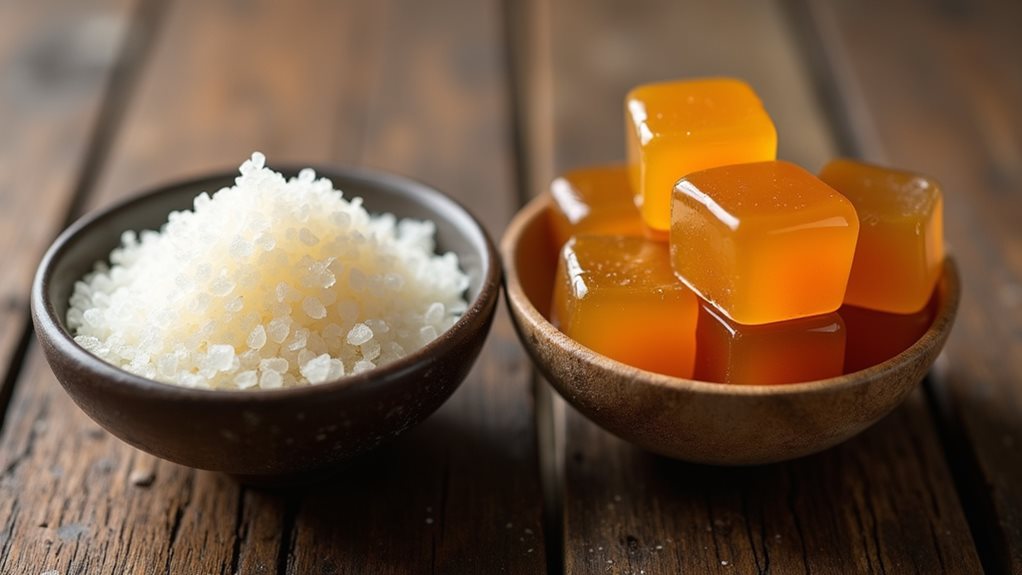
Collagen peptides and gelatin both derive from collagen, the main structural protein in the human body, but they differ considerably in form and use.
Collagen peptides are hydrolyzed, dissolving easily in hot and cold liquids with no gel formation, making them flavor-neutral for drinks. This process enhances their digestibility and bioavailability. Gelatin dissolves in hot water, forms gels when cooled, and has distinct flavor profiles suitable for culinary applications like desserts and broths. Hydrolyzed collagen is more easily absorbed than gelatin, influencing how quickly it can affect bodily functions related to collagen supply.
How Are Collagen Peptides and Gelatin Made?
Collagen peptides are made through enzymatic hydrolysis, breaking down collagen into smaller peptides, while gelatin is produced by partial hydrolysis using heat and water. The processes differ in intensity, resulting in distinct molecular structures: peptides are smaller and more soluble, whereas gelatin retains larger collagen fragments. These manufacturing methods directly impact the final product’s properties and applications. Understanding the differences in processing helps consumers choose the right supplement for their specific health needs. Enzymatic hydrolysis yields more uniform peptides with greater solubility collagen peptides and can influence digestibility and bioavailability.
Production Processes Explained
How are collagen peptides and gelatin produced from animal tissues? Collagen-rich materials are cleaned, pretreated, and extracted using heat or acids.
Gelatin results from partial hydrolysis, used as a gelling agent in cooking techniques and industrial applications.
Collagen peptides undergo full enzymatic hydrolysis, broken into smaller chains, suitable for supplements and functional foods.
Molecular Structure Differences
The molecular structures of collagen peptides and gelatin differ primarily in their degree of organization and stability.
Collagen peptides have high molecular flexibility and minimal cross linking density, making them soluble and small.
Gelatin has reduced molecular order, with increased flexibility but lower cross linking density, resulting in a less stable, denatured protein network that retains larger chain structures.
Are Collagen Peptides and Gelatin Nutritionally Similar?
Nutritionally, collagen peptides and gelatin are very similar because both originate from the same source protein: collagen. Their nutritional profiles are nearly identical, offering about 6–7 grams of protein per serving with minimal fats or carbohydrates.
However, neither provides a complete protein profile due to low levels of essential amino acids like tryptophan, limiting their use as primary protein sources.
A practical consideration for anyone using these supplements is that they can contribute to daily protein intake, but should be paired with other complete protein sources to ensure all essential amino acids are consumed. amino acid completeness
How Does Molecular Size Affect Their Function and Uses?
Because collagen peptides and gelatin differ mainly in their molecular size, this affects their protein structure and enzymatic breakdown.
Collagen peptides, being smaller, are easier to digest and absorb quickly, making them more suitable for supplementation.
Gelatin’s larger chains form gels, which are useful for culinary purposes, but require more digestion before absorption.
Why Do Collagen Peptides Dissolve in Hot and Cold Liquids?
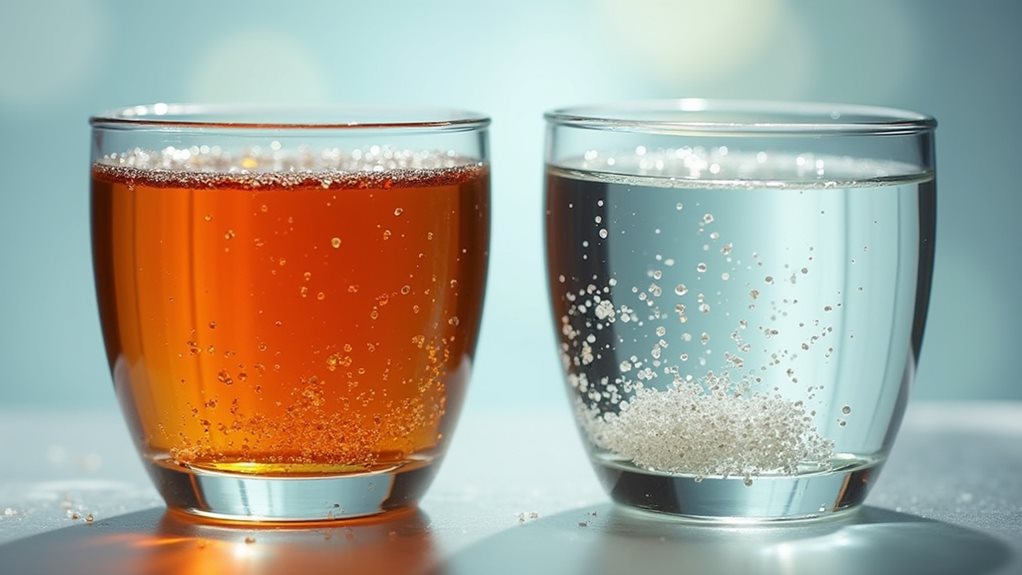
Collagen peptides have smaller molecular sizes due to hydrolysis, which enhances their solubility in both hot and cold liquids.
Heating increases molecular motion, helping the peptides disperse faster, while cold liquids slow this process, causing more clumping.
Unlike gelatin, collagen peptides are designed to dissolve readily across a range of temperatures, maintaining their functional properties regardless of temperature.
Hydrolysis reduces molecular weight, which improves solubility and bioavailability across temperatures collagen hydrolysis.
Molecular Size and Structure
The small molecular size of collagen peptides allows them to dissolve easily in both hot and cold liquids, unlike native collagen or gelatin.
Their reduced size enhances molecular flexibility, which decreases the need for structural integrity to maintain a gel.
This flexibility results in better solubility, as short peptide chains disperse more readily without requiring heat to unwind complex structures.
Hydrolysis Effects on Solubility
Hydrolysis considerably alters the molecular structure of collagen, which enhances its solubility in both hot and cold liquids.
Enzymatic breakdown reduces molecular stability by converting large collagen molecules into smaller peptides, disrupting hydrogen bonds, and changing the triple helix into a random coil.
These changes improve wettability, dispersibility, and solubility, making collagen peptides easier to dissolve across temperature ranges.
Gelatin Versus Peptides Behavior
Because of their molecular structure, collagen peptides dissolve in both hot and cold liquids, unlike gelatin, which mainly dissolves in hot water.
The temperature behavior results from molecular stability, as smaller peptide fragments stay freely mobile and don’t link into a gel.
Gelatin’s longer chains form a gel network when cooled, affecting their solubility and culinary functions.
How Does Gelatin Gell Compared to Collagen Peptides’ Solubility?
Gelatin forms a network through molecular interactions, creating a hydrogel that gels upon cooling.
Collagen peptides are more water-soluble, remaining dissolved without forming a gel, resulting in distinct textural differences and varied functional uses.
Magnesium glycinate is usually the best first choice for sleep because it’s gentle on the stomach and supports relaxation digestive gentleness and a common starting dose is 200–400 mg elemental magnesium, taken 30–60 minutes before bed.
Which Is Easier for Your Body to Absorb : Collagen Peptides or Gelatin?
Collagen peptides are easier for your body to absorb because they’re broken down into smaller peptide chains through hydrolysis, which speeds up the digestion process.
Gelatin, although well absorbed, retains larger molecular structures that require more digestive effort, resulting in slightly slower absorption.
Evidence shows collagen peptides typically lead to faster and more complete peptide appearance in the bloodstream, making them more efficient for quick absorption.
Hydrolysis and Fragment Size
Hydrolysis markedly impacts the structure and size of collagen-derived proteins, making them easier for your body to absorb. It alters molecular interactions and protein folding, breaking long protein chains into smaller fragments.
Collagen peptides, with their reduced size, are more digestible and soluble than gelatin, which retains larger, less processed protein structures, affecting bioavailability and absorption efficiency.
Absorption Speed Differences
Since smaller protein fragments are absorbed more quickly, collagen peptides have a clear advantage over gelatin regarding absorption speed.
The absorption rate depends on molecular size, with collagen peptides at roughly 3,000 to 10,000 Da, enabling faster entry into the bloodstream.
Gelatin, at 100,000 to 300,000 Da, is absorbed more slowly because of its larger molecular size.
Digestive Process Efficiency
Which form of collagen is easier for your body to digest? Collagen peptides are more efficiently processed because their smaller molecular stability requires less enzymatic breakdown, allowing faster absorption.
Gelatin’s longer peptide chains need more enzymatic work before absorption, making digestion less straightforward.
Both are absorbed well, but collagen peptides generally offer a more streamlined digestive process.
When Should You Use Collagen Peptides or Gelatin?
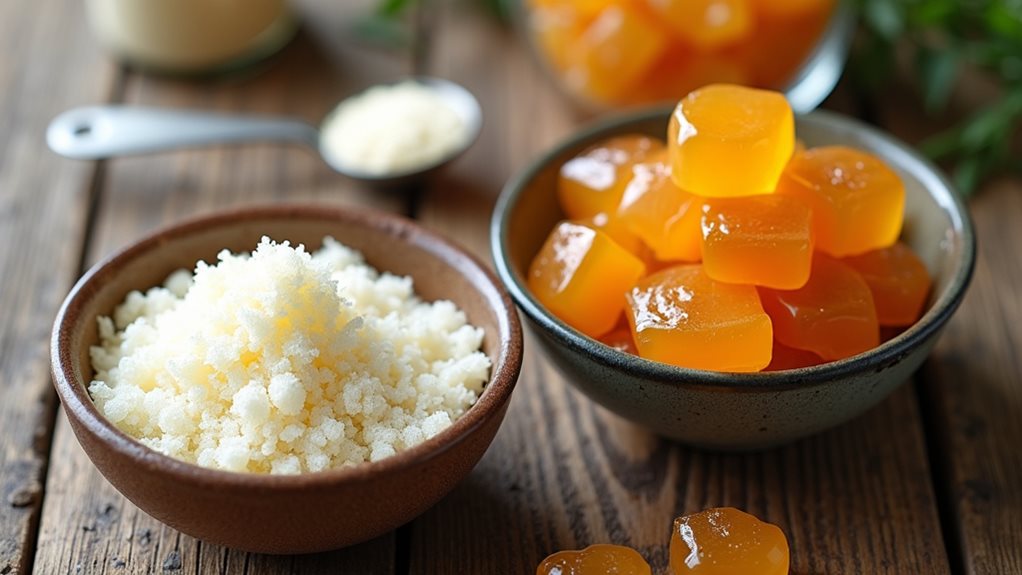
You should choose between collagen peptides and gelatin based on your recipe or supplement routine needs.
Collagen peptides are ideal for beverages due to their neutral flavor and easy dissolving, requiring no heat.
Gelatin is better for recipes needing a gel-like texture, which often involve heating and cooling, affecting flavor pairing and storage considerations.
In addition, the choice can influence the potential for specific applications such as supporting skin, joints, gut, or general connective tissue, depending on your goals. easier amino acid profile
What Are the Health Benefits of Collagen Peptides and Gelatin?
Collagen peptides and gelatin offer various health benefits supported by scientific studies, although the strength of evidence varies. They can improve skin hydration and elasticity.
They also support joint and cartilage health, and potentially enhance bone density. Their cooking versatility allows easy incorporation into meals.
This makes it easier to accommodate dietary restrictions and helps make consistent supplementation more accessible for overall health maintenance. Vitamin C is essential for collagen synthesis, and ensuring sufficient intake can maximize the benefits of collagen supplementation collagen synthesis when paired with a balanced diet.
How Do They Impact Skin, Joints, and Gut Health?
Both collagen peptides and gelatin influence skin, joints, and gut health through their unique properties and effects.
Collagen peptides improve skin hydration, elasticity, and reduce wrinkles, often used in cosmetic applications.
Gelatin supports joint comfort and may coat the gut, making it suitable for culinary uses.
Collagen peptides are absorbed faster, providing more immediate benefits.
Meanwhile, gelatin’s slower digestion enhances gut support.
Which Is Better for Gelling Recipes or Nutritional Support?
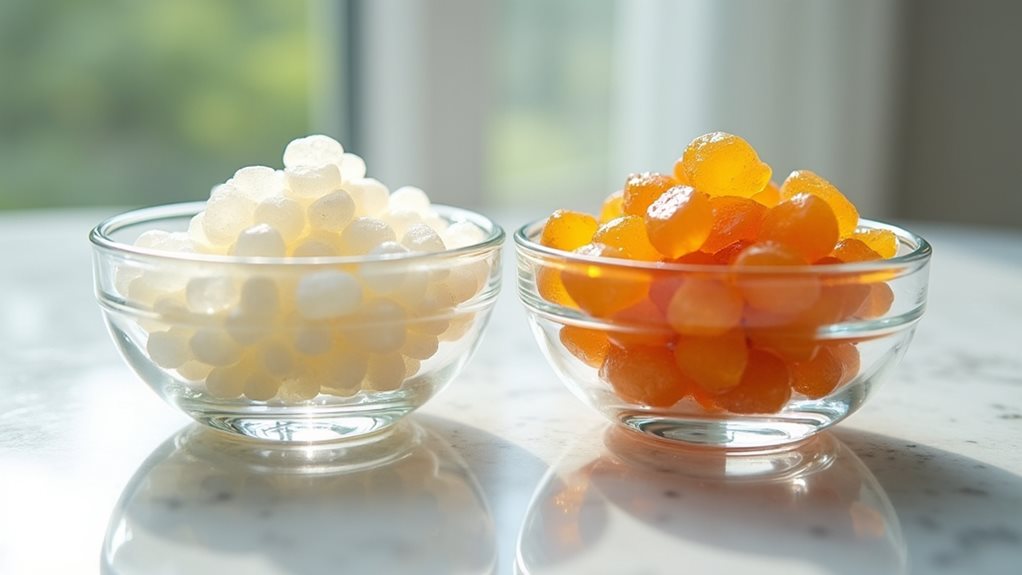
For gelling recipes, gelatin is generally the superior choice because it creates a firm, elastic gel that holds its shape when cooled. Its gelling performance depends on cooking techniques, such as dissolving in hot liquids, which influence flavor combinations and texture. Collagen peptides can be digested and absorbed more easily, supporting nutritional intake without altering gel structure, and they are ideal for drinks and nutritional support. Structural proteins assist in understanding why gelatin forms gels while collagen peptides do not.
How Do You Choose Between Collagen Peptides and Gelatin for Your Goals?
Choosing between collagen peptides and gelatin depends largely on your specific health goals and how you plan to incorporate these supplements into your routine.
Consider flavor profiles and cooking tips: collagen peptides have neutral tastes and dissolve easily in drinks, making them convenient.
Gelatin provides thicker textures suitable for recipes. Match the form to your desired function for best results.
Frequently Asked Questions
Can Collagen Peptides and Gelatin Be Used Interchangeably in Recipes?
Collagen peptides and gelatin can’t be used interchangeably in recipes due to their texture comparison and cooking compatibility.
Gelatin forms a gel when cooled, providing firmness and structure, which is essential for set desserts.
Collagen peptides remain soluble and don’t gel, making them suitable for drinks and smoothies.
Substituting one for the other often results in undesirable texture changes or recipe failure, especially when a specific gel or firmness is required.
Do Collagen Peptides or Gelatin Taste Different?
Collagen peptides and gelatin have similar flavor profiles, both being neutral or mild in taste. However, texture differences are notable: collagen peptides remain liquid and don’t gel.
Gelatin creates a thick or gel-like consistency when cooled. These texture differences influence the sensory experience more than flavor, with collagen peptides blending seamlessly into beverages and gelatin affecting the mouthfeel through gelling.
These differences impact how each ingredient is used in recipes.
Are There Any Allergens Associated With Collagen Peptides or Gelatin?
Collagen peptides and gelatin can pose allergen potential, especially for individuals sensitive to specific source proteins. Allergic reactions, including immune responses like skin rashes, swelling, or respiratory issues, may occur if you have allergies to fish, bovine, porcine, shellfish, or poultry sources.
Sensitized people are at higher risk, and reactions can be severe, requiring emergency care. Always check product labels for source details to minimize allergen exposure and prevent adverse immune reactions.
How Long Do Collagen Peptides and Gelatin Last in Storage?
Collagen peptides typically last 1 to 2 years in dry storage, with longer shelf life possible under perfect conditions.
While gelatin’s shelf life is similar, it is less specifically documented.
Proper storage tips include keeping powders in a cool, dark, dry place, sealed tightly, and avoiding moisture, heat, and light exposure.
Once opened, use collagen peptides within 6 to 12 months for ideal quality.
Gelatin similarly benefits from airtight, moisture-free storage.
Can Vegetarians or Vegans Use Collagen Peptides or Gelatin?
Vegetarians and vegans can’t use collagen peptides or gelatin because both are animal-derived, sourced from bones, skin, or connective tissues.
For ethical considerations, plant-based alternatives like agar-agar, pectin, and carrageenan serve as gelling agents, offering similar functions without animal products.
These options support plant-based diets and align with ethical values, but don’t provide actual collagen, instead supporting body functions that promote collagen synthesis naturally.
And Finally
Choosing between collagen peptides and gelatin depends on your specific needs. Collagen peptides are easily absorbed, support skin and joint health, and dissolve in both hot and cold liquids. Gelatin is effective for gelling recipes and provides similar nutritional benefits but requires hot liquids to dissolve. Your selection should consider your health goals, preferred usage, and whether you need a supplement or a cooking ingredient.
References
- https://www.healthline.com/nutrition/collagen-vs-gelatin
- https://www.barebiology.com/blogs/news/is-collagen-powder-the-same-as-gelatin
- https://www.youtube.com/watch?v=r9JMMjGfOdY
- https://prlabs.com/blog/collagen-vs-gelatin-which-one-offers-better-health-benefits.html
- https://www.reddit.com/r/nutrition/comments/n2yqh6/does_collagen_have_the_same_nutritional_values_as/
- https://www.youtube.com/watch?v=jisiLmG0cDY
- https://www.organised.co/guides/vs-comparisons/collagen-peptides-vs-gelatin
- https://www.verywellhealth.com/gelatin-vs-collagen-11807008
- https://www.performancelab.com/blogs/nutrition/gelatin-versus-collagen
- https://www.anec.org/en/difference-collagen-gelatin-collagen-peptide.htm