
You don’t need a perfect hour for fish oil, because morning, afternoon, and evening doses absorb similarly. What matters most is taking it with a meal, especially one that contains fat, since fat triggers bile release and improves omega-3 absorption. Taking fish oil with food also lowers burping, nausea, and reflux. If a single dose bothers you, split it and keep the timing consistent, so results stay steady and easy to maintain, with more practical details ahead.
Takeaways
- Fish oil timing matters less than consistency; morning, afternoon, and evening work similarly for absorption.
- Take fish oil with a meal, especially one containing fat, to improve omega-3 absorption.
- Empty-stomach fish oil can reduce uptake and increase burping, nausea, reflux, and stomach discomfort.
- Taking fish oil with your largest meal may help both absorption and digestive tolerance.
- If one dose causes reflux, split the dose or choose a triglyceride or phospholipid form.
What Is the Best Time to Take Fish Oil?
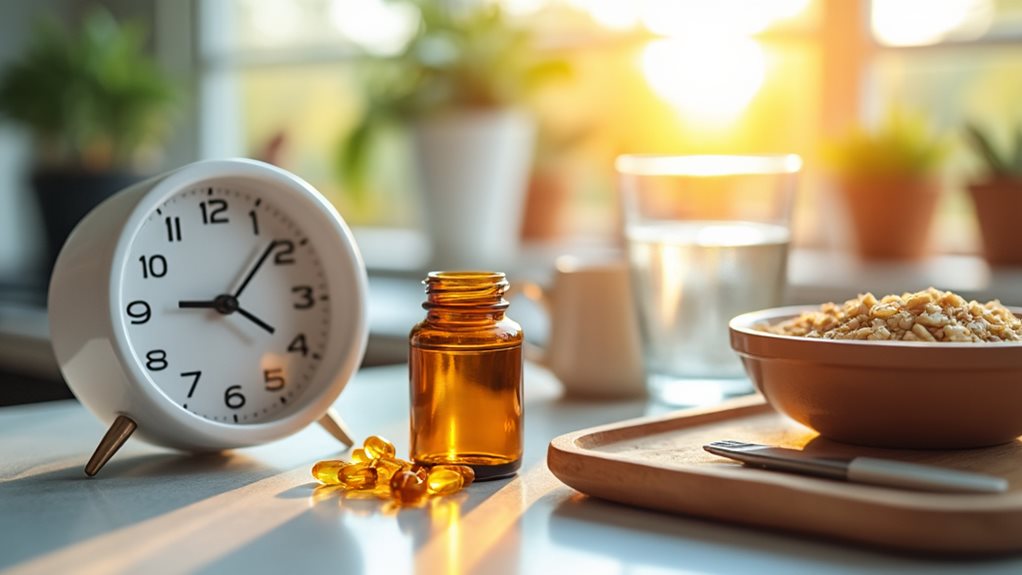
There isn’t one single best time to take fish oil, because morning, afternoon, and evening doses all produce similar EPA and DHA absorption.
You should choose a time you can repeat daily, since consistency supports long-term tissue levels.
If digestive side effects bother you, take it with a meal.
Probiotic timing matters less than routine, and empty-stomach use can reduce uptake.
Taking fish oil with a meal containing fat may help your body absorb more omega-3s.
Does Fish Oil Absorb Better With Meals?
You’ll absorb fish oil better when you take it with a meal that contains fat, because fat triggers bile release and helps emulsify the oil. On an empty stomach, absorption drops sharply, while a high-fat meal can raise uptake to around 60–70%. Taking it mid-meal can also reduce fishy burps, nausea, and stomach discomfort. After meals, fish oil is absorbed more effectively because it is a fat-soluble nutrient that needs dietary fat to support digestion and absorption.
Fat Aids Absorption
Fat helps fish oil absorb better because it triggers bile release, and bile emulsifies omega-3 fats in the intestine.
You shouldn’t Optimize empty stomach dosing for standard oil, because bile stays low and absorption drops.
Compare fat free alternatives and emulsified comparisons, since Formulation bioavailability rises when fat is present.
Ethyl ester and triglyceride forms both improve, but fat still drives uptake.
Take With Meals
With fish oil, taking it with a meal usually improves absorption because food triggers bile release and helps break the oil into smaller droplets.
You’ll absorb more omega-3s, especially with Dietary Fat Sources like eggs, nuts, or avocado.
Take it with your largest meal, before or after matters little.
This also supports Fish Oil Burp Prevention, and reduces nausea, reflux, and empty-stomach discomfort.
Why Fat Improves Fish Oil Absorption
When you take fish oil with fat, your body releases bile salts, and those salts help break down the oil for absorption. A fat-containing meal can increase omega-3 uptake by 200% to 300%, while an empty stomach can cut absorption by 60% to 70%. Meals with about 10 to 15 grams of fat, like avocados, nuts, seeds, or olive oil, give you the best meal-time absorption advantage. The omega-3s from fish oil are transported in micelles formed during fat digestion, which enhances their uptake by the intestinal lining. bioavailability
Fat-Boosted Omega-3 Uptake
Because omega-3s like EPA and DHA are lipid-soluble, your body absorbs them best in the presence of dietary fat. Fat in the stomach creates a dissolving medium, triggers bile, and supports EPA DHA Transport.
Triglyceride fish oil often performs better than ethyl esters, especially with meals. Consistency Matters, so take your dose regularly with some fat for steadier omega-3 uptake.
Meal-Time Absorption Advantage
Dietary fat plays a direct role in fish oil absorption, since omega-3s like EPA and DHA are fat-soluble and need bile to be emulsified before your body can absorb them.
You’ll absorb far more with meals containing 5-10 grams of fat, often 60-90%, versus about 20% fasting.
This enhances heart health outcomes and dosing compliance, especially for ethyl ester forms.
Morning vs Evening Fish Oil: What Studies Show
Although timing doesn’t change fish oil’s basic absorption much, studies show a possible advantage for morning dosing in some metabolic settings. You may see a Morning triglyceride advantage, while Circadian Inflammation and night dosing effects can shift symptoms. Human and mouse dose timing outcomes favored morning intake for triglyceride lowering, yet EPA and DHA bioavailability stayed similar. The daily omega-3 dosage depends on age, goals, and the EPA/DHA content of the supplement being taken omega-3 dosage guidelines.
Pick a Fish Oil Time You’ll Remember
Pick breakfast, lunch, or dinner, then link it to Habit formation and reminder systems.
Take it with a fat-containing meal, since absorption depends more on food than clock time.
If your routine changes, use alarms, pill organizers, or a checklist, so you stay consistent.
In addition, aligning your fish oil intake with a regular daily routine can help improve long-term adherence habit formation and ensure consistent dosing.
How to Prevent Fish Oil Reflux
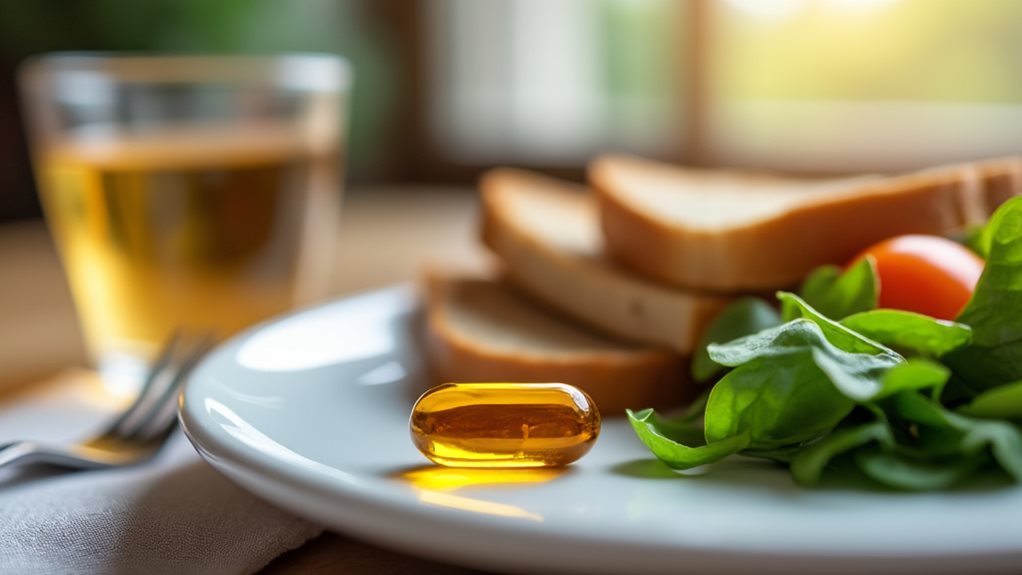
To prevent fish oil reflux, take each dose immediately before a meal that contains at least 10 grams of fat, because food helps the oil mix in the stomach and lowers the chance of it floating back up.
Additionally, consider selecting an omega-3 supplement that uses a stable, easily digestible form such as triglyceride or phospholipid to support better absorption and reduce reflux risk form quality.
Use enteric coating benefits, practice meal portion timing, follow capsule hydration tips, try left side positioning, and track reflux symptom tracking for oil floating prevention.
Should You Take Fish Oil With Your Largest Meal?
Yes, taking fish oil with your largest meal usually improves absorption because that meal is more likely to contain enough fat for EPA and DHA to enter the body efficiently.
Consuming fish oil with a fat-rich meal can also help minimize GI issues like reflux, burping, and nausea, making the supplement easier to tolerate. Omega-3 absorption is enhanced when dietary fat is present, which supports better uptake of EPA and DHA. Lunch or dinner often works best, and fat-containing foods like avocado, nuts, or olive oil help. If you have sensitive digestion, start with a smaller dose and gradually increase as tolerated to reduce any discomfort.
Is It Better to Split Your Fish Oil Dose?
Splitting your fish oil dose can make it easier to tolerate, especially if a single large serving causes reflux, indigestion, burping, or nausea. Taking fish oil with meals helps absorption and reduces side effects, and aligning dose timing with your routine can improve comfort without changing total omega-3 intake or blood levels. Creatine is another supplement that supports brain energy and may help with fatigue and stress resilience, particularly in women with lower baseline stores brain energy and may interact with mood when combined with certain medications.
Can You Take Fish Oil on an Empty Stomach?
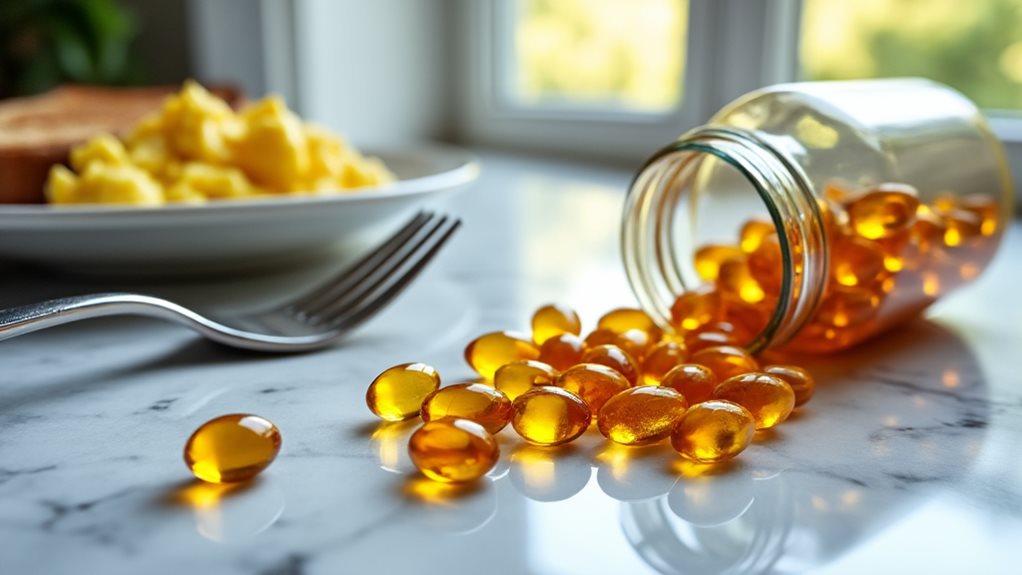
You can take fish oil on an empty stomach, but absorption drops sharply, and you may get less than 20% to 30% of the benefit.
Taking it with a meal that includes at least 5 to 10 grams of fat enhances omega-3 uptake, and it helps your body use bile and digestive enzymes more effectively.
Empty stomach use also raises the risk of reflux, nausea, and fishy burps, so mid-meal intake is usually the better choice.
Covering safety and interactions, fish oil and magnesium are generally safe to take together, and combining them does not introduce major adverse interactions for most people. absorption of omega-3s may still be optimized when both are taken with a meal that contains fat, supporting better overall utilization of the nutrients.
Empty Stomach Risks
An empty stomach can limit fish oil’s benefit and increase side effects, because omega-3s absorb poorly without dietary fat.
You may see gastric distress patterns, nausea, reflux, and burps, while capsule dissolution variability can raise symptom triggers.
Absorption can drop 60-70%, so risk reduction matters.
Without food, bile and enzymes stay low, and EPA and DHA bioavailability falls, especially with larger doses.
Take With Meals
Take fish oil with meals, because food, especially food that contains fat, improves omega-3 absorption and lowers the chance of stomach upset.
A meal with fat helps you absorb omega-3s 3 to 5 times better, and any fat works. Taking capsules without food can cut absorption by 60 to 70 percent.
Follow Reflux prevention tips, and use breakfast, lunch, or dinner.
Does Evening Fish Oil Offer Extra Benefits?

Evening fish oil can offer practical benefits, but its value depends more on consistency and absorption than on the clock alone.
Circadian inflammation timing may make nighttime joint improvement more likely, since your body’s inflammatory patterns shift during rest.
If you take it with a fat-containing dinner, you improve absorption, and steady evening use supports reliable long-term results.
Can Fish Oil Help You Sleep Better?
Fish oil may also influence sleep, because omega-3 fatty acids support brain signaling and circadian rhythms that help regulate rest.
Omega 3 mechanisms may improve sleep regulation, and studies link fish oil with better sleep quality, shorter sleep onset, and longer sleep time.
You may see targeted benefits in special populations, including children, older adults, and people with sleep disorders, though results stay mixed.
Can Fish Oil Ease Morning Stiffness?
You may notice less morning stiffness when you take fish oil consistently, because EPA and DHA can help reduce inflammation overnight.
Clinical studies link daily doses of about 2,000 to 3,000 mg with fewer stiffness hours after 6 to 12 weeks, and some people report benefit from taking it in the evening.
For rheumatoid arthritis, this timing may support overnight recovery and ease movement when you wake.
1,000 mg to 2,000 mg of EPA and DHA daily has been associated with anti-inflammatory effects that may contribute to morning relief.
Morning Stiffness Relief
Although morning stiffness often comes from ongoing joint inflammation, omega-3s in fish oil may help ease it by calming inflammatory signals.
You may notice shorter stiffness periods, better joint mobility, and fewer tender joints with steady use.
For gut absorption and reflux prevention, take fish oil with food.
Benefits usually build gradually, and consistent dosing supports steadier symptom control in rheumatoid arthritis.
Evening Dose Benefits
Taken at night, fish oil may better match the body’s circadian rhythm and help reduce the inflammatory activity that rises during sleep.
You may see less morning stiffness because omega-3s can suppress overnight cytokines, support joint repair, and improve sleep quality.
Keep dose consistency habits, since regular bedtime use matters.
If Gastrointestinal side effects occur, taking it with food can help.
Does Fish Oil Timing Affect Heart Health?
Fish oil timing doesn’t appear to change heart health outcomes in any major way. You’ll get more from daily consistency than from morning or evening dosing.
Take it with a meal that has dietary fat, like eggs or avocado, to improve absorption.
If Gut side effects bother you, split doses.
Use adherence strategies, because skipped doses lower omega-3 buildup and reduce benefits.
Does Fish Oil Timing Affect Brain Benefits?
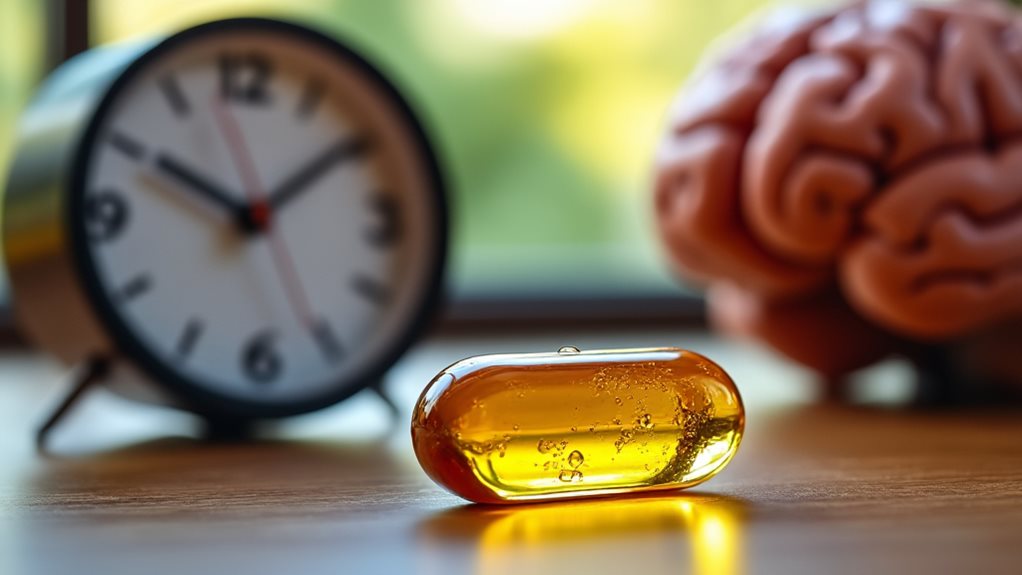
Brain benefits from fish oil depend more on steady use than on the exact clock time, but timing can still affect absorption. You’ll usually see cognitive gains after 24 weeks, with 2,000 to 3,000 mg daily.
Take it with a fat-containing meal, morning or evening, and use routine consistency tips, Gastrointestinal comfort strategies, and split doses if you need less discomfort.
Which Fish Oil Form Absorbs Best?
Among fish oil supplements, triglyceride and re-esterified triglyceride forms absorb better than ethyl ester forms.
In a Triglyceride vs ethyl ester comparison, you get more EPA and DHA into your blood, especially during Fasting absorption comparison.
Studies show TG forms can raise plasma levels 50% and improve uptake up to 76% without a high-fat meal.
Ethyl esters need fat to absorb well, often only 20% fasted.
What Foods Pair Best With Fish Oil?
With fish oil, the best food pairings are those that supply healthy fat, because EPA and DHA need fat for good absorption.
Choose avocado, olive oil, nuts, eggs, or nut butter, and pair them with colorful fruit for added antioxidants.
Snack pairing ideas and fruit smoothie combos work well, but avoid refined grains and processed snacks, which can lower uptake and benefits.
Best Fish Oil Timing for Sensitive Stomachs
You should take fish oil with a meal, not on an empty stomach, because dietary fat improves absorption and lowers the chance of fishy burps or reflux.
For sensitive stomachs, the largest meal of the day often works best, and lunch or dinner can be especially useful when they include eggs, yogurt, avocado, olive oil, or fatty fish.
If symptoms continue, you can split the dose between two meals, start with a lower amount, and increase it slowly as your stomach adjusts.
With Meals, Not Empty
Because omega-3 fatty acids are fat-soluble, fish oil works best when you take it with a meal that contains fat.
Your gastrointestinal comfort hacks improve when you follow fat content guidelines, like eggs, avocado, nuts, or olive oil.
Taking it with at least 5–10 grams of fat can triple absorption, reduce reflux, and prevent wasted supplement dose with empty-stomach use.
Split Doses For Comfort
If a full dose of fish oil upsets your stomach, splitting it into two smaller doses can improve tolerance without reducing daily intake.
You can take one dose with breakfast and one with dinner, which may ease nausea and burping.
Check antacid timing, because antacids can change absorption.
This approach also supports reflux prevention, since smaller amounts reduce stomach pressure and irritation.
Largest Meal Timing
Taking fish oil with the largest meal of the day often improves both comfort and absorption for sensitive stomachs.
You should use eating cues from lunch or dinner, because this habit building links supplements with food and reduces reflux triggers.
A meal with 30 to 50 grams of fat enhances omega-3 uptake, and taking it during the heaviest meal improves digestion comfort.
How to Build a Fish Oil Routine That Sticks
Build your fish oil routine around consistency and fat-containing meals, not around a perfect clock time.
Habit consistency and dose tracking help you stay on schedule, while a morning reminder or evening routine can anchor the habit.
Take it with eggs, avocado, nuts, or other fats, because absorption improves.
If reflux bothers you, split the dose between two meals and avoid empty-stomach use.
Frequently Asked Questions
Can Fish Oil Be Taken After Exercise?
Yes, you can take fish oil after exercise. For best results, use post workout dosing with a recovery meal that includes fat, because it improves absorption and may help reduce soreness.
Exercise meal timing matters more than exact minutes after training, and omega-3s work best with consistent daily use.
If you take higher doses, check with a clinician, since they can affect bleeding risk and interact with some medicines.
Does Fish Oil Timing Matter for Athletes?
Yes, fish oil timing matters less than your daily routine for athletic performance.
You’ll get the best results by taking it consistently, because consistency matters more than a single pre-workout dose.
Take 1 to 3 grams of EPA and DHA with a fat-containing meal, ideally dinner, to improve absorption and reduce burps.
Avoid large doses right before training, since they can slow digestion and cause discomfort.
Should Fish Oil Be Taken With Other Supplements?
Yes, you can take fish oil with other supplements, and supplement stacking often works well.
For better absorption tips, pair it with vitamin D, vitamin K2, or calcium-rich meals, because fat helps omega-3 uptake.
Avoid combining it casually with anticoagulants, aspirin, NSAIDs, or clopidogrel, because bleeding risk can rise.
You should also separate fish oil from thyroid medicine, if a clinician advises it.
Does Fish Oil Timing Affect Burping?
Yes, fish oil timing can affect burping. You can reduce it by taking capsules with your largest meal, mid-meal, with fatty foods, which supports fatty acid absorption and stomach comfort.
You can also split doses, use enteric-coated softgels, or take them in the evening so any burps happen during sleep.
Avoid carbonated drinks, acidic foods, and taking fish oil before or after eating, since they can increase reflux and burping.
Can You Take Fish Oil at the Same Time as Medications?
You can take fish oil with some medications, but you should separate it from blood thinners, blood pressure drugs, and orlistat, because interactions can raise bleeding risk or lower absorption.
Taking With Meals improves tolerance and Vitamin Absorption, especially with fat-containing food.
Keep fish oil at least 2 hours from orlistat, and ask your healthcare provider before combining it with diabetes medicines, statins, or daily anticoagulants.
And Finally
Fish oil timing matters less than consistency, but taking it with a meal can improve absorption and reduce stomach upset. You should choose a time you can repeat every day, whether that’s breakfast or dinner. Fat in food helps your body use the oil more efficiently, and a routine makes missed doses less likely. If you get nausea or burps, take fish oil with your largest meal and keep the schedule steady.
References
- https://drinkag1.com/blog/post/best-time-to-take-fish-oil
- https://health.yahoo.com/wellness/nutrition/vitamins-supplements/articles/dietitians-best-time-fish-oil-131400496.html
- https://resources.healthgrades.com/right-care/cholesterol/best-time-to-take-fish-oil
- https://www.vinmec.com/eng/blog/when-is-the-best-time-to-take-omega-3-en
- https://omegaquant.com/whats-the-best-time-to-take-your-fish-oil-supplement/