
You’ll usually get more EPA and DHA for your money with fish oil, and it’s the better-studied choice for lowering triglycerides and supporting heart health. Krill oil may absorb a bit better because its omega-3s are in phospholipids, and it often causes less burping or fishy aftertaste. Fish oil is cheaper and more transparent on dose, while krill oil can suit you if comfort matters. Keep going, and the differences become clearer.
Takeaways
- Fish oil usually provides more EPA and DHA per serving, making it stronger and more cost-effective for most people.
- Krill oil may absorb better and cause less burping, reflux, and fishy aftertaste.
- Fish oil has better evidence for lowering triglycerides and supporting cardiovascular health.
- Krill oil adds phospholipids, astaxanthin, and choline, but usually at a much higher price.
- Fish oil is generally the better choice for high-dose omega-3 needs; krill oil suits people prioritizing tolerance.
Fish Oil vs Krill Oil: Key Differences

Fish Oil vs Krill Oil: Which Is Actually Better?
Fish Oil vs Krill Oil: Key Differences
Although fish oil and krill oil both supply omega-3s, they differ in absorption, dose strength, price, and added nutrients.
You get phospholipid delivery and faster receptor binding with krill oil, yet fish oil usually gives more EPA and DHA per serving.
Fish oil offers better dosing transparency, lower cost, and stronger omega 3 purity, while krill oil adds astaxanthin and choline.
Krill oil may also produce higher blood EPA and DHA levels over 72 hours in some studies. bioavailability
How Fish Oil and Krill Oil Are Sourced
Fish oil usually comes from small, cold-water oily fish such as sardines, anchovies, mackerel, herring, and menhaden, while krill oil comes only from Antarctic krill.
You get fish oil from Regulated Fisheries, and processors follow strict processing standards after rapid harvest.
You get krill oil from Antarctic waters, where controlled harvesting protects ecosystems, and crews process whole krill quickly to preserve quality.
Human supplements are the highest-value fish oil products, which is why so much processing goes into turning the raw oil into capsules for health-conscious consumers and that emphasis on quality controls helps ensure potency and purity.
What Omega-3s Does Each Provide?
Both oils supply the long-chain omega-3s EPA and DHA, but they do so in different amounts and forms.
EPA and DHA serve distinct roles in the body, and your choice may depend on your health goal.
Fish oil usually gives you more EPA per capsule, while krill oil often shows a higher EPA DHA ratio variability.
For ALA content comparison, both stay low, though krill oil can contain trace amounts.
You’ll mainly get marine omega-3s, not plant-based ALA. EPA vs DHA helps prioritize which omega-3s to focus on for your goal.
Does Krill Oil Absorb Better?

Krill oil often absorbs better than fish oil because its omega-3s sit in phospholipids, which the body can use more easily than triglycerides or ethyl esters.
Krill oil may also provide higher plasma levels at lower doses due to these phospholipid-bound omega-3s, which can influence overall uptake and utilization. phospholipid form
Fish Oil vs Krill Oil for Heart Health
Fish Oil vs Krill Oil: Which Is Actually Better?
Fish Oil vs Krill Oil for Heart Health
You get omega-3s from both fish oil and krill oil, but fish oil usually provides more EPA and DHA per serving, which supports heart health more directly.
Clinical research links fish oil to lower triglycerides and fewer cardiovascular events in high-risk groups, while krill oil shows some promising lipid changes but has less long-term evidence.
If you want the better-studied option for cardiovascular support, fish oil remains the primary choice in current guidelines.
In addition, evidence on triglyceride reduction with fish oil generally requires a moderate to high dosage of EPA and DHA to observe meaningful changes. triglyceride lowering
Omega-3 Absorption
When comparing omega-3 absorption for heart health, krill oil often raises blood levels more efficiently than standard fish oil because its omega-3s sit in phospholipids instead of triglycerides.
You get better enzyme efficiency and faster uptake, especially with lower doses.
With dose matching, fish oil can narrow the gap, but krill oil still tends to absorb more readily and increase omega-3 status.
Cardiovascular Support
For heart health, both fish oil and krill oil can improve lipid markers, but neither clearly dominates across every outcome.
You may lower triglycerides with either, yet fish oil has stronger evidence for reducing heart events and raising the omega 3 index at higher doses.
Krill oil offers antioxidant benefits, but studies haven’t shown clear blood pressure or disease-risk advantages.
Which Lowers Triglycerides More?
You’ll usually see triglycerides fall more from the oil that delivers more total EPA and DHA, because the effect depends on dose rather than source alone. Fish oil often uses up to 4 g of EPA+DHA daily to cut triglycerides by 20% to 50%, while krill oil has shown smaller drops at lower omega-3 doses. When you compare equal EPA doses, studies and meta-analyses show no significant difference, so you should weigh dose, absorption, and product strength when choosing. DHA+EPA content is the key driver of triglyceride reduction, not the oil source itself.
Triglyceride-Lowering Evidence
Although both oils can lower triglycerides, fish oil has the stronger and more consistent human trial evidence, especially at higher doses.
Your dose adequacy matters most, and baseline triglycerides shape results.
Fish oil often cuts levels 20% to 50% in raised cases.
Krill oil can help, but lower doses often miss significance.
Head-to-head trials usually show similar effects, not clear superiority.
EPA Dose Comparison
Dose matters more than source when the goal is lowering triglycerides, and EPA-containing oils follow the same basic rule. You need EPA dosing targets near 2–4 g daily for meaningful drops, because triglyceride outcomes evidence shows 1 g barely changes levels.
Fish oil and krill oil can both work, but higher total EPA doses drive the result, not the label.
Practical Choice Factors
When triglyceride lowering is the main goal, fish oil usually has the stronger practical case because it has the better evidence at higher doses.
You’ll usually get greater reductions, 20% to 50% at up to 4 grams.
Krill oil can help, but its drop is often about 10%.
For budget effectiveness and evidence strength, fish oil’s dose-response data guide your choice.
Fish Oil vs Krill Oil: Safety and Side Effects
Both fish oil and krill oil are generally safe in recommended doses, but higher intakes can raise important risks.
You should watch for bleeding, lower blood pressure, and atrial fibrillation.
Allergic reaction risk rises with krill oil if you react to shellfish.
For digestive upset management, note loose stools, reflux, or fullness.
High doses can also affect warfarin, aspirin, and diabetes control.
Additionally, timing and concomitant food intake can influence absorption and tolerance, so consider how you take these supplements with meals to optimize comfort and potential effects. absorption timing
Which Is Easier on Your Stomach?

When you compare fish oil and krill oil, you’ll often notice differences in digestive tolerance, reflux, and aftertaste.
Krill oil’s phospholipid form can make it easier to absorb, and studies report fewer complaints of stomach discomfort, heartburn, and nausea.
Fish oil can still work well, but it more often causes burping, a fishy aftertaste, and other mild digestive issues. Additionally, some people may experience minor bleeding risk with high doses, so monitoring intake is prudent for those on anticoagulants. phospholipid absorption
Digestive Tolerance
Digestive comfort often separates these two omega-3 options.
You get fewer bloating, nausea, and indigestion reports with krill oil, because its phospholipids absorb more easily.
Reflux management matters less than overall tolerance, yet swallowing comfort improves since capsules stay smaller.
Fish oil can burden digestion, especially with low bile or sensitive stomachs, while krill oil usually causes fewer interruptions and better compliance.
Reflux And Aftertaste
Although both supplements supply omega-3s, krill oil is usually easier on reflux and aftertaste because its phospholipids release fewer volatile compounds.
You may notice less burping, fewer fishy repeats, and quicker relief, since astaxanthin helps limit oxidation.
For better digestive tolerance, take it with food, and use careful supplement timing.
Fish oil often causes longer aftertaste and more gastric gas.
Fish Oil vs Krill Oil: Cost Comparison

Fish oil usually costs far less than krill oil because it delivers much more EPA and DHA per serving. You can plan your budget per serving around its lower cost per omega3, and the dosage price comparison stays favorable.
Retail price variability still shows fish oil at $0.05–$0.10 per gram, while krill oil often runs $0.30–$0.80, about 3–5 times higher.
Is Krill Oil Worth the Higher Price?
Krill oil’s higher price only makes sense when you look at what you get per dose, not just the label cost.
You should do a buy benefits comparison, because fish oil often delivers 6 to 10 times more EPA+DHA per dollar.
Label transparency checking helps you spot low-dose capsules, and concentrated fish oil usually meets clinical needs with fewer capsules and less monthly expense.
Which Supplement Is More Sustainable?
When you compare sustainability, the biggest difference is the scale and impact of harvesting.
Krill oil comes from tightly regulated Antarctic fisheries, with low bycatch, abundant stocks, and traceability reporting.
Fish oil often depends on overfished stocks, industrial trawling, and higher emissions.
If you value dietary diversity, krill’s smaller ecological footprint can matter more, because it reduces pressure on marine food webs.
Who Should Choose Fish Oil?
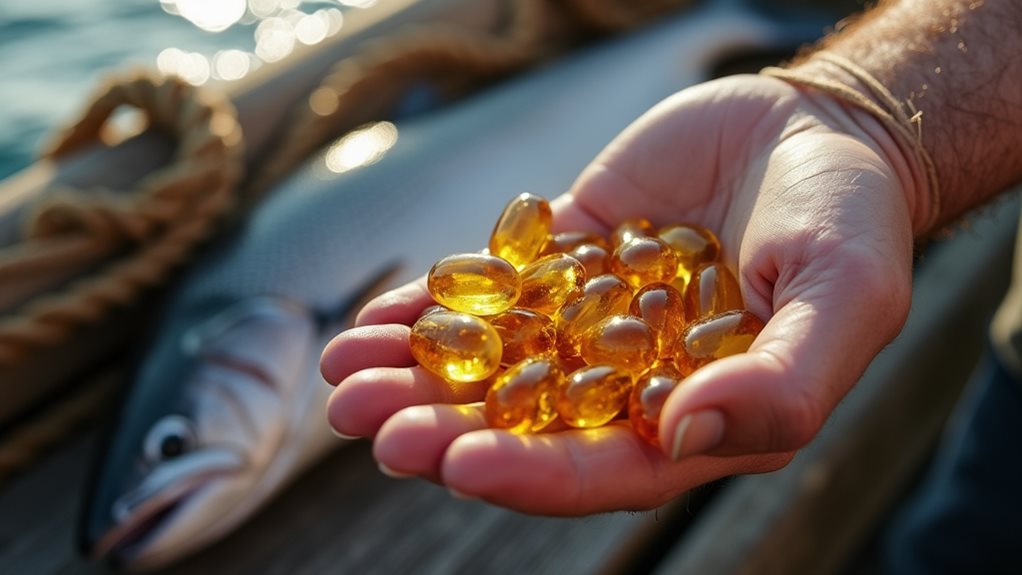
For people with high triglycerides or heart disease, fish oil is often the better choice because studies show the clearest cardiovascular benefits in these groups.
You should use it if you rarely eat fatty fish, need Triglycerides targets, or want standard omega 3 dosing, supported by evidence.
Healthy adults without heart disease usually don’t see major event reduction, and high doses can raise risk.
Who Should Choose Krill Oil?
People who want a smaller, easier-to-swallow supplement often choose krill oil, since many capsules are compact and easier to tolerate than large fish oil pills.
You may benefit if you need better omega-3 absorption, have lower stomach tolerance, or want Astaxanthin content for antioxidant support.
You can also consider it if you avoid fish, have allergies, or want triglyceride management.
Frequently Asked Questions
Can Fish Oil or Krill Oil Interact With Blood Thinners?
Yes, fish oil and krill oil can interact with blood thinners, and you should treat both as clotting modifiers.
They can raise bleeding risk with warfarin, aspirin, clopidogrel, apixaban, or rivaroxaban, especially at higher doses.
You should tell your clinician about dosing timing, watch for bruising or nosebleeds, and avoid surgery use without guidance.
Immune support benefits don’t remove this risk, so monitor carefully.
Which Oil Has More EPA per Serving?
Fish oil has more EPA per serving. It usually supplies 300–600 mg per softgel, while krill oil often provides under 100 mg. You’d need 8–9 krill capsules to match one fish oil serving, so dosage guidance matters. Because higher doses can raise Side Effects risk, you should follow label instructions or clinical advice.
Fish oil also gives more EPA for the price, making it the more efficient option.
Are There Vegan Omega-3 Alternatives to Fish and Krill Oil?
Yes, you do have vegan omega-3 alternatives to fish and krill oil.
You can get Plant based omega from flaxseeds, chia seeds, walnuts, hemp seeds, and ground linseed, but your body converts ALA poorly.
You can choose algae derived oils, they provide preformed EPA and DHA, match fish oil bioavailability, and support reliable intake.
Fortified plant milks and cereals can also add small amounts to your daily diet.
How Should Fish Oil and Krill Oil Be Stored?
You should store fish oil and krill oil in cool, dark places, with refrigeration tips followed after opening.
Keep fish oil below 25°C. Refrigerate liquid fish oil at 4°C, and use airtight, opaque containers for light protection.
Store krill oil at 2–8°C. Refrigerate unopened bottles if rooms stay warm, and seal containers tightly.
Avoid bathrooms, windows, and heat sources, because moisture and light speed oxidation and reduce potency.
Can Either Supplement Help With Brain Function?
Yes, either supplement can help brain function, but results aren’t guaranteed.
You may see modest memory support and better cognitive performance if you already get too little omega-3 fat.
These fats help cell membranes and may reduce inflammation, which supports brain signaling.
Fish oil usually provides more EPA and DHA, while krill oil may absorb well.
Clinical evidence is mixed, so you should treat both as supportive, not corrective, options.
And Finally
You can choose fish oil if you want a lower-cost, widely studied omega-3 supplement with strong evidence for heart support. You can choose krill oil if you prefer a product that may absorb well and contains antioxidants, but it usually costs more and provides less EPA and DHA per dose. For most people, fish oil offers better value, while krill oil may suit you if sustainability and smaller capsules matter more.
References
- https://pmc.ncbi.nlm.nih.gov/articles/PMC4559234/
- https://countrylifevitamins.com/blogs/blog/difference-fish-oil-vs-krill-oil
- https://www.goodrx.com/well-being/supplements-herbs/krill-oil-vs-fish-oil
- https://www.drugs.com/medical-answers/krill-oil-vs-fish-oil-difference-3040407/
- https://www.joinajenda.com/article/krill-oil-vs-fish-oil-which-is-better-for-your-heart-health