
You shouldn’t combine ashwagandha with alcohol. Both can slow your central nervous system, which can increase drowsiness, dizziness, confusion, poor coordination, and slower reactions. The mix can also make driving or using machinery unsafe, and it may raise liver strain in people with liver disease or heavy alcohol use. If you want to use ashwagandha, wait at least 24 hours before drinking, and longer gaps may be safer for some people.
Takeaways
- Combining ashwagandha and alcohol is generally not considered safe because both can increase drowsiness and slow reactions.
- The mix may worsen dizziness, confusion, coordination, and judgment, increasing accident risk.
- Alcohol and ashwagandha together may heighten sedation and, in some cases, affect breathing or cause irregular breathing.
- The combination can increase liver strain, especially in people with liver disease, hepatitis, or heavy alcohol use.
- Avoid mixing them before driving, using machinery, or if you take other sedatives or have major health conditions.
Is Ashwagandha and Alcohol Safe Together?
Ashwagandha and Alcohol: Is It Safe to Combine?
Is Ashwagandha and Alcohol Safe Together?
Although some people assume ashwaganda is harmless, combining it with alcohol isn’t considered safe.
Medication timing matters, and interaction myths can hide real risk.
You can face excess drowsiness, confusion, and slower reactions because both depress the nervous system.
Individual variability changes your response, so a misconception cleanup means checking with a doctor, especially since guidelines advise avoiding this mix. Potential liver strain can also be a concern when ashwagandha and alcohol are used together.
To be aware of how these substances interact, consider the potential for nervous system depression and how it may vary between individuals.
Why Mixing Ashwagandha and Alcohol Feels Stronger
You may notice slower reaction time, dizziness, and confusion, since the combined effects reduce coordination and judgment.
Even small amounts can feel more intense, so the risk of impaired movement and mistakes rises quickly. Ashwagandha and alcohol interactions can also influence sleep architecture and daytime sedation, further complicating recovery and alertness.
Sedation Amplifies
Ashwagandha and alcohol can feel stronger together because both slow the central nervous system, and their sedating effects can add up quickly.
You may notice sleepiness interaction, deeper drowsiness, and less alertness.
Combined use can also raise hangover intensity, increasing nausea, headache, and dehydration.
The overlap of these depressant effects can push sedation beyond what either substance causes alone.
Slower Reaction Time
A mixed drink can slow your responses quickly, because ashwagandha and alcohol both increase GABA activity in the brain.
You may notice reaction time rising by 250 milliseconds, and coordination drops as signals move more slowly.
Hydration timing and electrolyte balance won’t prevent this sedation, but they support safer recovery.
Your alertness, processing speed, and voluntary control all decline together.
Dizziness And Confusion
The slower reaction time from this mix often comes with dizziness and confusion, because both ashwagandha and alcohol depress the central nervous system.
You may feel stronger sedation, poor balance, and mental fog, as GABA effects build.
These breakthrough symptoms can make you stumble, misjudge movement, and feel more intoxicated.
If drowsiness deepens, overdose risk rises, along with breathing problems.
What Ashwagandha and Alcohol Do to Your CNS
When ashwagandha and alcohol enter your system together, they can slow the central nervous system through overlapping GABA activity.
That GABA collaboration increases CNS inhibition, so you may notice slower thinking, weaker coordination, and a sedative mismatch.
If you drink often, sedation tolerance can shift sleep organization, raise withdrawal concerns, trigger anxiety rebound, and worsen next day hangover through lingering brain suppression.
Additionally, combining these substances can amplify dizziness and impair motor performance, especially in individuals with lower body mass or slower metabolism. GABA activity
How Ashwagandha and Alcohol Increase Drowsiness
When you combine ashwagandha and alcohol, their sedative effects add up, and your brain slows its alertness and reaction time. This can make you feel drowsy, dizzy, and less steady, which can weaken judgment and motor control. As a result, your risk of accidents rises, especially when you drive, work, or handle machinery. Additionally, both substances can interact with sedation levels, potentially amplifying impairment and complicating decisions about safety-sensitive activities. sedative effects
Sedative Effects Combined
Because both ashwagandha and alcohol increase sedation, taking them together can cause much stronger drowsiness than either substance alone.
You may feel heavy, foggy, and hard to keep awake, because drug interaction timing lets their effects overlap.
Sleepiness tolerance varies, and moderate amounts can still overwhelm you.
Stay aware of accident risk awareness and breathing safety concerns, especially with higher doses.
Impaired Reaction Time
Even in small amounts, ashwagandha and alcohol can slow your reaction time by amplifying the same calming brain signals.
Your GABA response deepens, receptor differences and individual sensitivity change the effect, and metabolic variability shifts dose timing toward a stronger peak interaction.
You may notice drowsiness, slower thinking, and delayed movements.
Withdrawal effects can also mask how long this slowdown lasts.
Increased Accident Risk
Asashwagandha and alcohol can also raise the risk of accidents by pushing drowsiness beyond simple slowdown.
You may lose coordination, judge hazards poorly, and react late, which affects driving, tools, and stairs.
Waterfall safety planning matters, balance training advice helps, and household fall prevention should be stricter.
Combined sedation can also slow breathing, and emergency service delays become more dangerous.
Can Ashwagandha and Alcohol Impair Driving?
When ashwagandha and alcohol are used together, they can impair driving by increasing sedation, slowing reaction time, and reducing coordination. Medication interaction myths can hide real danger, and individual variability factors change how strongly you’re affected. Clinical evidence suggests that ashwagandha’s effects on anxiety are generally tolerable but can vary among individuals, and combining it with alcohol may amplify sedative effects for some people drug interactions and should be approached with caution. Medical experts advise avoiding the mix before driving and waiting hours.
Liver Risks From Ashwagandha and Alcohol
Because both substances can stress the liver, combining ashwagandha with alcohol raises the risk of liver injury and abnormal enzyme results.
In addition, long-term daily use of ashwagandha without medical supervision may mask underlying liver conditions, making monitoring essential for anyone who regularly consumes alcohol. liver monitoring
Who Faces the Highest Liver Risk?
You face the highest liver risk if you already have cirrhosis, chronic liver disease, fatty liver disease, or a past drug-induced liver injury, because ashwagandha can trigger rapid liver damage. Heavy drinking adds more stress to the liver, and when alcohol combines with ashwagandha, enzyme levels can rise faster in people with pre-existing damage. If you also have hepatitis B or C, fibrosis, or unresolved abnormal liver tests, you should avoid this combination completely. Ashwagandha safety is important to consider for anyone with thyroid conditions, since thyroid status can influence medication and supplement interactions.
Pre-Existing Liver Disease
Among people with liver disease, ashwagandha carries the highest risk for those with cirrhosis or advanced chronic liver disease, since their livers have less reserve and clear toxins more poorly. You should avoid it, because liver function testing can show ALT and AST spikes, and supplement withdrawal symptoms may follow stopping.
Fatty liver also raises concern, and injury can progress to liver failure.
Heavy Drinking Risks
Heavy drinking raises the liver risk far more than light or occasional use, and certain groups face damage at lower doses.
Your risk thresholds drop with women susceptibility, binge drinking patterns, and metabolic syndrome interplay.
If you’re a woman, over 45, poor, or have diabetes or obesity, your liver can scar faster, and cirrhosis may develop after years of sustained intake.
How Ashwagandha and Alcohol Affect Blood Pressure
When ashwagandha and alcohol are taken together, both can lower blood pressure by widening blood vessels and reducing resistance to blood flow.
Additionally, kidney safety matters can influence how these substances affect magnesium balance and blood pressure, so caution is advised for individuals with kidney impairment or who are on medications that affect blood pressure. blood pressure safety
Can Ashwagandha and Alcohol Cause Breathing Problems?
Ashwagandha and alcohol can also affect breathing, because both substances slow the central nervous system and raise GABA activity.
Together, they can reduce respiratory drive, causing shallow or irregular breaths, especially with Dosing Variability.
If you have asthma, COPD, or take other sedatives, risk rises further.
Breath Monitoring matters, and you should seek urgent care for extreme drowsiness, confusion, or loss of consciousness.
How the Mix Affects Focus, Memory, and Judgment
When you combine ashwagandha and alcohol, you can feel more drowsy, and that extra sedation makes it harder to stay focused on complex tasks.
Your memory and recall can weaken too, because the mix disrupts how your brain encodes new information and holds short-term details.
Judgment and reaction time also suffer, so you may respond more slowly, make poorer decisions, and struggle with coordination.
Focus and Attention
The ashwagandha-alcohol mix can sharply weaken focus and attention because both substances slow the central nervous system. You may feel sleepy quickly, so sleepiness timing becomes unpredictable.
Reduced alertness lowers vigilance, and reaction warning signs include sluggish thinking and light-headedness.
Your concentration drops, judgment suffers, and tasks that need precision or fast responses become unsafe, especially when driving or using machinery.
Memory and Recall
Alcohol and ashwagandha can interfere with memory formation, so new information may not stick as well after you take them together.
You may notice weaker short-term recall, less stable long-term memory, and slower retrieval of details.
Poor hydration timing and reduced sleep quality can make these effects stronger, because both support memory consolidation.
The mix can also blur judgment-related memory cues, reducing accuracy.
Judgment and Reaction Time
How quickly can judgment slip when ashwagandha and alcohol are combined? You may notice slower reaction time, poor coordination, and weak focus as additive GABA effects depress your brain. Dose timing and tolerance changes can make these effects less predictable, so confusion and delayed responses may grow fast.
Avoid driving or machinery, because impaired judgment and motor control raise accident risk.
What to Do If You Already Mixed Them
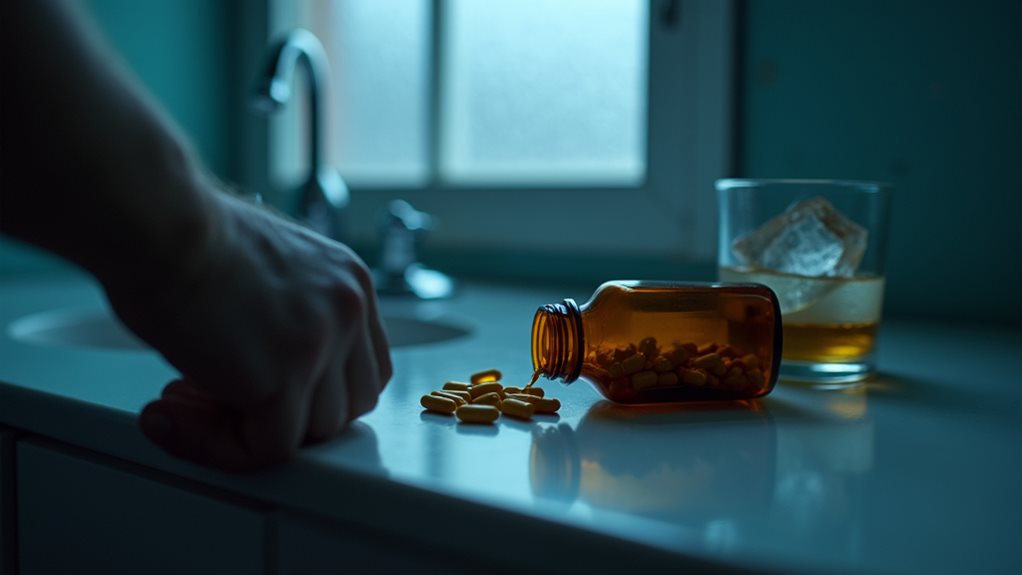
If you’ve already mixed ashwagandha and alcohol, stop taking both substances and watch for immediate effects such as slowed reaction time, poor coordination, unusual drowsiness, blood pressure changes, and irregular heart rhythms.
Track emergency symptom monitoring, use poison control contact if breathing worsens, follow abstinence duration guidance, and support hydration recovery.
Rest, avoid driving, and seek care if nausea, chest pain, or confusion grows.
When to Avoid Ashwagandha Completely
Ashwagandha isn’t safe for everyone, and you should avoid it completely in several high-risk situations.
If you’re pregnant, breastfeeding, have autoimmune disease, thyroid disorders, hyperthyroidism, liver disease, hepatitis, or use sedatives, anxiety drugs, or blood sugar medication, complete avoidance matters.
Autoimmune flares, thyroid lab checks, and lifelong reassessment guide safety.
Stop before surgery, and never ignore rising side effects or lab changes.
How Long to Wait Before Drinking Alcohol
After you’ve ruled out situations where ashwagandha isn’t safe at all, the next question is timing alcohol intake. Wait at least 24 hours after your last dose, because shorter gaps raise sedation, blood pressure swings, and liver stress.
Food timing and your dosing schedule matter, too. For hangover prevention and sleep stabilization, some experts prefer 48 to 72 hours before drinking.
What Doctors Recommend for Safer Use
Doctors generally recommend avoiding alcohol altogether while you’re taking ashwagandha, because the two can intensify central nervous system depression and increase safety risks.
Follow patient instructions exactly, keep Sleep timing consistent, and tell your clinician about every supplement you use.
If you have liver disease, blood pressure issues, or unusual drowsiness, stop co-use and seek medical advice promptly.
What Research on Ashwagandha and Alcohol Still Lacks
Despite growing interest in this combination, research on ashwagandha and alcohol still has major gaps.
You lack Long Term Safety data, Clinical Trial Gaps remain wide, and Longitudinal Effects are unclear.
Researchers also need Dose Standardization, Pharmacokinetic Data, and better Liver Monitoring.
Sparse evidence leaves Metabolism Pathways, Withdrawal Interactions, and sedative effects uncertain, so current advice relies on limited findings.
Frequently Asked Questions
Can Ashwagandha Alter Alcohol Metabolism?
You can’t rely on ashwagandha to alter alcohol metabolism, because studies show no meaningful CYP metabolic changes. It doesn’t inhibit or induce CYP450 enzymes, so it doesn’t change how your body breaks down alcohol through that pathway.
However, you should still watch liver enzyme activity, since combined use can raise ALT and AST slightly, increase liver strain, and add sedation, dizziness, and impaired judgment during drinking.
Does Ashwagandha Affect Hangover Severity?
You shouldn’t expect ashwagandha to reduce hangover severity. It has no proven clinical effect on symptoms, though its antioxidant and anti-inflammatory actions may slightly support recovery.
You may see small changes in blood sugar balance or liver stress markers, but evidence is limited.
Alcohol still drives dehydration, poor sleep, and oxidative stress, so hangover relief remains unconfirmed, and combining both can increase drowsiness, dizziness, and impaired coordination.
Could Alcohol Reduce Ashwagandha’s Benefits?
Yes, alcohol can reduce ashwagandha’s benefits. You may get less stress relief, weaker sleep support, and less immune support, because alcohol can alter GABA activity and increase sedation.
You also face Blood sugar effects, liver enzyme risks, and slower reaction time.
Higher drinking can blunt cortisol reduction and add nausea or dizziness.
If you use ashwagandha, you should limit alcohol, because combined use can mask the herb’s intended effects.
Are Certain Ashwagandha Forms Riskier With Alcohol?
Yes, certain ashwagandha forms can be riskier with alcohol.
You should watch formulation strength, because high-dose standardized extracts can increase drowsiness and motor impairment more than low-potency root forms.
Liquid tinctures may act faster, which can intensify sedation.
Products with added sedatives, like melatonin or valerian, raise risk further.
Current data don’t show clear differences in Liver toxicity between forms, so dosage matters most.
Does Timing of Doses Change Interaction Risk?
Yes, dose timing effects can change alcohol interaction risk. If you space doses by at least 6 to 8 hours, you may lower overlap, sedation, and coordination problems.
Ingestion spacing matters because absorption changes can shift how long both substances stay active. Short gaps raise risk more than longer gaps, especially if you metabolize slowly.
No fixed cutoff works for everyone, so you should use caution and monitor your response closely.
And Finally
You should not assume ashwagandha and alcohol are safe together, because both can slow your central nervous system and increase drowsiness. If you drink, you may feel more sedated, less alert, and more impaired than expected, which can affect driving and coordination. Avoid mixing them if you take sedatives, have liver disease, or feel unwell. Wait before drinking, and ask a doctor if you use ashwagandha regularly or take other medicines.
References
- https://nasz-gabinet.pl/en/blog/ashwagandha-a-alkohol/
- https://www.healthycell.com/blogs/articles/ashwagandha-and-alcohol-can-you-take-them-together
- https://medisearch.io/blog/ashwagandha-and-alcohol
- https://sunwink.com/blogs/sunwink-blog/ashwagandha-alcohol
- https://www.thecabinchiangmai.com/addiction-type/alcohol/ashwagandha/
- https://www.bbrief.co.za/2024/04/26/ashwagandha-and-alcohol/
- https://www.webmd.com/vitamins-supplements/ashwagandha
- https://aidevi.com/article/ashwagandha-and-alcohol-risks.html